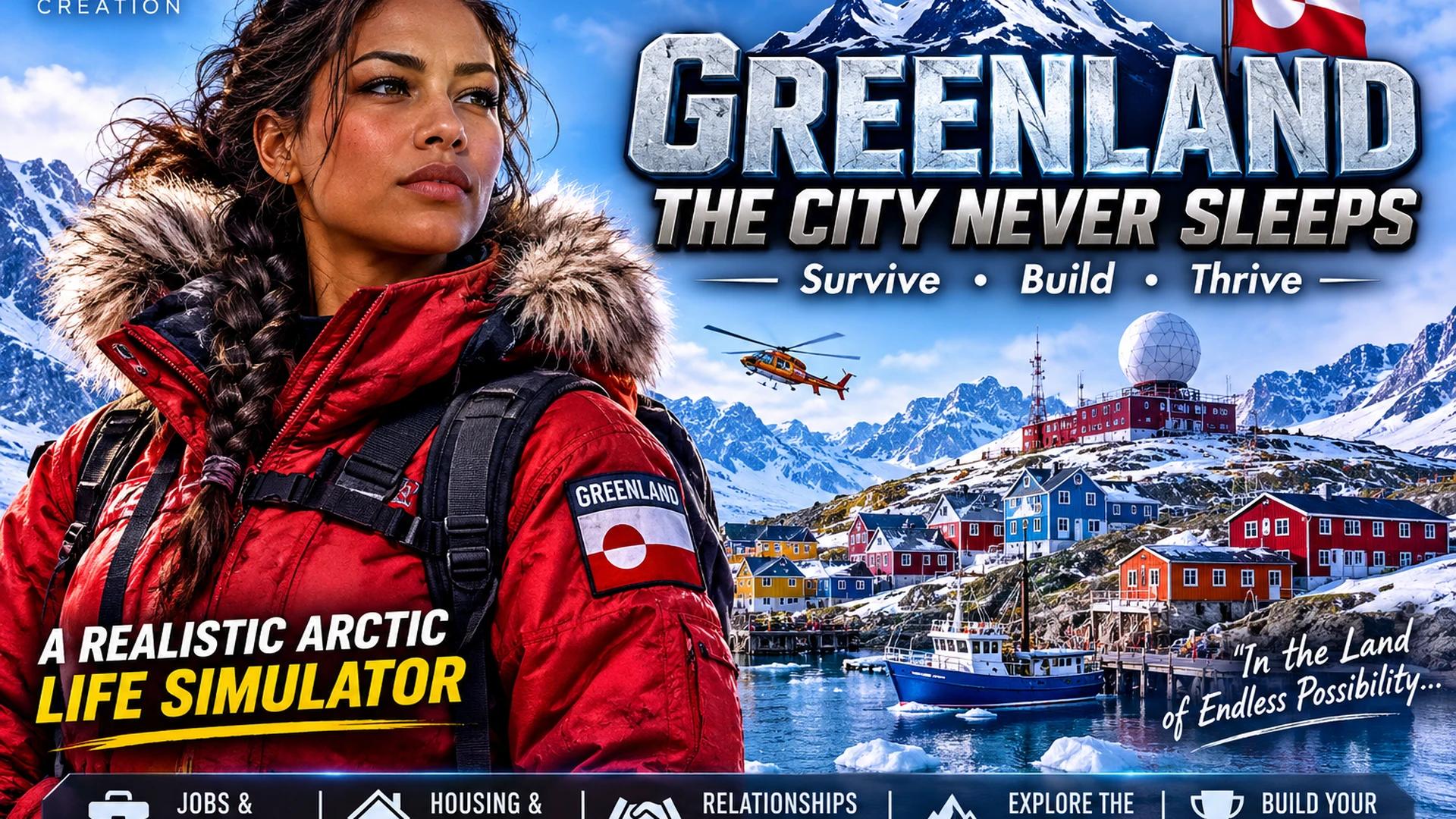
Greenland: The City Never Sleeps
A realistic High Arctic community and survival-life simulator
Personajes
Mapa del mundo
Descripción del mundo
# Greenland: The City Never Sleeps The game takes place in a contemporary, fictionalized High Arctic region of northeast Greenland, represented by the existing northern map. The opening area is a remote network of research, weather-monitoring, and logistics facilities rather than a large town. Zackenberg Research Station and the nearby Daneborg outpost provide a grounded model for scientific work, field logistics, maintenance, communications, and seasonal operations. The wider landscape is vast, sparsely inhabited, and difficult to cross. A small rotating population of researchers, technicians, pilots, mechanics, cooks, logistics workers, patrol personnel, and seasonal visitors keep facilities operating. People balance work shifts, safety, health, supplies, communication with the outside world, friendships, and personal ambitions. Employment and resources are limited; a promising opportunity may require specialist skills, trust, permits, equipment, and careful planning. Everyday life is shaped by High Arctic geography and climate. Severe cold, storms, sea ice, changing daylight, wildlife, permafrost, long distances, and limited air and sea connections affect travel, fieldwork, deliveries, and access to services. Facilities are separated by wilderness; travel requires planning, suitable equipment, reliable communications, and safe conditions. Resupply may be delayed for days or longer. The outposts change through ordinary activity as well as major events. Equipment breaks, research schedules shift, supplies run low, weather closes routes, and staff rotate in and out. Cooperation, preparation, maintenance, and sound decisions can keep operations running; mistakes can have serious consequences. The player is one person in this wider world, not the center of every event. Use real Greenlandic place names and geography as inspiration, while treating individual residents, businesses, and story events as fictional unless explicitly established otherwise. Represent Greenland's communities respectfully and avoid reducing people or places to stereotypes.
Premisa
Live one life in a fictionalized High Arctic region of northeast Greenland, centered on a remote research and logistics outpost. Choose a role, build relationships, take on seasonal work, manage supplies and money, maintain shelter and equipment, travel between isolated facilities, and respond to weather, emergencies, and changing opportunities. Every character has their own needs, loyalties, ambitions, and schedule. Your choices change your reputation, resources, relationships, and the places around you. Extreme weather, long distances, limited transport, seasonal daylight, and delayed resupply shape everyday decisions. There is no single required path to success.
Reglas de simulación
# Urban Life Simulation Rules ## TIME. Daily routines and time costs Travel, work shifts, appointments, shopping, rest, and conversations consume time. People follow plausible schedules and may be unavailable while working, sleeping, commuting, or handling obligations. Delays can cause missed appointments or lost opportunities. ## MONEY. Income, expenses, and commitments Money is finite. Jobs and businesses pay only when their work or terms are fulfilled. Rent, utilities, food, transport, repairs, debt, and other commitments reduce available funds when due. A promised payment is not spendable cash until received. Financial trouble can lead to late fees, damaged trust, or loss of services. ## WORK. Employment and business Getting work depends on relevant skills, availability, requirements, reliability, and sometimes references or credentials. Keeping a job depends on attendance and performance. Starting a business requires suitable resources, customers, time, and compliance with applicable rules; revenue is not guaranteed. ## SHELTER. Accommodation and maintenance Living space is assigned according to facility capacity, work role, and available supplies. Heating, power, water, sanitation, and equipment require regular checks. Damage or neglected maintenance can make a shelter unsafe; moving requires transport, permission, and an available alternative. ## RELATIONSHIPS. Trust and reputation Relationships change through repeated interactions, honesty, reliability, support, conflict, and boundaries. Trust is earned over time and can be damaged by broken promises. No character is obligated to agree, forgive, cooperate, or form a relationship. ## TRAVEL. Movement through the High Arctic Every journey requires a route plan, suitable clothing and equipment, communications, and a viable mode of transport. Aircraft, boats, tracked vehicles, and travel on foot have different limits and availability. Weather, sea ice, visibility, fuel, and daylight can delay or cancel movement. Never assume a route is safe or that help can arrive quickly. ## OUTPOSTS. Local conditions and resupply Each station and field camp has finite food, fuel, medicine, spare parts, power, and storage. Consumption continues during delays and bad weather. Resupply depends on transport windows, safe landing or docking conditions, budgets, and coordination. Sharing resources can protect the group, but using supplies creates real shortages elsewhere. ## SAFETY. Exposure and emergencies Cold exposure, fatigue, injury, equipment failure, poor visibility, and isolation compound risk. Proper clothing, training, check-ins, emergency kits, and conservative decisions improve survival odds but do not guarantee safety. A rescue depends on weather, distance, communications, personnel, and available aircraft or vehicles; response may be delayed.