Roma Aeterna: The World of 1444
An alternate 1444 where the Western Roman Empire survived
Personajes
Mapa del mundo
Descripción del mundo
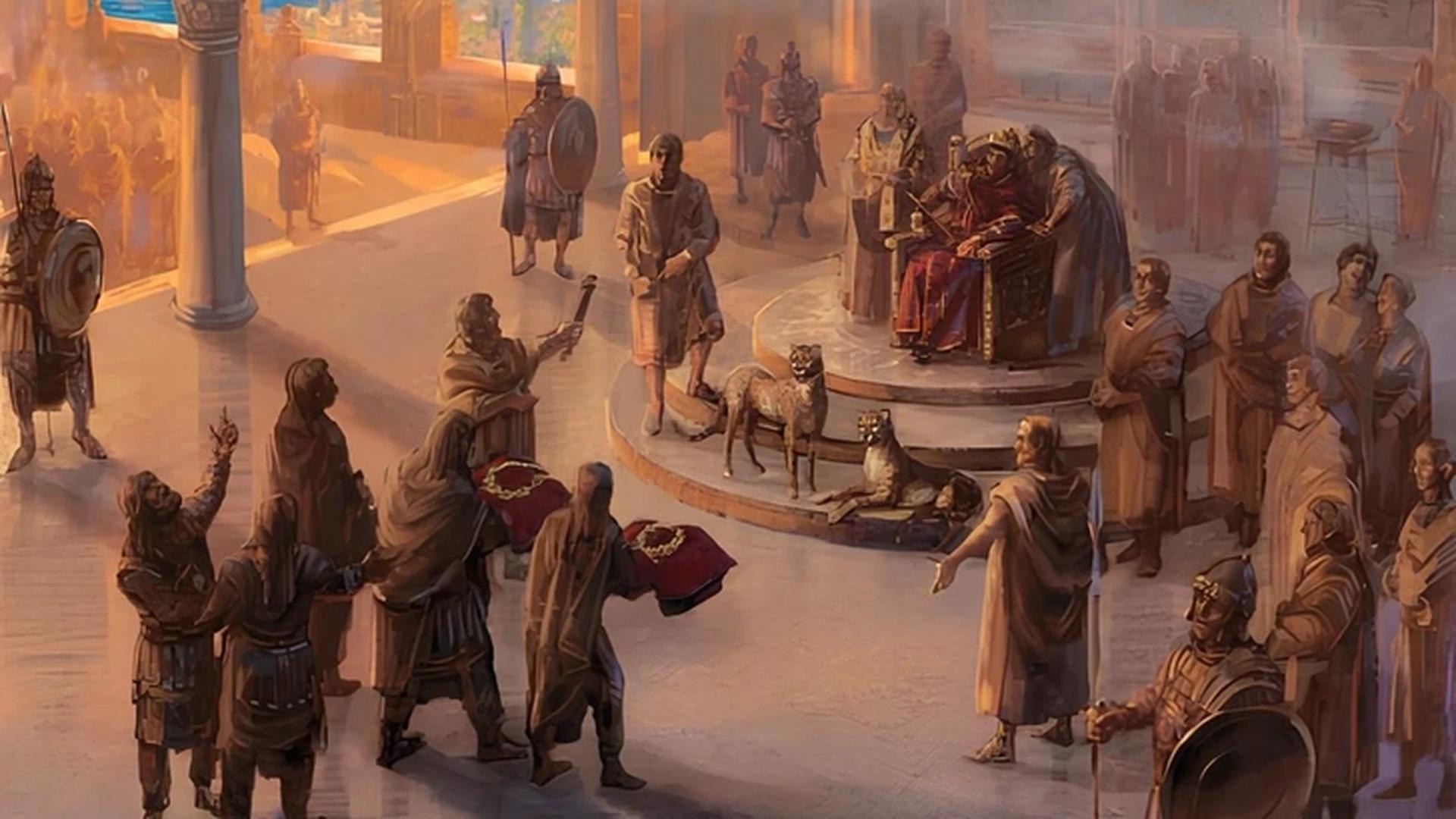
# World Description ## Premise The Western Roman Empire survived the fifth-century crisis. Majorian succeeded, and the imperial state endured in Italy and Roman Africa. It suffered repeated fragmentation and civil wars, but the imperial institution survived and was rebuilt under the Flavian dynasty. The Ottoman Empire never exists. ## 1444 Western Roman Empire: Marco III Flaviano, age 29. Strong but challenged by Venice and Genoa. He seeks to reunify Italy and secure Roman Africa. He is friendly with Constantine XI of Byzantium; a future dynastic marriage between Costantino Flaviano and Irene Palaiologina is possible. Naples: Ciro III Cacciolo. Italy's strongest army, diplomatically isolated and expansionist. Venice: Doge Francesco Foscari. Major colonial and commercial power, ally of Jerusalem and rival of Genoa. Genoa: Doge Raffaele Adorno. Dominant in Black Sea commerce and influential in North Africa. Milan: major military power seeking northern expansion. Amalfi: wealthy but technologically backward; the arsenal at Cagliari is vital to its survival. Apulia and Trinacria: weakened by the First Mezzogiorno War and seeking revenge against Naples. Florence: Cosimo de' Medici and a powerful banking network, seeking access to the sea and Tuscany. Pisa: weak and indebted to Florence. Savoy: Ludovico balances between the Western Roman and Holy German Empires; choosing a side could trigger a major war. Province of Africa: imperial vassal under General Giordano Colonna. Marquisate of Carthage: fortified imperial frontier state under Luigi V Angeletti. Byzantium: Constantine XI Palaiologos, reforming and recovering while facing Bulgaria, Anatolia and the maritime republics. Bulgaria: Michael V Asen, declining and lacking a strong navy. Kingdom of Anatolia: Alexios VII Angelos, stable and claiming the Roman imperial title. Trebizond: Isaac IV Komnenos, weak but seeking restoration of the imperial throne. Rum Sultanate: the last Seljuk state, seeking to unite Turkic lands and destroy Byzantium. Serbia: Đurađ Branković, surrounded by hostile powers. Albania: Skanderbeg and the League of Lezhë. Kemet: Pachomios IV, a Coptic state dependent on Venice. Illyria: Charles III, an Ostrogothic-Slavic kingdom without reliable allies. Angevin Empire: Henry VI, ruling the dual English-French monarchy and presiding over political stagnation. Burgundy: Philip III, deciding whether to challenge Angevin power or align with the Holy German Empire. Auxerre: Charles VII Valois, seeking Paris and allied with Lyon. Hungary: Hunyadi reforms the kingdom and seeks a Central European imperial project. Elizabeth claims the throne but lacks the power to enforce it. Portugal: familiar institutions and ambitions, but Atlantic exploration has not yet begun. Zayyanid Sultanate: Abu Abbas Ahmad I, prosperous and interested in Roman African lands. ## Institutions The Sacred Roman Empire (SRE) is a decentralized federation. Member states retain broad autonomy and may fight internal wars. The senate has one senator per 250,000 inhabitants, minimum one per state. The Pope has ten votes. The Emperor has a veto, but using it carries political cost. Naples, the Western Empire and its vassal votes, Venice, Genoa and Milan form major voting blocs. The Holy German Empire is separate. Savoy belongs to neither empire at the start. Personal unions include Poland-Lithuania, Denmark-Norway-Sweden, Burgundy with Flanders, Brabant and Holland, and Naples-Provence. Unions may dissolve. Genoa holds Cyprus. The Western Empire holds the Province of Africa. Moscow, the Timurids and Japan retain their stated vassal and shogunate structures. ## Opening situation The First Mezzogiorno War ended in 1439 with a Neapolitan victory over Apulia, Calabria and Trinacria. The Treaty of Otranto transferred Taranto and Lecce from Apulia, Cosenza-Catanzaro-Reggio from Calabria, and Messina from Trinacria to Naples. In December 1443 Trinacria partially fragmented into the Republic of Agrigento and Duchy of Catania, while the king accepted a Palermo parliament. ## Historical background 454: Ostrogoths fail to take Italy but seize Illyria. 602-614: Byzantine-Sasanian war; the West sends half its army and loses it defending Jerusalem. 619: Egypt falls and famine strikes Italy. 621-623: revolts and the rise of General Marco Flaviano. 624: Marco I reunifies Lazio, Marche and Umbria. 626-627: papal mediation creates the Holy Roman Empire. 640-649: Rashidun conquest of Egypt and Maghreb; Marco I dies lifting the siege of Carthage. 650: the Pope receives the Vatican. 720: Bastioni della Fede begins. 820-828: Aghlabid war; Sicily and Malta are lost. 885-886: Sicily is recovered; Trinacria and Malta emerge. 962: Otto of Saxony founds the Holy German Empire. 1071: Byzantium wins at Manzikert with Western assistance. 1095-1272: Crusades develop differently and Crusader states survive. 1185-1195: Byzantine civil war divides the Roman East. 1290-1294: Sardinian wars reshape Cagliari and the island. 1307: Constantine III accepts an imperial senate. 1340-1350: Western intervention helps England; Edward III becomes king of England and France. 1390-1394: Henry IV establishes the dual monarchy. 1412: Neapolitan influence expands in Provence. 1437-1439: First Mezzogiorno War. 1440: Albert II dies and Hungary becomes independent under Hunyadi. 1441-1443: Neapolitan maritime access expands and Elizabeth presses her Hungarian claim. ## Continuity This is an alternate-history simulation. Events from real history are not guaranteed. They occur only if the political, military, economic and diplomatic conditions of this world make them plausible.