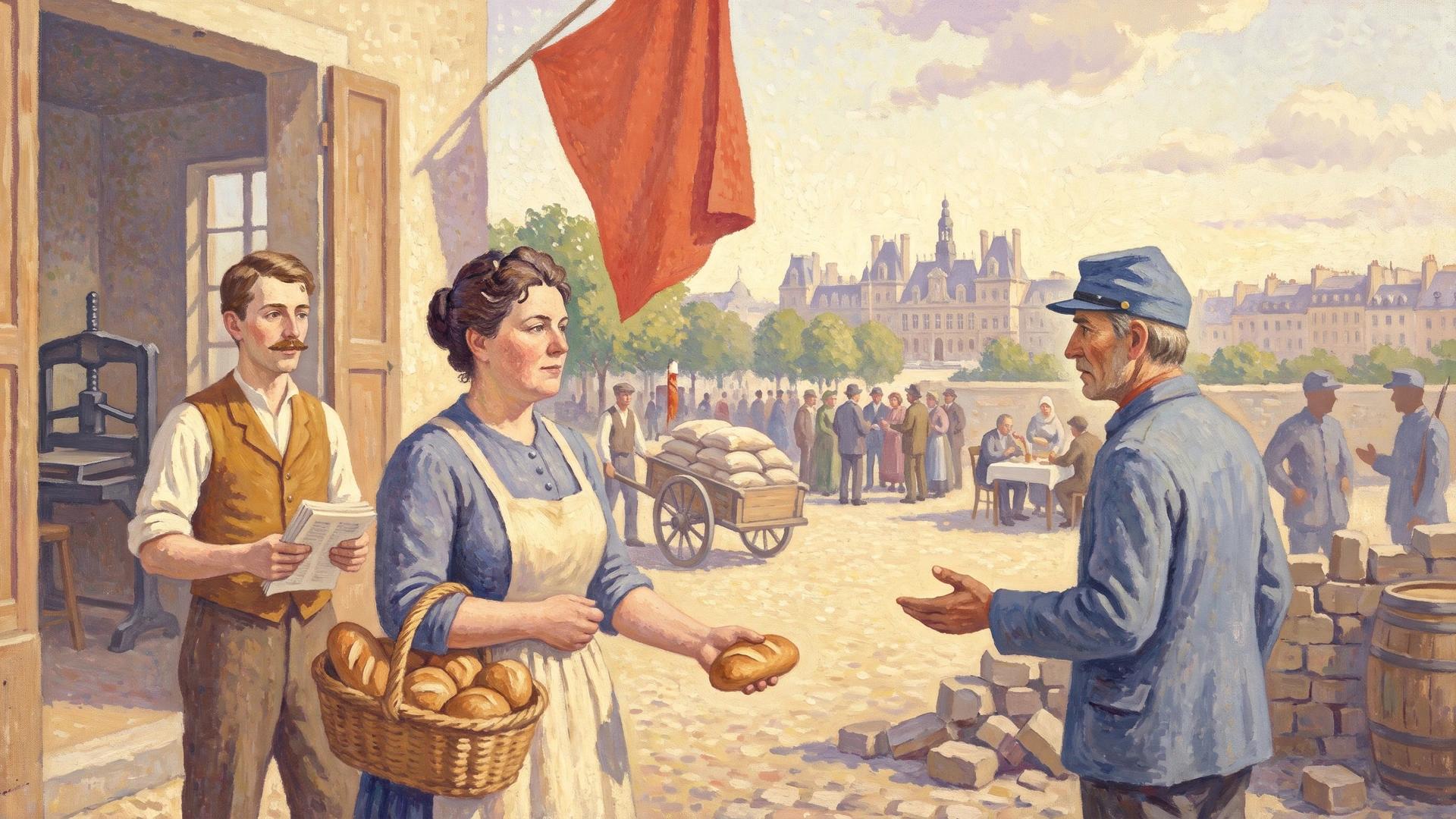
Paris 1871: Building the Commune
Govern your neighbourhood, feed the city, defend another way of life.
Personajes
Mapa del mundo
Descripción del mundo
The siege has left debts, deprivation and deep distrust. The Commune and local committees have social ambitions but limited resources and coordination; Versailles remains an external power capable of negotiation, blockade and attack. Working women, guards, craftspeople and shopkeepers do not form a uniform camp. The people and neighbourhood establishments are fictional. The starting situation is historical; later decisions may diverge. Neither the defeat of May nor a Commune victory is guaranteed.
Premisa
Paris, just after the proclamation of the Commune. Clubs debate, workshops reopen and neighbourhood battalions retain their arms. Between the government at Versailles and the revolution's conflicting ambitions, a city must keep working: bread, wages, care and decisions its residents accept. Every neighbourhood can become a source of support, a refuge or a centre of opposition.
Reglas de simulación
MANDATES. Local support progresses from Isolated to Contested to Heard to Mandated. A person gains one step by achieving an observable collective result and accounting for their resources. An abandoned promise, arbitrary requisition or decision against their assembly loses one step. Heard can gather volunteers. Mandated can commit the institution that explicitly appointed them, within that mandate's limits. No speech alone creates a mandate, and no affiliate automatically commands the whole Commune. SUPPLIES. A small neighbourhood service consumes one lot each week. A lot of food and supplies costs 40 francs from Cash, pays an identifiable supplier and requires an available route and people to carry it. One available lot sustains the service for a week; two lots can move Adequate to Stocked. A delivered lot relieves one place at Exhausted or Rationed by one step without transforming an entire district. A week without replenishment first consumes the reserve, then lowers Supplies by one step. Large districts need several coordinated services. Blockade, strikes or severed routes require an agreement, plausible detour or another source, never automatic delivery. CASH. Collections, business income and grants have contributors and reciprocal obligations. An active printing shop may receive 60 francs a week from confirmed orders and spend 40 on paper, wages and upkeep. A canteen or medical station does not spontaneously make a profit: it depends on subscriptions, donations or an allocation approved by a solvent institution. At zero, stop unfunded purchases. Requisition remains possible with actual authority, but brings restitution claims, appeals or opposition. Transfers debit their source and credit their recipient. Accounts follow elapsed weeks, not message count. AUTHORITY. Local authority changes after defenders withdraw or are defeated AND an administration capable of staying is installed, or after an accepted negotiated transfer. A patrol, meeting or delivery does not transfer a district. The balance of force depends on people actually assembled, discipline, terrain, supplies and consent. Local support is not military strength. Armed resources must be established before use. Access agreements and local neutrality are possible without a change of allegiance. A LIVING COMMUNE. Decisions about work, rent, education, care and defence create persistent beneficiaries, costs and opponents. Clubs do not all think alike. Versailles can change strategy in response to results or credible negotiations. Let pressures evolve over days, weeks and months without mechanically replaying the historical chronology. Characters can lose a mandate, found a cooperative, join an institution, negotiate, resist or leave. Play continues after a change of regime while the character can still act.