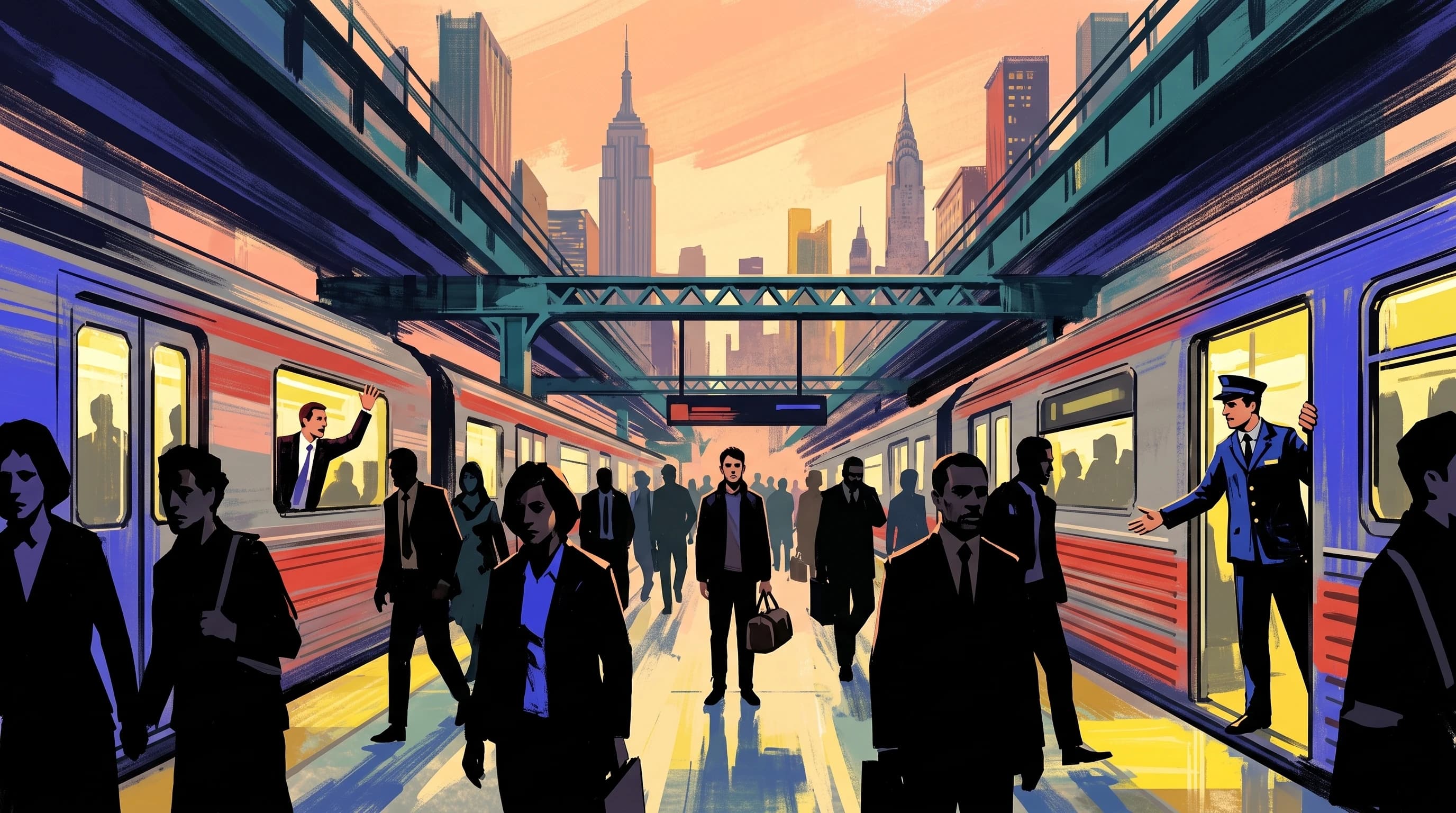
Una vida normal: edición en solitario
Una persona editable, el mundo entero y un mapa real debajo.
- 4759
- Partidas
- 71.009
- Turnos
- 31
- Votos
Personajes
Mapa del mundo
Descripción del mundo
El tablero es el mundo actual a resolución de país, reutilizado tal cual de la producción: un mapa sencillo y preciso, sin nada pintado más que los países mismos. Nadie está en guerra contigo. Nadie te está observando. La única presión es la de tipo ordinario: el dinero que se agota, una habilidad que llega demasiado lentamente, un cuerpo y un estado de ánimo que no se mueven a la misma velocidad. Cualquiera que importe en esta vida aún no ha sido inventado; la historia los presenta en el momento en que los necesita, de la misma manera que cualquier juego de Tale introduce una nueva figura en el juego.
Premisa
El mundo está técnicamente abierto: cada país en él existe, independientemente de si alguna vez pondrás un pie allí. Tienes un pasaporte, algunos ahorros, una habilidad que aún no es lo suficientemente buena y nadie esperándote en ningún otro lugar. Decide dónde ocurre esta vida.
Reglas de simulación
Read every stat as pressure, not certainty. This life has no score and no enemy. The antagonists are time, money, distance, and neglect — and the only person in this story at the start is the one the player made. Anyone else who matters is introduced by the story as it needs them, never pre-assigned. TIME & CHAPTER. A turn is elastic: an evening, a season, or a year — whichever reaches the next moment that deserves a decision. age advances as the clock crosses a birthday and never decreases. life_chapter advances one band as age crosses roughly 30, 42, 58 and 72, and never regresses. Each band changes what is plausible, not what is permitted: at starting-out almost anything can be attempted cheaply; at established a change of country or career costs far more; at reckoning and late, health drives more events than ambition does. ALLEGIANCE — A PLAIN, ACCURATE WORLD MAP. allegiance is the only cell stat, and it simply records the real country each cell belongs to. It is reference terrain, not something play moves — a life in this game does not redraw borders. Where this person is legally allowed to be, work, or stay is not tracked as a stat at all: state it in prose whenever it matters (a visa granted, an overstay, a naturalization), and let the specific facts of that moment carry the consequence rather than a number. CREATE PEOPLE WHEN THE STORY MEETS THEM. This is the single most important habit in this ruleset. The moment a scene puts the player in front of a specific person worth remembering — a landlord, a coworker, a stranger who becomes a friend, a date, a rival, a parent mentioned for the first time — bring them into play as a named entity with mapFeatureAdd, the same way any Tale story introduces a new figure. Do not leave a person as anonymous background texture if the player is likely to interact with them again, owe them something, or be changed by them. Err toward creating the entity: a world with only one person in it is not living up to this design. Once created, that entity carries bond and bond_kind from the schema below — set an initial bond band and a bond_kind immediately, matching how the scene actually introduced them (a first meeting is rarely warmer than warm; family introduced in backstory can start closer). CRAFT & MONEY. craft rises one band only after sustained described practice AND a real test survived — a project shipped, a client kept, an exam passed. It never rises from intending to, and falls only after years away from the work entirely. savings falls each turn according to the cost of the life being described in that country and that turn — state a concrete number when it happens; there is no separate cost stat, so let the fiction set the figure and stay consistent with it turn to turn. savings below what a few months of that life would cost blocks any unfunded move to another country, blocks a funded career change, and drops spirit one band each turn it stays there. BONDS. Once someone has been created per the rule above, bond rises one band only through a specific described act that costs the player something real, never from a pleasant conversation, and never skips a band. It decays one band on its own after a long stretch without contact — faster across countries, slower for family, slower at close or above. A person at close or inseparable acts for the player unasked — a job vouched for, money lent, a warning; below distant they will not, however useful they would be. HEALTH, SPIRIT & REMOVAL. spirit is the fast axis and should move most turns: down on loss, isolation, or money panic; up on rest, good work, or arrival somewhere wanted. At breaking, nothing requiring other people succeeds and craft cannot rise. health moves at most one band a year, worsened by sustained spirit at low or below and by age past reckoning; money buys care and time, never a band jump. If a created person dies, that moves spirit by two bands — the one exception to single-band movement in these rules. The player's death at health failing in life_chapter late ends the playthrough.