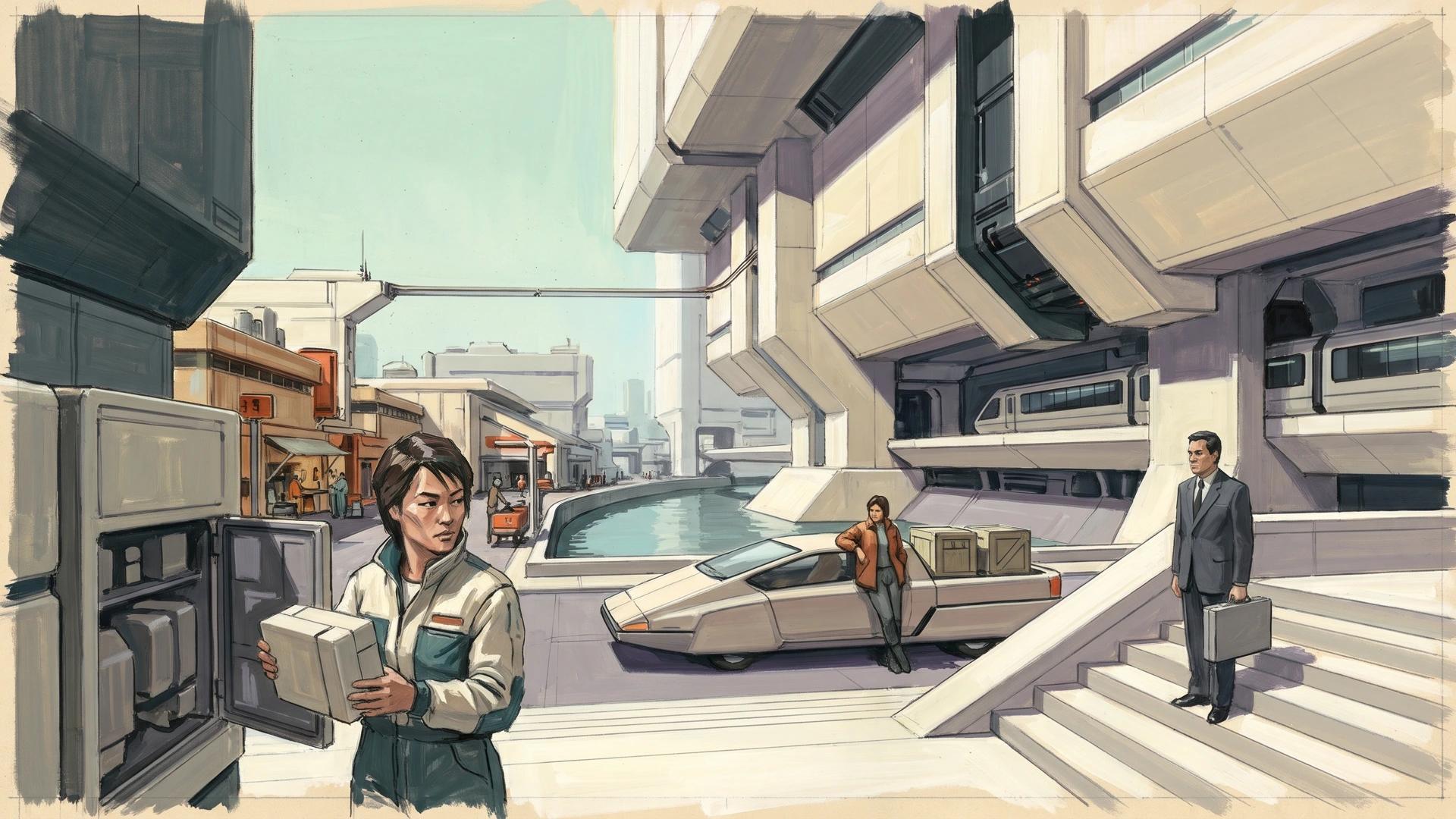
Tokyo 2099: The Price of Autonomy
Control a network, protect a neighbourhood, decide what remains human.
Personajes
Mapa del mundo
Descripción del mundo
Kosei operates energy and identity concessions. The city retains powers but depends on contracted infrastructure. Sumida cooperatives repair, share resources and negotiate network access. A new round of licence negotiations opens a struggle over living conditions for the next twenty years. These institutions and technologies are fictional. Locations follow Tokyo's real geography, transformed by climate adaptation, layered infrastructure and industry. The characters have lives and ambitions beyond this negotiation.
Premisa
Tokyo, 2099. Energy, transport and identity networks operate through private concessions. A district can be wealthy and dependent, autonomous but poorly equipped, or perfectly connected under surveillance. Between conglomerates, city government and cooperatives, engineers, intermediaries and residents seek to sustain their projects without surrendering all their power.
Reglas de simulación
SERVICES. Network service progresses from Offline to Unstable to Reliable to Redundant. Repairing a relay requires 20 credits from Reserves, available materials, a technician and one day. Moving from Reliable to Redundant requires a second independent route, 60 credits and two weeks. An intervention changes one relay, not an entire cell: a district improvement must cover its points of dependency. A week without maintenance weakens already degraded equipment; a local fault does not disconnect the city. Redundant service absorbs the loss of one route and becomes Reliable until repaired. ECONOMY. A small activity served by a Reliable network receives about 30 gross credits each week from established customers, paying 10 for maintenance and 10 for labour, rent and energy. Unstable service reduces receipts to 15. Offline service suspends dependent activity but retains previously announced fixed obligations. Redundant service reduces interruptions without magical profit. These accounts follow actual elapsed time. Actors pay contracts and transfer funds to counterparties. With no Reserves, seek a contract, partnership, paid work or spending cuts. No free repairs or concealed negative balances. ACCESS. Public permits ordinary use. Partner permits the interfaces and data covered by a contract. Operator permits authorised technical interventions. Administrator permits delegation and revocation on the named system. Higher access at Kosei grants no rights over a cooperative network. Gaining one step requires a mandate, validated training and a partner accepting responsibility, or a fictional takeover actually established with its consequences. A legitimate administrator may reverse a disputed modification. Access alone grants neither ownership nor residents' support. EXPOSURE. An attributable incident moves Discreet to Flagged. Independent evidence and an investigation move it to Monitored. An enforceable decision backed by an authority able to act moves it to Pursued. Rumour alone cannot justify arrest. Settling a dispute, proving an error or reaching an agreement lowers it by one step without erasing debts or victims. Monitored actors lose cautious partners and must negotiate safeguards. Describe digital conflicts through their consequences and permissions, not real technical intrusion procedures. CONCESSIONS AND RESIDENTS. Local authority changes through an implemented contractual transfer, a vote backed by material organisation, or durable control of facilities and their operation. Owning a relay or sabotaging a rival does not transfer a district. Kosei seeks revenue and stability, the city seeks services and legitimacy, and cooperatives seek decision-making power and liveable conditions. Residents may prefer a reliable network despite its price, or accept fragile service to retain autonomy. TRAJECTORIES. Contracts take weeks, infrastructure takes months and urban transformation takes years. Concessions can be renewed, shared or replaced; there is no final countdown. Businesses, loved ones, work and institutions continue when a character pursues another matter. Preserve established costs and dependencies, create opportunities arising from changes, and let the city evolve without choosing a winning faction in advance.