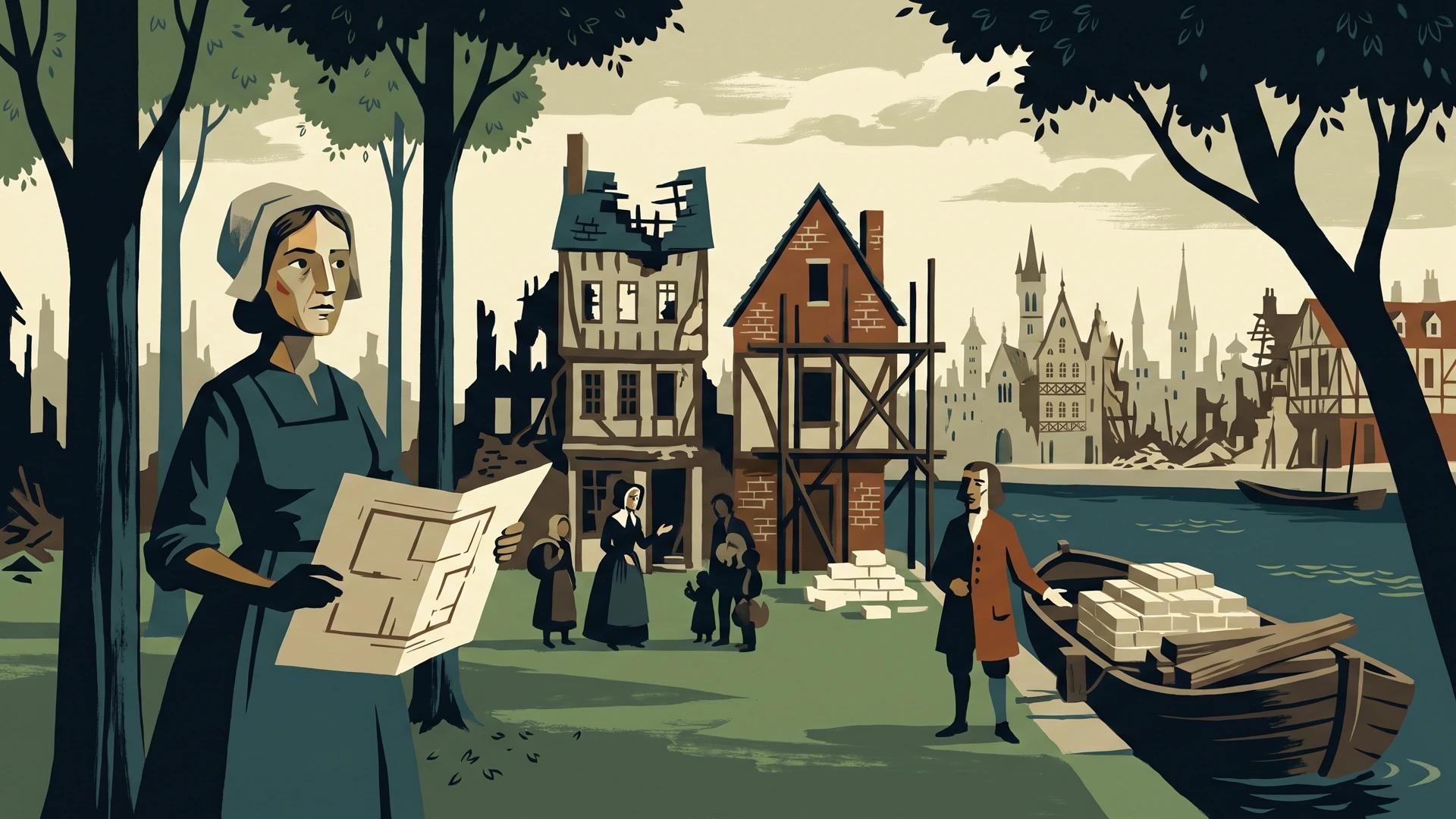
London 1667: Rebuilding from the Ashes
Rebuild a city, earn your place, decide who can afford to stay.
Personajes
Mapa del mundo
Descripción del mundo
The restored monarchy and the City negotiate reconstruction. Livery companies defend access to their trades, while river commerce funds supplies. Property rights outlive the houses they once described, and displaced families wait to return. Brick and stone gradually replace timber. The people and businesses are fictional within this historical setting. Outlying board regions represent countryside, markets and sources of materials; their contemporary buildings do not depict London in 1667.
Premisa
London, March 1667. The Great Fire has destroyed the heart of the City. Behind every plot awaiting reconstruction stand competing owners, trades, tenants and authorities. The wharves are busy, debts keep growing and the first brick houses rise from the ashes. Craftspeople, merchants and neighbourhood organisers can prosper together, clash over rents or build a different future for their street.
Reglas de simulación
REBUILDING. District condition progresses from Ruined to Under construction to Working to Prosperous. A small building project requires rights to its site, a responsible craftsperson and 20 pounds actually paid from someone's Funds for materials. Four weeks of supplied labour can open a small workshop or house. A cell represents several streets: one successful building cannot restore an entire district. Several lasting businesses or a funded collective programme are needed. Prosperity attracts residents and orders, but also raises rents and creates conflict. ACCOUNTS. Funds belong to each actor, never to an abstract player. A small operating business earns about 6 pounds gross per week and spends 4 on wages, rent and supplies. Adjust this scale once for an established larger operation and keep it consistent. A week without customers earns no gross income but retains fixed obligations. Charge only for elapsed time, never once per message. Payments between actors are transfers; external expenses have named recipients. With no funds, unfunded investment is impossible, but paid work, an advance or the sale of a right remain available. Do not hide negative debt inside this reserve. STANDING. Completing a first contract or honouring a difficult obligation raises Standing by one step; an unpaid abandonment or proven fraud lowers it by one. Repeating tiny favours cannot raise it indefinitely. Established standing allows negotiation of an advance up to 20 pounds from a willing lender; Trusted up to 50. Persist the amount, lender, due date and consideration. An advance creates a dependency and cannot renew before repayment. A partner may refuse regardless of standing when their interests conflict. AUTHORITY. Local authority is distinct from property and Standing. A street changes authority after an accepted formal delegation, a durable rival institution or an effective replacement of its agents. Buying a house does not transfer the City. Parishes provide relief and local networks, the City licences and arbitration, and the Crown orders and concessions. No individual automatically commands their entire affiliation. CONFLICT AND TIME. Compare the rights claimed, resources committed and partners actually present. An owner can block construction but needs future rents. A craftsperson can refuse a price but lose the order. Residents can organise but must fund their return. Settlements reshape these interests for the following weeks and years. Construction, arrears and rivalries continue during absences. Reconstruction is not a victory meter: new trades, alliances, districts and generations can carry the simulation forward.