Spanish Civil War (V1)
The day before of the star of spanish civil war
- 426
- Partidas
- 5811
- Turnos
- 8
- Votos
Personajes
Mapa del mundo
Descripción del mundo
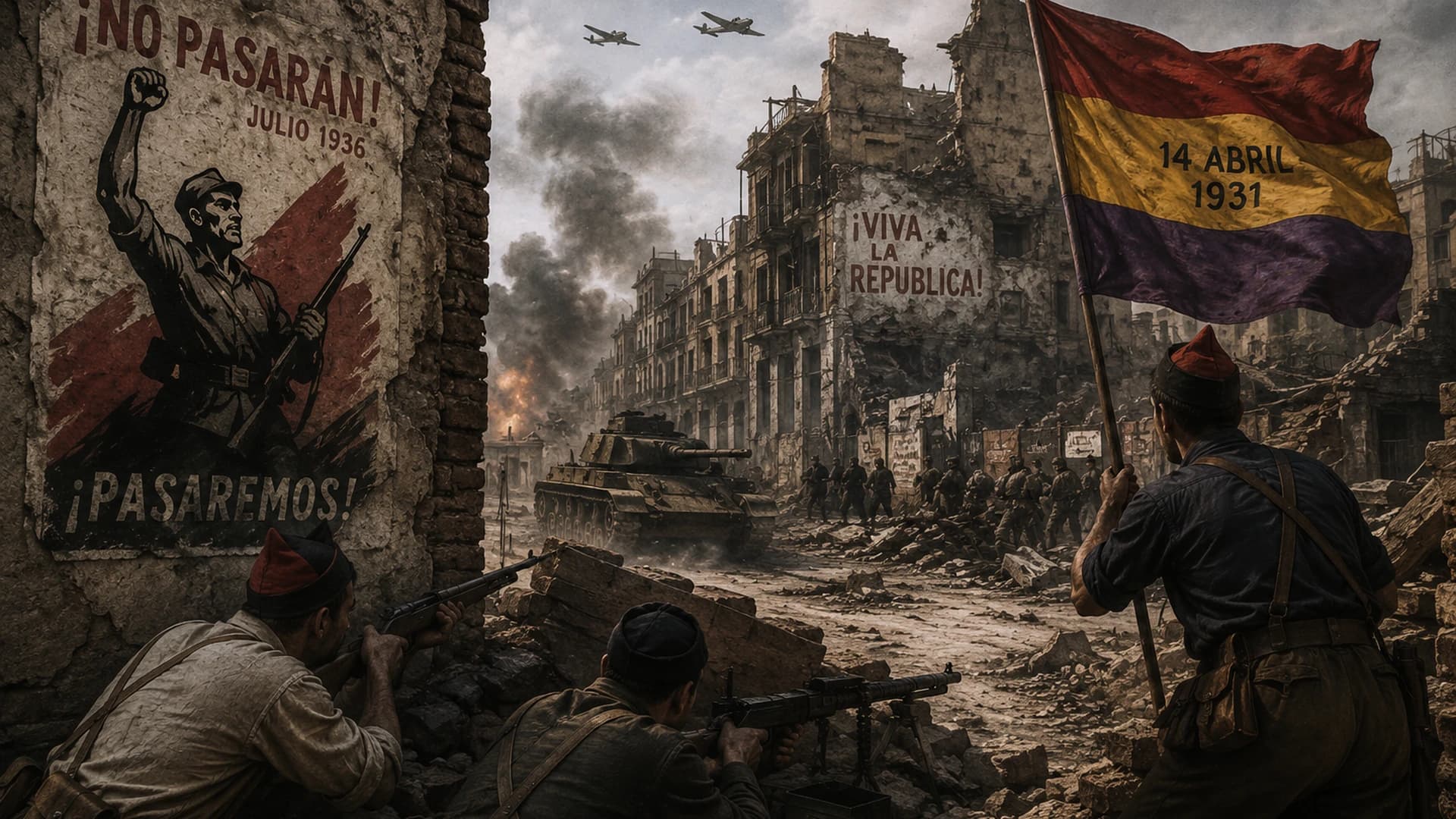
La Segunda República española atraviesa meses de fuerte polarización desde el triunfo electoral del Frente Popular en febrero. El Ejército está profundamente dividido: una parte de sus mandos prepara en secreto un golpe contra el Gobierno, mientras otros oficiales permanecen leales a las instituciones republicanas. En el campo andaluz y extremeño persisten conflictos agrarios sin resolver; en Asturias y León perdura la memoria de la represión de la revolución de 1934; en Navarra, los círculos carlistas y falangistas se han movilizado silenciosamente en apoyo de la conspiración. Cataluña y el País Vasco mantienen gobiernos autonómicos propios con agendas distintas a las de Madrid. El Protectorado Español de Marruecos alberga las unidades más combativas del Ejército, el Tercio y las fuerzas de Regulares, bajo mando de oficiales africanistas. Portugal, gobernado por el régimen de Salazar, ya ofrece refugio y contactos a generales conspiradores. Italia y Alemania, bajo regímenes fascistas, observan con simpatía cualquier posible golpe contra un gobierno de izquierdas. Francia, gobernada por el Frente Popular de Léon Blum, es ideológicamente afín a la República española pero permanece cautelosa. Los círculos antifascistas del extranjero, sobre todo en París, siguen con inquietud las noticias que llegan de España, aunque aún no existe ninguna organización de voluntarios formalmente constituida. The Second Spanish Republic has been experiencing months of intense polarization since the Popular Front's electoral victory in February. The Army is deeply divided: some of its commanders are secretly plotting a coup against the government, while other officers remain loyal to republican institutions. Unresolved agrarian conflicts persist in the Andalusian and Extremaduran countryside; the memory of the repression following the 1934 revolution lingers in Asturias and León; and in Navarre, Carlist and Falangist circles have quietly mobilized in support of the conspiracy. Catalonia and the Basque Country maintain their own autonomous governments with agendas distinct from Madrid's. The Spanish Protectorate in Morocco is home to the Army's most battle-hardened units—the *Tercio* and the *Regulares* forces—commanded by *africanista* officers. Portugal, ruled by Salazar's regime, is already offering refuge and contacts to plotting generals. Italy and Germany, under fascist regimes, view any potential coup against a leftist government with sympathy. France, governed by Léon Blum's Popular Front, is ideologically aligned with the Spanish Republic but remains cautious. Anti-fascist circles abroad—particularly in Paris—follow news arriving from Spain with concern, although no formally organized volunteer groups exist yet.