Guerra de Corea
Guerra de Corea de 1950
- 20
- Partidas
- 298
- Turnos
- 5
- Votos
Personajes
Mapa del mundo
Descripción del mundo
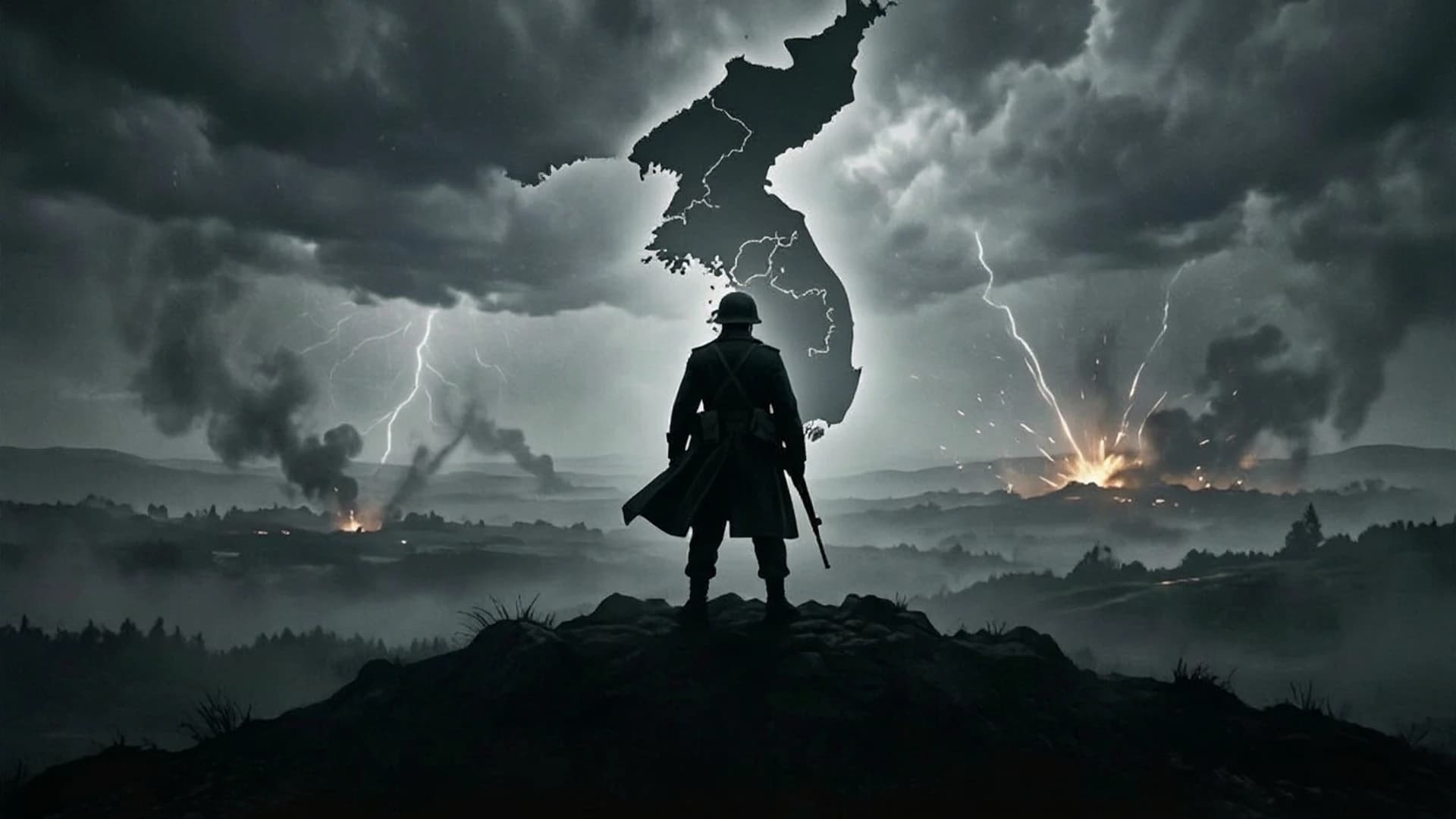
La Guerra de Corea (1950-1953) fue el primer gran conflicto armado de la Guerra Fría, librado entre la República Popular Democrática de Corea (Corea del Norte, respaldada por la Unión Soviética y más tarde por la República Popular China) y la República de Corea (Corea del Sur, apoyada por la coalición de las Naciones Unidas liderada por Estados Unidos). La guerra comenzó el 25 de junio de 1950, cuando las fuerzas norcoreanas cruzaron el paralelo 38, con el objetivo de unificar la península bajo un régimen comunista. En cuestión de semanas, habían empujado a las tropas surcoreanas y estadounidenses hasta el extremo sureste de la península, el Perímetro de Busan. En septiembre, el audaz desembarco anfibio del general MacArthur en Incheon cambió el curso de la guerra, lo que condujo a una contraofensiva de la ONU que capturó Pionyang y se acercó al río Yalu. China intervino entonces en masa, haciendo retroceder a las fuerzas de la ONU por debajo del paralelo 38. Tras dos años de brutal guerra de posiciones, se firmó un armisticio el 27 de julio de 1953, dejando la península dividida por una zona desmilitarizada que aún existe hoy. En este escenario, el jugador puede asumir el papel de cualquier facción o incluso de un actor neutral (por ejemplo, un empresario japonés, un asesor soviético o un general estadounidense) e influir en el curso de la guerra a través de decisiones estratégicas, asignación de recursos y maniobras diplomáticas. El mundo está fielmente recreado con más de 340 celdas hexagonales que cubren la península de Corea, partes de China, Japón y el Lejano Oriente ruso. Las ciudades, puertos, aeródromos y líneas defensivas están representados como puntos de referencia. Los principales ejércitos, alas aéreas, flotas navales y líderes históricos están presentes como entidades, cada uno con estadísticas de combate y habilidades especiales. La cronología es dinámica: si el jugador no interviene, la guerra sigue su trayectoria histórica: ofensiva norcoreana, desembarco de Incheon, intervención china y estancamiento final. Sin embargo, cada acción (o inacción) altera los modificadores globales, lo que puede crear resultados alternativos: una Corea unificada bajo régimen comunista, una península democrática, una prolongada guerra de desgaste o incluso un armisticio temprano.
Premisa
Controlas uno de los bandos en la Guerra de Corea, tomando decisiones estratégicas. Hay dos alianzas disponibles: el Bloque Soviético (Corea del Norte, China, URSS) y el Bloque de la OTAN (Corea del Sur, EE. UU./ONU, Japón como base de retaguardia). El Norte aspira a unificar la península, el Sur a preservar su independencia.
Reglas de simulación
The game simulates the Korean War at a strategic level, combining turn-based movement, combat resolution, and dynamic global modifiers. Below are the core rules: 1. **Control and Ownership:** Each hex cell is controlled by one of seven factions: North Korea (1), South Korea (2), UN (reserved, 3), China (4), USSR (5), Japan (6), or Neutral (0, used only for waters and uninvolved areas). Initial control follows historical borders as of 25 June 1950: all cells north of the 38th parallel belong to North Korea; all cells south belong to South Korea; Japan, China, and Soviet territories are assigned to their respective owners. 2. **Territorial Expansion (Front-Line Rule):** A cell can be captured only if it is adjacent (shares an edge) to a cell already controlled by the attacking side. This ensures that offensives create a continuous, cohesive front rather than isolated "islands" of occupation. Armies must advance methodically, filling gaps behind them to maintain supply lines and avoid being outflanked. To achieve a broad front, players should deploy multiple armies side by side, each advancing on a parallel axis, so that they cover adjacent cells simultaneously. This rule mimics real-world logistics and prevents the chaotic "red splotch" effect. 3. **Combat and Movement:** Entities (armies, divisions, air wings, naval fleets) have stats: Strength (combat power), Morale (fighting spirit), Supply Status (logistics), Experience (battle hardening), and special abilities (e.g., artillery, airstrike, amphibious). Movement speed determines how many cells a unit can traverse per turn. Combat resolution compares Strength modified by terrain, fortifications, entrenchment, air superiority, and sea control. Units can fortify positions, increasing entrenchment over time. 4. **Global Modifiers (Story Stats):** Ten interconnected global stats shape the entire war. They can be influenced by player decisions and shift the balance of power: - **Global Tension** (0–100): Escalation risk; high tension may trigger superpower intervention or nuclear threats. - **North/South Morale** (0–100): Affects all units of that side; low morale leads to retreats and lower combat efficiency. - **North/South Supply** (0–100): Determines ammunition, fuel, and food availability; low supply drastically reduces offensive capability. - **Air Superiority** (positive = UN/ US advantage, negative = North/Soviet advantage): Gives bonuses to airstrikes and reconnaissance; protects own troops from enemy air. - **Sea Control** (positive = UN/ US advantage, negative = North/Soviet advantage): Enables amphibious landings, protects supply convoys, and allows naval bombardment. - **Guerrilla Activity** (0–100): Partisan warfare behind enemy lines; high activity disrupts supply and lowers morale of occupying forces. - **Diplomatic Pressure** (0–100): Mounting international pressure for ceasefire; high values may trigger an armistice event. - **Winter Effects** (0–100): Seasonal modifier that slows movement and reduces combat effectiveness; higher in winter months. 5. **Player Agency:** The player can take various actions depending on their chosen faction or role: - Military commanders can order offensives, retreats, reinforce units, build fortifications, or conduct amphibious assaults. - Political leaders can allocate resources (boost supply), launch propaganda (boost morale), or negotiate (modify diplomatic pressure). - Neutral actors (e.g., Japan) can offer logistical support to either side, trade, or even secretly fund partisan groups, affecting global stats without direct combat. - To create a wide, efficient front, players should order multiple adjacent armies to advance simultaneously, exploiting the adjacency rule to fill gaps and prevent enemy counter-penetration. 6. **Historical Events and Triggers:** Although the scenario does not include hard-coded event chains, the global modifiers are designed to simulate historical milestones if the player remains passive. For example: - If **South Supply** and **South Morale** remain high, the game can simulate the Incheon landing by allowing amphibious operations. - If **North Supply** drops below 30, Chinese intervention becomes more likely (simulated by raising China-aligned forces' stats). - When **Diplomatic Pressure** and **Global Tension** reach certain thresholds, an armistice event may be triggered, ending the war. 7. **Victory Conditions:** There are no fixed victory conditions – the scenario is open-ended. However, plausible goals include: - Unifying the peninsula under your side's control. - Achieving a favourable armistice. - Preventing Chinese or Soviet intervention. - Prolonging the war to exhaust the opponent. 8. **Landmarks and Strategic Points:** Cities, ports, airfields, and defensive lines provide bonuses. Capturing or controlling them gives advantages in supply, fortification, and air/naval operations. The 38th Parallel itself is a landmark that, if crossed, triggers changes in global modifiers. All rules interact dynamically, allowing for emergent storytelling and strategic depth. The game remembers the date and can progress in real-time, with seasonal changes affecting winter effects. Player actions are recorded and influence the final outcome, making each playthrough unique.