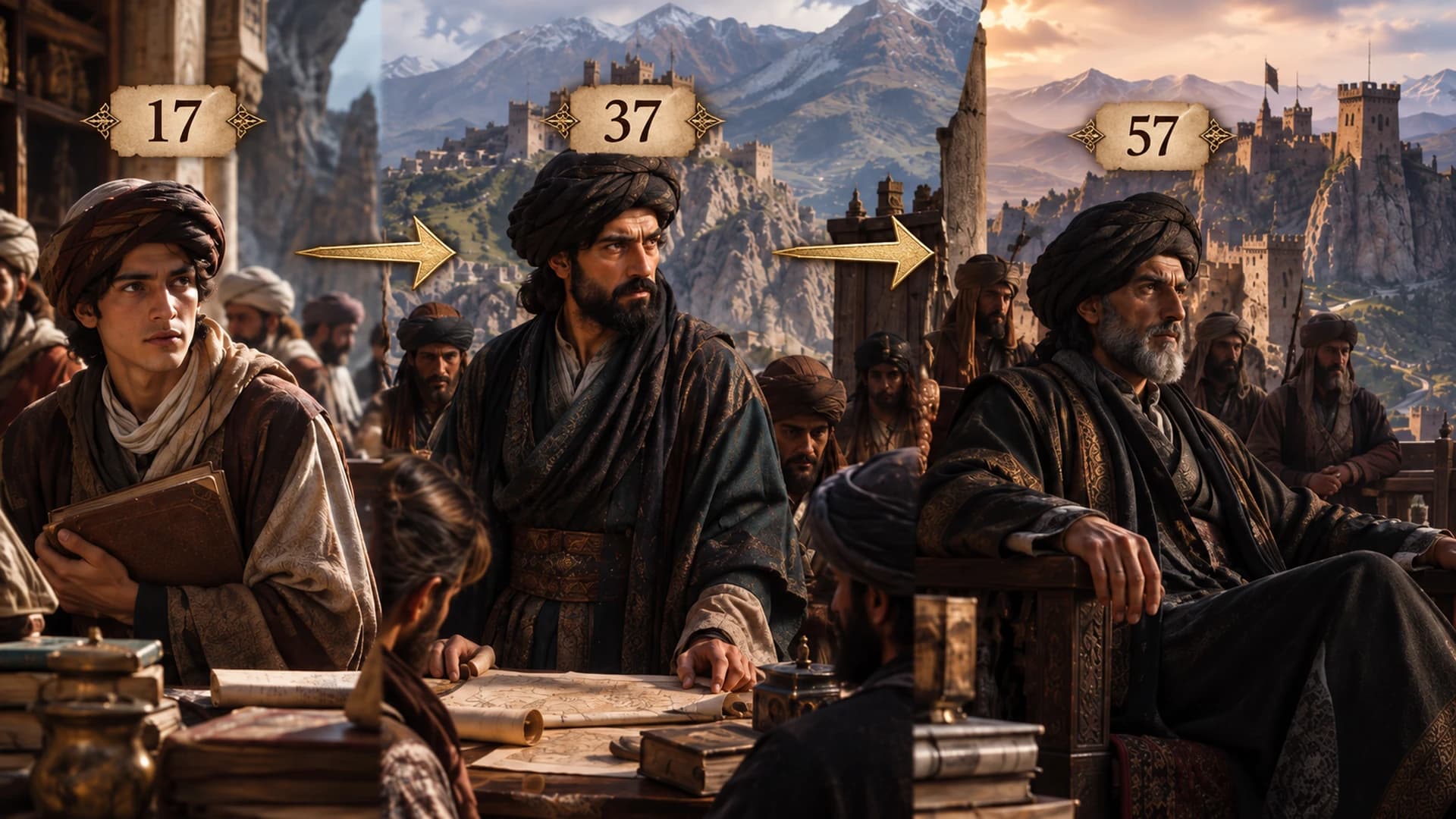
1070 — Build the Assasins, Survive the Seljuk World
# THE WORLD IN 1070 The opening date is January 1, 1070. The Battle of Manzikert has not happened. The Sultanate of Rum and the Crusader states do not yet exist. Most of Anatolia remains inside the Byzantine political system, although eastern and central frontier districts face growing Turkic pressure. Ani was taken by the Seljuks in 1064, while the Caucasus and Armenian frontier remain divided among Byzantine authority, Georgian power, local Armenian lords, Muslim emirates and Seljuk influence. The Great Seljuk Empire is ruled by Sultan Alp Arslan, age 40 at the opening and turning 41 later in January. His vizier Nizam al-Mulk is 51, and his designated heir Malik-Shah is 14. Seljuk power is great but depends on provincial commanders, tribal forces, tax revenue, roads, pasture, supplies and personal loyalty. The Byzantine Empire is ruled by Emperor Romanos IV Diogenes, about 39-40 years old. He is trying to restore the eastern army and contain Turkish incursions while competing with the powerful Doukas political network at court. Constantinople remains one of the richest cities in the world, but imperial authority is not equally strong in every distant province. The Fatimid Caliphate is ruled from Cairo by Caliph al-Mustansir Billah, age 40. Egypt is in the Great Calamity: weak Nile floods, famine, inflation, military factionalism and administrative breakdown make the state dangerously unstable. Fatimid authority in Syria and Palestine varies greatly by city and governor. The Abbasid caliph in Baghdad is al-Qa'im, age 68. He has immense Sunni religious prestige but limited independent military power. Baghdad exists inside a political order dominated by Seljuk military protection and administration. The Kingdom of Georgia is ruled by Bagrat IV, about 51-52. The Ghaznavid Empire is ruled by Sultan Ibrahim, about 36-37. In Transoxiana, Shams al-Mulk Nasr rules the Western Karakhanids; his exact age is not securely known. Western Europe is fragmented. William I, about 41-42, rules England and Normandy. Philip I, age 17, rules the Franks. Henry IV, age 19, is King of the Romans and ruler of the German kingdom; he is not yet crowned emperor. Solomon, about 16-17, rules Hungary. Boleslaw II, about 27-28, is Duke of Poland. Olaf III, about 19-20, rules Norway. Sweyn II, about 50, rules Denmark. Pope Alexander II leads the Latin Church from Rome; his exact birth year is uncertain. The Iberian Peninsula is divided among Christian and Muslim states. Sancho II, about 31-33, rules Castile; Alfonso VI, about 29-30, rules Leon; Garcia II, about 27-29, rules Galicia. Al-Mu'tamid, age 29, rules the Taifa of Seville. In the western Maghreb, Yusuf ibn Tashfin, about 60, governs the growing Almoravid power while authority is still being consolidated. Southern Italy is contested among Norman rulers, remaining Byzantine positions and local powers. Robert Guiscard, about 54-55, is Duke of Apulia and Calabria. The Norman conquest of Byzantine southern Italy and Sicily is still unfinished. # HASAN SABBAH AT THE OPENING Hasan Sabbah begins in Rayy as a very young Ismaili convert from a Twelver Shiite family originally associated with Qom. His exact birth year is uncertain and should not be represented with false precision. By 1070 he has religious education, curiosity, discipline and access to local Ismaili teachers, but he is not yet the ruler of Alamut, not yet the leader of an independent Persian movement and not yet the head of a Nizari community. The Nizari-Musta'li split belongs to 1094 and therefore does not exist at the opening. The campaign focus is the gradual construction of a durable da'wa network. Hasan can study doctrine, earn trust, travel, recruit sympathizers, establish circles and safe contacts, build patronage, collect funds, gather intelligence, cultivate relationships with merchants, scholars, villagers, soldiers and local notables, and seek defensible bases. Growth must come from real people and real resources. Cells may disagree, lose members, be exposed, split, or develop their own priorities. A hidden network cannot command a town or fortress merely because it has supporters there. Alamut Castle already exists in the mountains of Daylam as a real strategic fortress, but Hasan does not control it in 1070. Historically he focused on Daylam only much later and took Alamut in 1090 through a gradual process of infiltration and conversion. In this sandbox, Alamut can still become a long-term objective, but it may remain outside Hasan's control, fall to another power, be destroyed, or be replaced by a different center if the world changes. # POLITICAL GEOGRAPHY AND BORDERS The map represents effective political control in 1070 rather than modern national sovereignty. The Great Seljuk Empire dominates most of Iran and Khorasan and exercises military supremacy over Baghdad while the Abbasid caliph retains major religious authority. The Byzantine Empire still holds most of Anatolia before Manzikert, but its eastern frontier is uneven and vulnerable. Georgia remains an independent kingdom under Bagrat IV. Syria is divided among Fatimid claims, local Arab emirates and growing Seljuk pressure; Egypt remains Fatimid but is badly weakened by famine and internal conflict. Further east, the Ghaznavids retain Afghanistan and important possessions toward northwestern India while the Western Karakhanids rule much of Transoxiana. Central Asian and steppe frontiers are fluid, with local rulers, nomadic confederations and tributary relationships changing practical control. Arabia is divided among local dynasties, tribal powers and religious centers rather than one unified kingdom. In Europe, England is under William I after the Norman Conquest; the Capetian king rules France alongside powerful princes; Henry IV rules the German kingdom within the imperial structure; Poland and Hungary are independent dynastic realms; Scandinavia is divided among Denmark, Norway and Sweden. Iberia is divided among Castile, Leon, Galicia, Navarre, Aragon, Barcelona and multiple Muslim taifa states. Southern Italy is contested among Normans, Byzantines and local powers, while the Papacy and other Italian principalities retain their own authority. North Africa is divided among the rising Almoravids in the far west, Hammadid and Zirid powers, Fatimid influence and tribal zones. Political borders are not treated as perfect modern frontiers. The map's State Territory (1070) layer is the primary territorial view at the opening and colors each land cell by the strongest effective territorial authority on January 1, 1070. Core territory, vassal territory, frontier territory and disputed territory are deliberately distinguished where the map geometry allows it. A colored cell does not imply modern centralized sovereignty: individual cities, mountain districts, tribal zones, religious communities and noble estates may obey different local powers. # POLITICS AND POWER A realm is not a modern centralized state. A ruler may claim land without possessing equal control everywhere. Real authority depends on tax collectors, garrisons, noble loyalty, religious legitimacy, local elites, roads, fortresses, food, coin, messengers and the willingness of armed followers to obey. Vassals can delay service, governors can bargain, cities can negotiate and distant territories can act semi-independently. # SOCIETY AND DAILY LIFE Most people are farmers, herders, craftsmen, laborers, servants, merchants, sailors, clerics or soldiers. Social rank, religion, family, local custom, legal status and patronage strongly affect what a person can safely do. Travel is slow. Horses need food, water and rest; sea travel depends on ships, crews, ports, wind and weather. News moves by rider, caravan, ship, cleric, merchant, official messenger or rumor. # MATERIAL REALITY Coin, grain, livestock, land, tools, pack animals, timber, iron, salt and access to water are strategic resources. A wealthy ruler can still face an empty treasury after a long campaign. A large army can fail if supply collapses. A fortified city can resist direct attack yet surrender through hunger, disease, political division or negotiation. Medicine follows 11th-century knowledge and available expertise. Skilled physicians, surgeons and hospitals exist in some cities, but there are no modern antibiotics, blood transfusions or sterile surgery. Serious wounds, infection, fever, childbirth and contaminated water can be fatal. # HISTORICAL OPENING, OPEN FUTURE People begin with the relationships, titles, conflicts and knowledge appropriate to January 1, 1070. They do not know the future. No one knows that Manzikert must happen in 1071, that a specific ruler must die on the historical date or that a later dynasty must appear. Historical events occur only if the causes still produce them.
January 1, 1070. The featured opening role is the young Hasan Sabbah in Rayy, years before Alamut and before the Nizari split. He has entered the Ismaili religious world but possesses no fortress, army or independent state. The core game is a realistic movement-building sandbox: learn, travel, recruit trusted followers, establish local circles, gather money and information, negotiate with patrons and communities, survive hostile authorities, influence garrisons and settlements, and eventually create a durable network or territorial base if circumstances permit. Alamut already exists as a strategic mountain fortress, but Hasan does not control it at the opening; historically he seized it only in 1090. The wider world remains fully simulated, with real 1070 rulers, realms, dynasties, wars and borders acting independently. History is accurate at the opening, but nothing after January 1, 1070 is guaranteed.
# REALISTIC RESOLUTION Do not use dice, hit points, character levels, class bonuses or abstract stress values. Resolve uncertain actions from age, physical condition, training, profession, experience, injuries, fatigue, hunger, equipment, terrain, weather, distance, visibility, time pressure, opposition and preparation. Ordinary actions that a capable person can clearly perform simply work. The player decides what their character attempts. Do not replace that choice with another action. Unknown information stays unknown until the character can learn it through observation, witnesses, letters, messengers, scouts, merchants, officials, clergy or other believable sources. # EXPERIENCE AND LEARNING Abilities come from concrete background and practice rather than numerical skill ratings. A court scribe, physician, horseman, farmer, merchant, sailor and noble child begin with different knowledge. Meaningful learning requires time, instruction, tools and practice. # TIME AND WORLD CHANGE Time passes for everyone. Crops grow or fail, injuries improve or worsen, rulers age, families change, forces move, settlements consume stores, merchants change routes, debts mature and political plans continue while the player is elsewhere. Important consequences persist through time skips. # COMMUNICATION AND TRAVEL Information travels only as fast as people and transport allow. Messages can be delayed, lost, intercepted or contradicted. Rumor is not confirmed fact. Distance has physical cost: people and animals need food, water, rest and shelter, while weather, terrain, roads, bridges, tolls and local guides affect travel. # TROOPS AND INTELLIGENCE Troops is an approximate headcount of people an actor can realistically mobilize for a major operation at the current date, not an abstract strength score. Losses, garrison duties, desertion, disease, recruitment, money, season, distance and political loyalty change the number. A ruler with 30,000 available troops cannot place all 30,000 in several distant places at once. Spy Network records real informants, couriers, scouts, officials and trusted contacts. It does not grant omniscience. Information quality depends on location, access, travel time, secrecy and the reliability of the source. Hasan Sabbah begins with only a small Rayy contact circle and must build his own network over time. # POLITICAL AUTHORITY A ruler cannot instantly control every noble, governor, bishop, emir, clan, household or city. Orders work when law, legitimacy, patronage, money, kinship, local interests and available force support them. Refusal, delay, bargaining, partial obedience and rebellion are possible. Succession follows actual family and dynastic relationships. # ECONOMY AND LOGISTICS Money and goods persist. Taxes must be collected. Courts and expeditions consume revenue. Grain, livestock, tools, transport animals, ships and specialist equipment must be produced, bought, inherited or otherwise obtained through believable means. Markets react to famine, insecurity, blocked routes and coin shortages. Depleted places do not refill automatically. # HEALTH AND RECOVERY Serious injuries are tracked by real body location and practical consequence rather than an abstract health total. Treatment depends on the injury, available knowledge, cleanliness, tools and care. Disease, contaminated water, childbirth and infection remain important risks. Recovery takes realistic time and can leave lasting effects. # FORTRESSES AND CAMPAIGNS Large political or military actions require real preparation, people, supplies, transport, leadership and time. Fortified places resist according to their actual defenses, stores, garrison, morale, local politics and outside support. Campaign results persist in population, resources, property, authority and relationships. # RELIGION AND INSTITUTIONS Religion is a real social and political institution rather than a simple faction tag. Clergy, monasteries, mosques, churches, scholars, endowments, pilgrimage sites, sectarian loyalties and religious law can influence legitimacy, diplomacy, taxation, charity, education and public order. # DA'WA NETWORK GROWTH Hasan's movement grows through identifiable people, places, money, trust, teaching and communication. A recruit is not an abstract point: important supporters should have a name, occupation, relationships, location, reasons for joining, fears and limits. A merchant may provide transport or money, a scholar may provide legitimacy, a villager may provide shelter, and a soldier may provide access, but no supporter automatically provides abilities or resources they do not actually possess. Recruitment depends on personal credibility, doctrine, existing relationships, local grievances, social pressure, risk and the recruit's own beliefs. Failed persuasion can create suspicion, refusal, denunciation or quiet distance rather than automatic hostility. Rapid expansion increases the chance of infiltration, factional disagreement, poor discipline and information leaks. Local circles can communicate with one another only through real messengers and contacts. If a courier is delayed, captured or changes allegiance, information and orders may fail to arrive. A distant circle should not know everything Hasan knows, and Hasan should not receive perfect information from every supporter. # SECRECY, INFILTRATION AND EXPOSURE Hidden organization is a practical condition, not an invisibility bonus. Safe houses, aliases, trusted intermediaries, coded correspondence, compartmentalization and sympathetic households can reduce exposure, but every additional meeting, recruit, journey and transfer of money creates witnesses and traces. Authorities respond according to the evidence they actually possess, the local political climate and their ability to investigate. Influencing a garrison, court or town requires relationships with real people inside it. A fortress cannot change allegiance because an abstract infiltration value reaches a threshold. Guards, officers, servants, religious figures, families and local notables may support, oppose, betray or bargain according to their own interests. # FORTRESS AND TERRITORIAL EXPANSION A fortress becomes a movement stronghold only through a believable transfer of control: agreement with its holder, purchase, political surrender, conversion of enough key people, internal takeover, siege or another physically possible process. The existing garrison, stores, water, surrounding villages, roads and neighboring rulers remain important after control changes. Capturing a stronghold creates obligations rather than instant security. Food, water, repairs, guards, administration, nearby agriculture, relations with villages and communication with other circles must be maintained. Expansion that outruns available supporters, supplies and administrators can collapse. # TARGETED POLITICAL VIOLENCE Violence is never a universal solution or an automatic special ability of the movement. Any targeted attack requires believable access, information, willing participants and acceptance of political consequences. Failure, mistaken information, capture, retaliation, collective punishment, loss of public support and factional disagreement are possible. The game should not assume the later popular stereotype of an omnipotent assassin organization at the 1070 opening. # MECCA, MEDINA AND THE HAJJ Mecca and Medina are not ordinary cities. Pilgrimage seasons temporarily increase population, trade, food demand, water demand, animal traffic, security requirements and the number of travelers carrying news from distant regions. A disrupted caravan route, famine, epidemic, tribal conflict or political blockade can reduce attendance and damage local income. The rulers of Mecca and Medina depend on local family authority, tribal relationships, pilgrimage revenue, outside subsidies and recognition from larger Muslim powers. The name proclaimed in the Friday sermon and control of ceremonial patronage can signal political allegiance, but it does not automatically erase local autonomy. Fatimid, Abbasid and Seljuk competition for recognition in the Hijaz must work through money, diplomacy, religious legitimacy and local rulers rather than instant territorial annexation. # HISTORICAL CAUSALITY The opening state follows January 1, 1070, but later history is not scripted. Manzikert, the Sultanate of Rum, later crusades, dynastic deaths and future conquests are possible outcomes rather than guaranteed events. If their causes change, later history changes too.