Guerre de Corée
Guerre de Corée 1950
- 20
- Parties
- 298
- Tours
- 5
- Upvotes
Personnages
Carte du monde
Description du monde
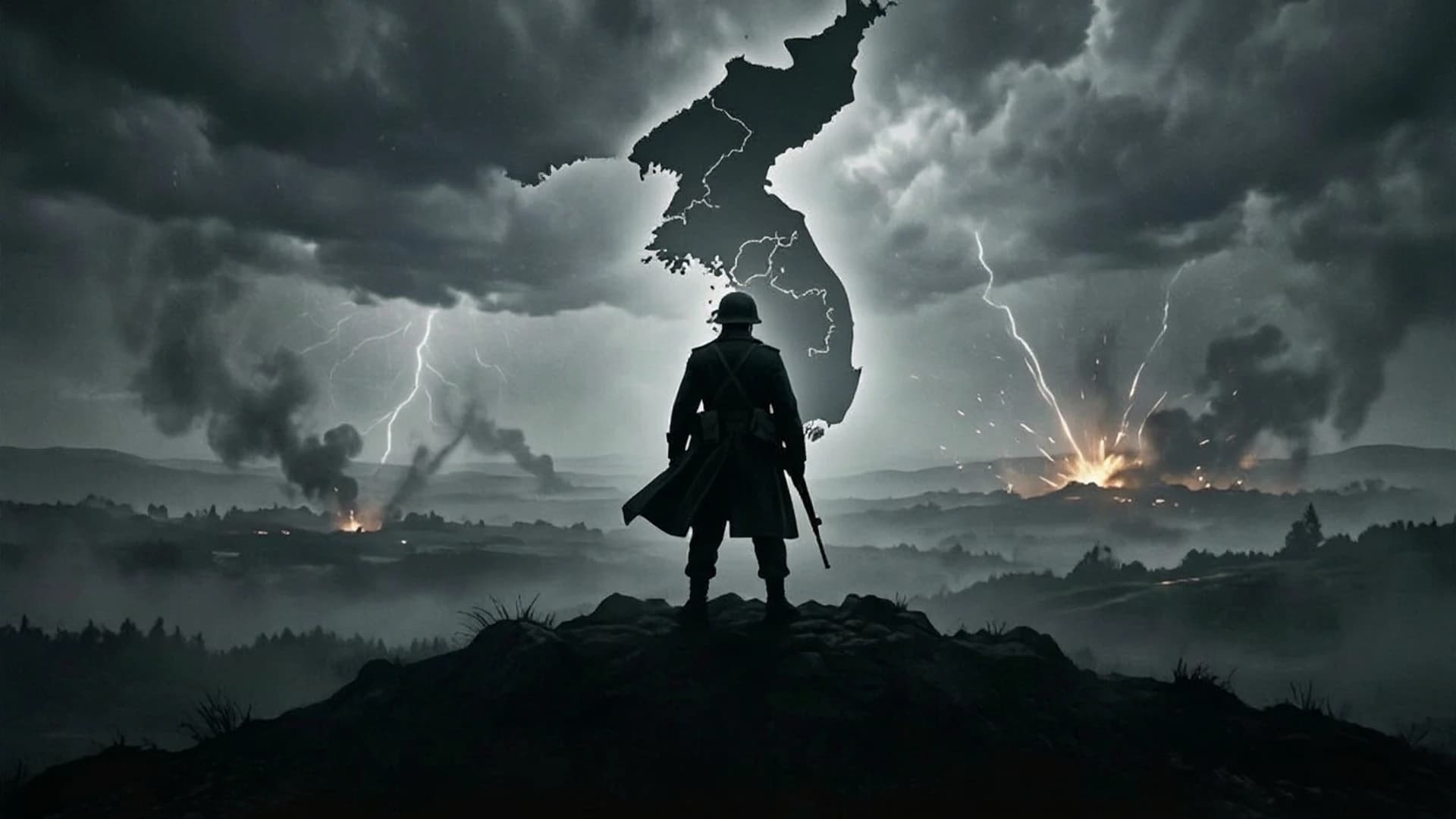
La guerre de Corée (1950–1953) fut le premier conflit armé majeur de la guerre froide, opposant la République populaire démocratique de Corée (Corée du Nord, soutenue par l'Union soviétique et plus tard par la République populaire de Chine) à la République de Corée (Corée du Sud, soutenue par la coalition des Nations unies dirigée par les États-Unis). La guerre débuta le 25 juin 1950 lorsque les forces nord-coréennes franchirent le 38e parallèle, visant à unifier la péninsule sous un régime communiste. En quelques semaines, elles avaient repoussé les troupes sud-coréennes et américaines jusqu'à la pointe sud-est de la péninsule, le périmètre de Busan. En septembre, le débarquement amphibie audacieux du général MacArthur à Incheon renversa la situation, menant à une contre-offensive de l'ONU qui captura Pyongyang et approcha le fleuve Yalu. La Chine intervint alors en masse, repoussant les forces de l'ONU en deçà du 38e parallèle. Après deux ans de guerre statique brutale, un armistice fut signé le 27 juillet 1953, laissant la péninsule divisée par une zone démilitarisée qui existe encore aujourd'hui. Dans ce scénario, le joueur peut incarner n'importe quelle faction ou même un acteur neutre (par exemple, un homme d'affaires japonais, un conseiller soviétique ou un général américain) et influencer le cours de la guerre par des décisions stratégiques, l'allocation des ressources et des manœuvres diplomatiques. Le monde est fidèlement recréé avec plus de 340 cellules hexagonales couvrant la péninsule coréenne, certaines parties de la Chine, du Japon et de l'Extrême-Orient russe. Les villes, les ports, les aérodromes et les lignes défensives sont représentés comme des points d'intérêt. Les principales armées, escadres aériennes, flottes navales et dirigeants historiques sont présents en tant qu'entités, chacune dotée de statistiques de combat et de capacités spéciales. La chronologie est dynamique : si le joueur n'intervient pas, la guerre suit sa trajectoire historique – offensive nord-coréenne, débarquement d'Incheon, intervention chinoise et impasse finale. Cependant, chaque action (ou inaction) modifie les modificateurs mondiaux, pouvant créer des résultats alternatifs : une Corée unifiée sous régime communiste, une péninsule démocratique, une guerre d'usure prolongée ou même un armistice anticipé.
Prémisse
Vous contrôlez l'un des camps de la guerre de Corée et prenez des décisions stratégiques. Deux alliances sont disponibles : le bloc soviétique (Corée du Nord, Chine, URSS) et le bloc de l'OTAN (Corée du Sud, États-Unis/ONU, Japon comme base arrière). Le Nord cherche à unifier la péninsule, le Sud à préserver son indépendance.
Règles de simulation
The game simulates the Korean War at a strategic level, combining turn-based movement, combat resolution, and dynamic global modifiers. Below are the core rules: 1. **Control and Ownership:** Each hex cell is controlled by one of seven factions: North Korea (1), South Korea (2), UN (reserved, 3), China (4), USSR (5), Japan (6), or Neutral (0, used only for waters and uninvolved areas). Initial control follows historical borders as of 25 June 1950: all cells north of the 38th parallel belong to North Korea; all cells south belong to South Korea; Japan, China, and Soviet territories are assigned to their respective owners. 2. **Territorial Expansion (Front-Line Rule):** A cell can be captured only if it is adjacent (shares an edge) to a cell already controlled by the attacking side. This ensures that offensives create a continuous, cohesive front rather than isolated "islands" of occupation. Armies must advance methodically, filling gaps behind them to maintain supply lines and avoid being outflanked. To achieve a broad front, players should deploy multiple armies side by side, each advancing on a parallel axis, so that they cover adjacent cells simultaneously. This rule mimics real-world logistics and prevents the chaotic "red splotch" effect. 3. **Combat and Movement:** Entities (armies, divisions, air wings, naval fleets) have stats: Strength (combat power), Morale (fighting spirit), Supply Status (logistics), Experience (battle hardening), and special abilities (e.g., artillery, airstrike, amphibious). Movement speed determines how many cells a unit can traverse per turn. Combat resolution compares Strength modified by terrain, fortifications, entrenchment, air superiority, and sea control. Units can fortify positions, increasing entrenchment over time. 4. **Global Modifiers (Story Stats):** Ten interconnected global stats shape the entire war. They can be influenced by player decisions and shift the balance of power: - **Global Tension** (0–100): Escalation risk; high tension may trigger superpower intervention or nuclear threats. - **North/South Morale** (0–100): Affects all units of that side; low morale leads to retreats and lower combat efficiency. - **North/South Supply** (0–100): Determines ammunition, fuel, and food availability; low supply drastically reduces offensive capability. - **Air Superiority** (positive = UN/ US advantage, negative = North/Soviet advantage): Gives bonuses to airstrikes and reconnaissance; protects own troops from enemy air. - **Sea Control** (positive = UN/ US advantage, negative = North/Soviet advantage): Enables amphibious landings, protects supply convoys, and allows naval bombardment. - **Guerrilla Activity** (0–100): Partisan warfare behind enemy lines; high activity disrupts supply and lowers morale of occupying forces. - **Diplomatic Pressure** (0–100): Mounting international pressure for ceasefire; high values may trigger an armistice event. - **Winter Effects** (0–100): Seasonal modifier that slows movement and reduces combat effectiveness; higher in winter months. 5. **Player Agency:** The player can take various actions depending on their chosen faction or role: - Military commanders can order offensives, retreats, reinforce units, build fortifications, or conduct amphibious assaults. - Political leaders can allocate resources (boost supply), launch propaganda (boost morale), or negotiate (modify diplomatic pressure). - Neutral actors (e.g., Japan) can offer logistical support to either side, trade, or even secretly fund partisan groups, affecting global stats without direct combat. - To create a wide, efficient front, players should order multiple adjacent armies to advance simultaneously, exploiting the adjacency rule to fill gaps and prevent enemy counter-penetration. 6. **Historical Events and Triggers:** Although the scenario does not include hard-coded event chains, the global modifiers are designed to simulate historical milestones if the player remains passive. For example: - If **South Supply** and **South Morale** remain high, the game can simulate the Incheon landing by allowing amphibious operations. - If **North Supply** drops below 30, Chinese intervention becomes more likely (simulated by raising China-aligned forces' stats). - When **Diplomatic Pressure** and **Global Tension** reach certain thresholds, an armistice event may be triggered, ending the war. 7. **Victory Conditions:** There are no fixed victory conditions – the scenario is open-ended. However, plausible goals include: - Unifying the peninsula under your side's control. - Achieving a favourable armistice. - Preventing Chinese or Soviet intervention. - Prolonging the war to exhaust the opponent. 8. **Landmarks and Strategic Points:** Cities, ports, airfields, and defensive lines provide bonuses. Capturing or controlling them gives advantages in supply, fortification, and air/naval operations. The 38th Parallel itself is a landmark that, if crossed, triggers changes in global modifiers. All rules interact dynamically, allowing for emergent storytelling and strategic depth. The game remembers the date and can progress in real-time, with seasonal changes affecting winter effects. Player actions are recorded and influence the final outcome, making each playthrough unique.