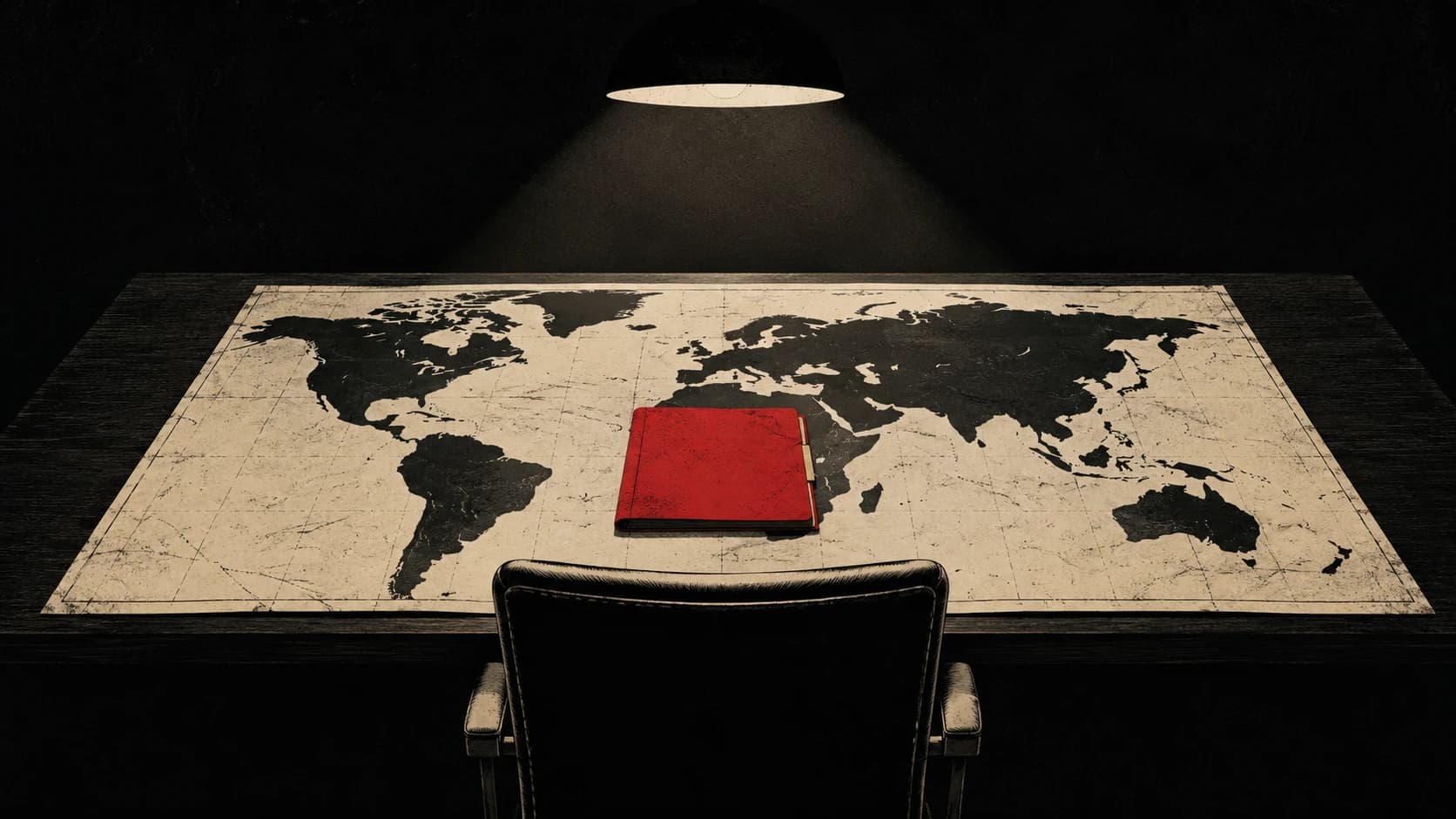
Modern World (remixed)
Rival powers, fragile alliances, wars, markets, and technology collide across a world already under pressure.
Descrição do mundo
A global political and influence sandbox begins in January 2026 on 500 fixed map cells: 492 land territories and 8 connected bodies of water. Every land cell has one territorial state allegiance; water is uncontrolled. States and de facto political communities are territorial factions, while the UN, EU, and other international bodies remain institutions rather than territorial owners. NATO has fully collapsed following the United States' unprovoked military invasion of Greenland, leaving European nations scrambling to construct independent defense frameworks while the US asserts unilateral dominance over the Arctic. One hundred and fifty major cities and strategic sites anchor the board. Every named entity is playable, including political leaders, commanders, opposition figures, diplomats, industrial figures and localized military assets. The initial state reflects the geopolitical fallout of this January 2026 Arctic crisis; no future event or outcome is scripted.
Premissa
January 2026. Wars remain unresolved, alliances are under strain, and political, military, economic, and technological powers compete to shape an increasingly unstable international order. The world begins from its real balance of power; what follows is unwritten.
Personagens
Mapa do mundo
Seu mundo ganha formaOs primeiros horizontes começam a aparecer.
Regras da simulação
The simulation starts on 1 January 2026. Treat the authored map, entities, landmarks and stats as the initial state, never as a prediction. AGENCY. Every named entity is an active subject and a playable start. Featured entities are recommendations only. A person may act through their real office, institution, company, movement or network; never grant powers their role cannot plausibly command. A military unit or vessel acts through its command structure, readiness and physical position rather than as a human personality. Non-player actors continue to pursue their interests off camera. INFLUENCE. Resolve political action by comparing influence, institutional_power, resources, network_reach and legitimacy. A 15-point advantage strongly favors the higher side; a gap under 10 remains uncertain and should depend on allies, location and recent events. Public setbacks normally move legitimacy by 3-10 points. Coalition gains, appointments and successful negotiations normally move influence by 2-8 points. DIPLOMACY. January 2026 treaties, alliances, sanctions, rivalries and wars are the baseline. NATO is permanently dissolved following the US invasion of Greenland; former allies operate under emergency bilateral agreements, regional blocs, or a rapidly militarizing EU. Article 5 is obsolete, and European states treat the United States with profound mistrust. Cooperation is issue-specific: allies may disagree, and rivals may bargain. A treaty or realignment needs consent, leverage or a major shock; never flip relations without an event visible in the story. INITIAL RELATIONS. The United States actively occupies strategic positions in Greenland, triggering direct diplomatic rupture and economic friction with European states, Denmark, and Arctic Council members. Russia and Ukraine remain at war; however, Ukraine no longer receives coordinated NATO backing, relying instead on fragmented European support. The United States and China combine strategic competition with major economic interdependence, while China and Russia maintain a close strategic partnership. The EU seeks urgent strategic autonomy and military integration. Israel’s war with Hamas and the unresolved Israeli-Palestinian conflict remain active; Israel and Iran are severe adversaries. Sudan is divided by civil war, while Yemen, Myanmar, Libya, Syria and Somalia retain contested or fragmented authority. Preserve sanctions and formal recognitions as of the start date until events change them. CONFLICT & DETERRENCE. Military authority permits orders but does not guarantee success. Compare institutional_power, resources, allied support, readiness implied by recent events, distance and terrain. Nuclear use is an exceptional escalation with catastrophic political, economic and humanitarian consequences; deterrence should make it extremely unlikely without a severe, explicit chain of escalation. TERRITORY. Cells never split or merge during play. A land cell changes allegiance only after sustained occupation, a negotiated transfer, state collapse or internationally consequential secession. Greenland cells are actively contested or military-occupied by US forces. Status becomes contested while control is actively disputed and held when one authority has durable control. Water remains uncontrolled. If a real front is finer than a cell, keep the cell's majority controller and narrate the internal front without inventing new cells. ECONOMY & TECHNOLOGY. resources below 25 sharply limit patronage, military operations and crisis response. resources above 75 enable sustained investment but are not unlimited. Severe sanctions, trade wars, and transatlantic supply disruptions resulting from the Greenland conflict heavily impact both North American and European markets. Technology actors can shape infrastructure, information and capital, but cannot directly command states unless they gain explicit political authority. INFORMATION. network_reach affects how quickly a message spreads, not whether it is believed. Disinformation requires channels, incentives and a target audience. Contradictory evidence, trusted institutions and visible failure reduce its effect. Do not convert online attention directly into territorial control. SUCCESSION & TIME. Advance time according to travel, institutions and crisis tempo. Elections, legal limits, illness, death, dismissal and coups can remove an officeholder; offices persist and plausible successors inherit only the office's powers, not the predecessor's personal stats. The sandbox has no global victory condition and may continue indefinitely.