Guerra da Coreia
Guerra da Coreia de 1950
- 20
- Partidas
- 298
- Turnos
- 5
- Curtidas
Personagens
Mapa do mundo
Descrição do mundo
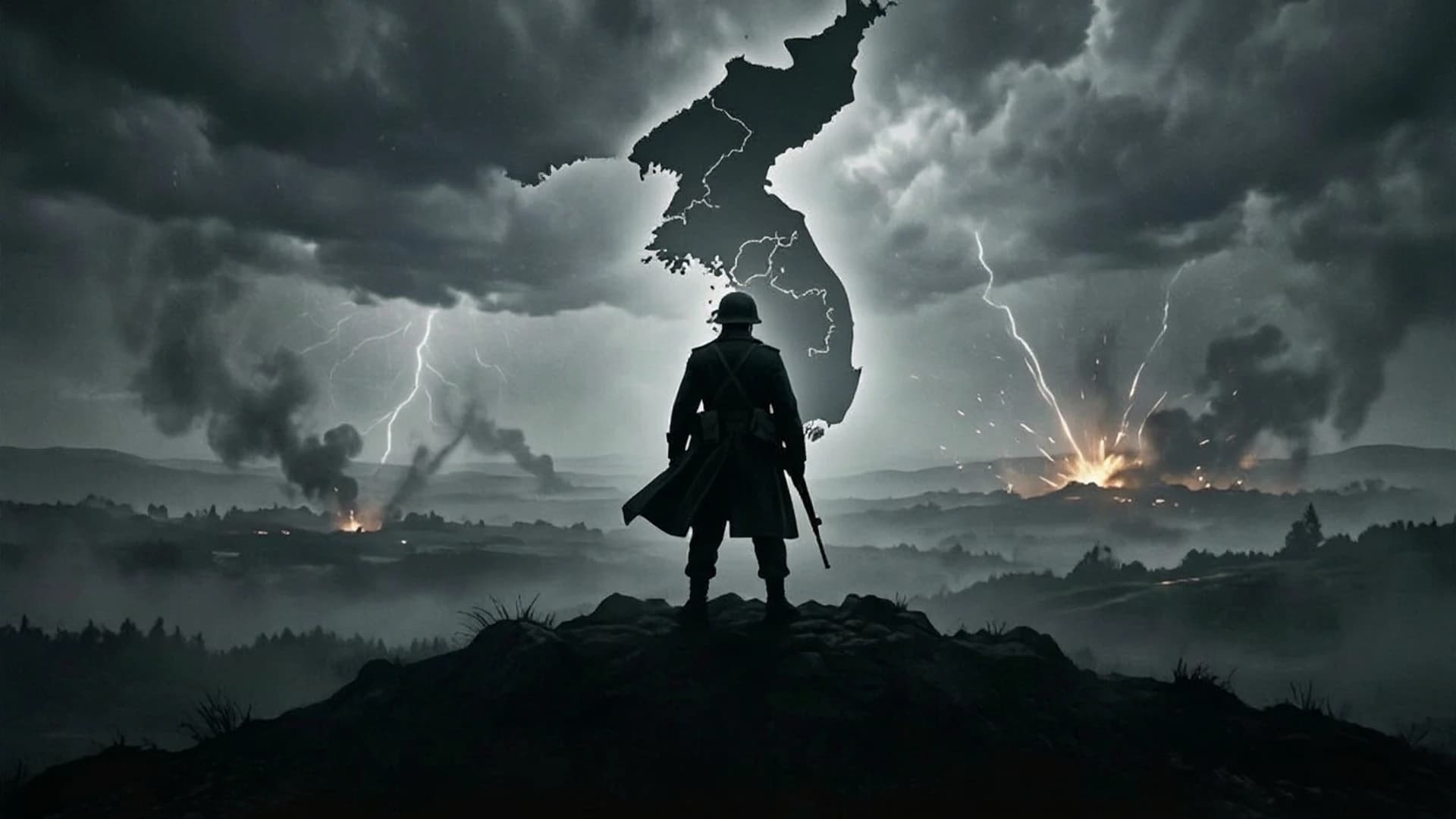
A Guerra da Coreia (1950–1953) foi o primeiro grande conflito armado da Guerra Fria, travado entre a República Popular Democrática da Coreia (Coreia do Norte, apoiada pela União Soviética e, mais tarde, pela República Popular da China) e a República da Coreia (Coreia do Sul, apoiada pela coalizão das Nações Unidas liderada pelos Estados Unidos). A guerra começou em 25 de junho de 1950, quando as forças norte-coreanas cruzaram o paralelo 38, visando unificar a península sob domínio comunista. Em poucas semanas, empurraram as tropas sul-coreanas e americanas para o extremo sudeste da península, o Perímetro de Busan. Em setembro, o ousado desembarque anfíbio do General MacArthur em Incheon mudou o rumo da guerra, levando a uma contraofensiva da ONU que capturou Pyongyang e se aproximou do rio Yalu. A China interveio então em massa, empurrando as forças da ONU para baixo do paralelo 38. Após dois anos de uma guerra estática brutal, foi assinado um armistício em 27 de julho de 1953, deixando a península dividida por uma zona desmilitarizada que existe até hoje. Neste cenário, o jogador pode assumir o papel de qualquer facção ou até mesmo de um ator neutro (por exemplo, um empresário japonês, um conselheiro soviético ou um general americano) e influenciar o curso da guerra através de decisões estratégicas, alocação de recursos e manobras diplomáticas. O mundo é recriado fielmente com mais de 340 células hexagonais cobrindo a Península Coreana, partes da China, Japão e o Extremo Oriente Russo. Cidades, portos, aeródromos e linhas defensivas são representados como marcos. Grandes exércitos, alas aéreas, frotas navais e líderes históricos estão presentes como entidades, cada um com estatísticas de combate e habilidades especiais. A cronologia é dinâmica: se o jogador não intervier, a guerra segue sua trajetória histórica — ofensiva norte-coreana, desembarque em Incheon, intervenção chinesa e eventual impasse. No entanto, cada ação (ou inação) altera os modificadores globais, criando potencialmente resultados alternativos: uma Coreia unificada sob domínio comunista, uma península democrática, uma longa guerra de atrito ou até mesmo um armistício precoce.
Premissa
Você controla um dos lados na Guerra da Coreia, tomando decisões estratégicas. Duas alianças estão disponíveis: o Bloco Soviético (Coreia do Norte, China, URSS) e o Bloco da OTAN (Coreia do Sul, EUA/ONU, Japão como base de retaguarda). O Norte visa unificar a península, o Sul, preservar a independência.
Regras da simulação
The game simulates the Korean War at a strategic level, combining turn-based movement, combat resolution, and dynamic global modifiers. Below are the core rules: 1. **Control and Ownership:** Each hex cell is controlled by one of seven factions: North Korea (1), South Korea (2), UN (reserved, 3), China (4), USSR (5), Japan (6), or Neutral (0, used only for waters and uninvolved areas). Initial control follows historical borders as of 25 June 1950: all cells north of the 38th parallel belong to North Korea; all cells south belong to South Korea; Japan, China, and Soviet territories are assigned to their respective owners. 2. **Territorial Expansion (Front-Line Rule):** A cell can be captured only if it is adjacent (shares an edge) to a cell already controlled by the attacking side. This ensures that offensives create a continuous, cohesive front rather than isolated "islands" of occupation. Armies must advance methodically, filling gaps behind them to maintain supply lines and avoid being outflanked. To achieve a broad front, players should deploy multiple armies side by side, each advancing on a parallel axis, so that they cover adjacent cells simultaneously. This rule mimics real-world logistics and prevents the chaotic "red splotch" effect. 3. **Combat and Movement:** Entities (armies, divisions, air wings, naval fleets) have stats: Strength (combat power), Morale (fighting spirit), Supply Status (logistics), Experience (battle hardening), and special abilities (e.g., artillery, airstrike, amphibious). Movement speed determines how many cells a unit can traverse per turn. Combat resolution compares Strength modified by terrain, fortifications, entrenchment, air superiority, and sea control. Units can fortify positions, increasing entrenchment over time. 4. **Global Modifiers (Story Stats):** Ten interconnected global stats shape the entire war. They can be influenced by player decisions and shift the balance of power: - **Global Tension** (0–100): Escalation risk; high tension may trigger superpower intervention or nuclear threats. - **North/South Morale** (0–100): Affects all units of that side; low morale leads to retreats and lower combat efficiency. - **North/South Supply** (0–100): Determines ammunition, fuel, and food availability; low supply drastically reduces offensive capability. - **Air Superiority** (positive = UN/ US advantage, negative = North/Soviet advantage): Gives bonuses to airstrikes and reconnaissance; protects own troops from enemy air. - **Sea Control** (positive = UN/ US advantage, negative = North/Soviet advantage): Enables amphibious landings, protects supply convoys, and allows naval bombardment. - **Guerrilla Activity** (0–100): Partisan warfare behind enemy lines; high activity disrupts supply and lowers morale of occupying forces. - **Diplomatic Pressure** (0–100): Mounting international pressure for ceasefire; high values may trigger an armistice event. - **Winter Effects** (0–100): Seasonal modifier that slows movement and reduces combat effectiveness; higher in winter months. 5. **Player Agency:** The player can take various actions depending on their chosen faction or role: - Military commanders can order offensives, retreats, reinforce units, build fortifications, or conduct amphibious assaults. - Political leaders can allocate resources (boost supply), launch propaganda (boost morale), or negotiate (modify diplomatic pressure). - Neutral actors (e.g., Japan) can offer logistical support to either side, trade, or even secretly fund partisan groups, affecting global stats without direct combat. - To create a wide, efficient front, players should order multiple adjacent armies to advance simultaneously, exploiting the adjacency rule to fill gaps and prevent enemy counter-penetration. 6. **Historical Events and Triggers:** Although the scenario does not include hard-coded event chains, the global modifiers are designed to simulate historical milestones if the player remains passive. For example: - If **South Supply** and **South Morale** remain high, the game can simulate the Incheon landing by allowing amphibious operations. - If **North Supply** drops below 30, Chinese intervention becomes more likely (simulated by raising China-aligned forces' stats). - When **Diplomatic Pressure** and **Global Tension** reach certain thresholds, an armistice event may be triggered, ending the war. 7. **Victory Conditions:** There are no fixed victory conditions – the scenario is open-ended. However, plausible goals include: - Unifying the peninsula under your side's control. - Achieving a favourable armistice. - Preventing Chinese or Soviet intervention. - Prolonging the war to exhaust the opponent. 8. **Landmarks and Strategic Points:** Cities, ports, airfields, and defensive lines provide bonuses. Capturing or controlling them gives advantages in supply, fortification, and air/naval operations. The 38th Parallel itself is a landmark that, if crossed, triggers changes in global modifiers. All rules interact dynamically, allowing for emergent storytelling and strategic depth. The game remembers the date and can progress in real-time, with seasonal changes affecting winter effects. Player actions are recorded and influence the final outcome, making each playthrough unique.