Корейская война
Корейская война 1950 года
- 20
- Игры
- 298
- Ходы
- 5
- Голоса
Персонажи
Карта мира
Описание мира
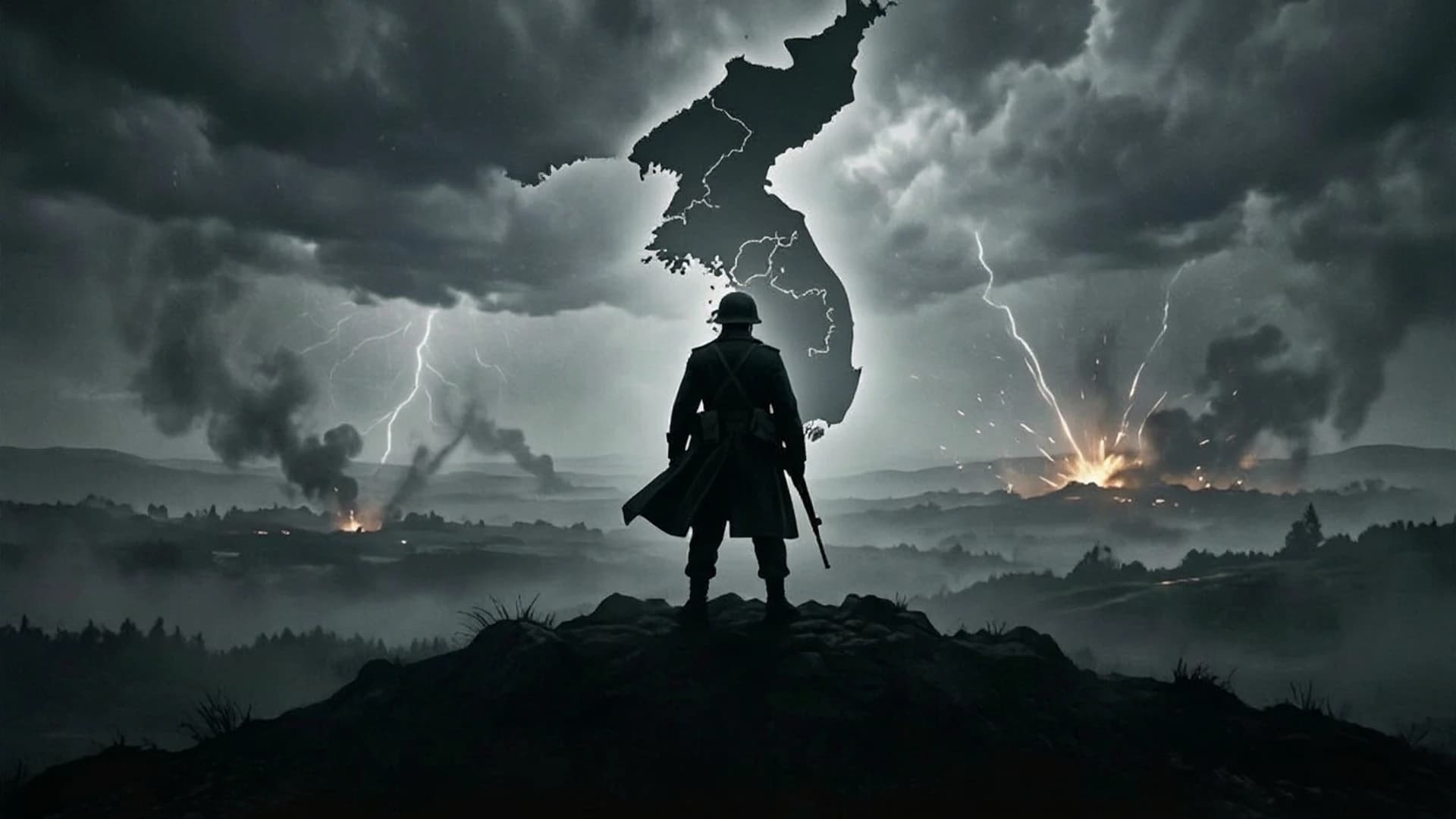
Корейская война (1950–1953) стала первым крупным вооруженным конфликтом холодной войны между Корейской Народно-Демократической Республикой (Северная Корея, при поддержке Советского Союза, а затем Китайской Народной Республики) и Республикой Корея (Южная Корея, при поддержке коалиции ООН во главе с США). Война началась 25 июня 1950 года, когда северокорейские войска пересекли 38-ю параллель, стремясь объединить полуостров под властью коммунистов. В течение нескольких недель они оттеснили южнокорейские и американские войска к юго-восточной оконечности полуострова — Пусанскому периметру. В сентябре дерзкая морская десантная операция генерала Макартура в Инчхоне переломила ход событий, что привело к контрнаступлению сил ООН, которые захватили Пхеньян и приблизились к реке Ялуцзян. Затем в войну массово вмешался Китай, оттеснив силы ООН обратно за 38-ю параллель. После двух лет изнурительной позиционной войны 27 июля 1953 года было подписано перемирие, оставившее полуостров разделенным демилитаризованной зоной, которая существует и по сей день. В этом сценарии игрок может взять на себя роль любой фракции или даже нейтрального участника (например, японского бизнесмена, советского советника или американского генерала) и влиять на ход войны с помощью стратегических решений, распределения ресурсов и дипломатического маневрирования. Мир достоверно воссоздан с использованием более 340 шестиугольных ячеек, покрывающих Корейский полуостров, части Китая, Японии и российского Дальнего Востока. Города, порты, аэродромы и оборонительные линии представлены в виде достопримечательностей. Крупные армии, авиакрылья, военно-морские флоты и исторические лидеры представлены в качестве игровых сущностей, каждая из которых обладает боевыми характеристиками и особыми способностями. Хронология динамична: если игрок не вмешивается, война развивается согласно историческому сценарию — наступление Северной Кореи, высадка в Инчхоне, вмешательство Китая и последующий тупик. Однако каждое действие (или бездействие) изменяет глобальные модификаторы, что потенциально может привести к альтернативным исходам: объединению Кореи под властью коммунистов, демократическому полуострову, затяжной войне на истощение или даже раннему перемирию.
Завязка
Вы берете под контроль одну из сторон в Корейской войне и принимаете стратегические решения. Доступны два альянса: советский блок (Северная Корея, Китай, СССР) и блок НАТО (Южная Корея, США/ООН, Япония как тыловая база). Цель Севера — объединить полуостров, цель Юга — сохранить независимость.
Правила симуляции
The game simulates the Korean War at a strategic level, combining turn-based movement, combat resolution, and dynamic global modifiers. Below are the core rules: 1. **Control and Ownership:** Each hex cell is controlled by one of seven factions: North Korea (1), South Korea (2), UN (reserved, 3), China (4), USSR (5), Japan (6), or Neutral (0, used only for waters and uninvolved areas). Initial control follows historical borders as of 25 June 1950: all cells north of the 38th parallel belong to North Korea; all cells south belong to South Korea; Japan, China, and Soviet territories are assigned to their respective owners. 2. **Territorial Expansion (Front-Line Rule):** A cell can be captured only if it is adjacent (shares an edge) to a cell already controlled by the attacking side. This ensures that offensives create a continuous, cohesive front rather than isolated "islands" of occupation. Armies must advance methodically, filling gaps behind them to maintain supply lines and avoid being outflanked. To achieve a broad front, players should deploy multiple armies side by side, each advancing on a parallel axis, so that they cover adjacent cells simultaneously. This rule mimics real-world logistics and prevents the chaotic "red splotch" effect. 3. **Combat and Movement:** Entities (armies, divisions, air wings, naval fleets) have stats: Strength (combat power), Morale (fighting spirit), Supply Status (logistics), Experience (battle hardening), and special abilities (e.g., artillery, airstrike, amphibious). Movement speed determines how many cells a unit can traverse per turn. Combat resolution compares Strength modified by terrain, fortifications, entrenchment, air superiority, and sea control. Units can fortify positions, increasing entrenchment over time. 4. **Global Modifiers (Story Stats):** Ten interconnected global stats shape the entire war. They can be influenced by player decisions and shift the balance of power: - **Global Tension** (0–100): Escalation risk; high tension may trigger superpower intervention or nuclear threats. - **North/South Morale** (0–100): Affects all units of that side; low morale leads to retreats and lower combat efficiency. - **North/South Supply** (0–100): Determines ammunition, fuel, and food availability; low supply drastically reduces offensive capability. - **Air Superiority** (positive = UN/ US advantage, negative = North/Soviet advantage): Gives bonuses to airstrikes and reconnaissance; protects own troops from enemy air. - **Sea Control** (positive = UN/ US advantage, negative = North/Soviet advantage): Enables amphibious landings, protects supply convoys, and allows naval bombardment. - **Guerrilla Activity** (0–100): Partisan warfare behind enemy lines; high activity disrupts supply and lowers morale of occupying forces. - **Diplomatic Pressure** (0–100): Mounting international pressure for ceasefire; high values may trigger an armistice event. - **Winter Effects** (0–100): Seasonal modifier that slows movement and reduces combat effectiveness; higher in winter months. 5. **Player Agency:** The player can take various actions depending on their chosen faction or role: - Military commanders can order offensives, retreats, reinforce units, build fortifications, or conduct amphibious assaults. - Political leaders can allocate resources (boost supply), launch propaganda (boost morale), or negotiate (modify diplomatic pressure). - Neutral actors (e.g., Japan) can offer logistical support to either side, trade, or even secretly fund partisan groups, affecting global stats without direct combat. - To create a wide, efficient front, players should order multiple adjacent armies to advance simultaneously, exploiting the adjacency rule to fill gaps and prevent enemy counter-penetration. 6. **Historical Events and Triggers:** Although the scenario does not include hard-coded event chains, the global modifiers are designed to simulate historical milestones if the player remains passive. For example: - If **South Supply** and **South Morale** remain high, the game can simulate the Incheon landing by allowing amphibious operations. - If **North Supply** drops below 30, Chinese intervention becomes more likely (simulated by raising China-aligned forces' stats). - When **Diplomatic Pressure** and **Global Tension** reach certain thresholds, an armistice event may be triggered, ending the war. 7. **Victory Conditions:** There are no fixed victory conditions – the scenario is open-ended. However, plausible goals include: - Unifying the peninsula under your side's control. - Achieving a favourable armistice. - Preventing Chinese or Soviet intervention. - Prolonging the war to exhaust the opponent. 8. **Landmarks and Strategic Points:** Cities, ports, airfields, and defensive lines provide bonuses. Capturing or controlling them gives advantages in supply, fortification, and air/naval operations. The 38th Parallel itself is a landmark that, if crossed, triggers changes in global modifiers. All rules interact dynamically, allowing for emergent storytelling and strategic depth. The game remembers the date and can progress in real-time, with seasonal changes affecting winter effects. Player actions are recorded and influence the final outcome, making each playthrough unique.