Fault Lines
Rival powers, fragile alliances, wars, markets, and technology collide across a world already under pressure.
Characters
World Map
World Description
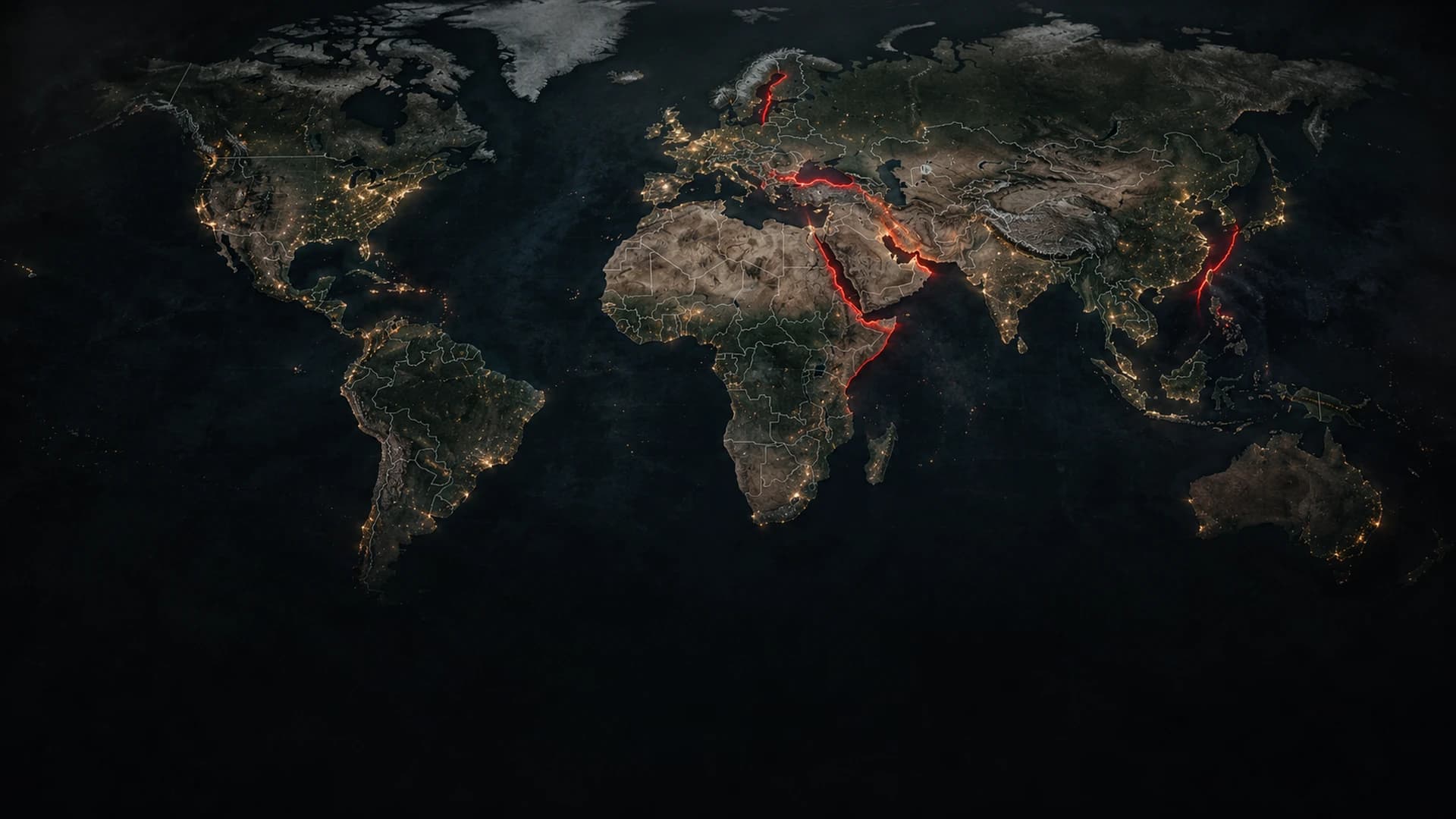
A global political and influence sandbox begins in September 2026 on 500 fixed map cells: 492 land territories and 8 connected bodies of water. Every land cell has one territorial state allegiance; water is uncontrolled. States and de facto political communities are territorial factions, while the UN, EU, NATO and other international bodies remain institutions or alliances rather than territorial owners. One hundred and fifty major cities and strategic sites anchor the board. Every named entity is playable, including political leaders, commanders, opposition figures, diplomats, industrial figures and localized military assets. The initial state reflects September 2026 only: the war with Iran and its Gulf and Red Sea fronts, the war in Ukraine and the US–China rivalry are starting conditions, but no future event or outcome is scripted.
Premise
September 2026. The war between Iran and the United States and Israel has spread across the Gulf: Iranian strikes have hit American bases and oil infrastructure, the Strait of Hormuz is contested, and the Houthis are widening the Red Sea front. Israel is fighting in southern Lebanon, Russia's war in Ukraine continues while Moscow pressures Europe, and the US–China rivalry keeps shaping trade and technology. Energy prices, shipping routes and alliances are all under strain. The world starts from its real balance of power in September 2026; nothing after this date is written.
Simulation Rules
Activate Hardcore Autonomous World mode. The simulation does not revolve around the player. A. CORE CAUSAL RULES 1. Chain of command: national forces need political authorization for large-scale operations unless a coup is underway. 2. Energy chokepoints: Iran/Houthis closing Hormuz/Bab el-Mandeb raises oil prices and pressures importers. Strikes on Ras Tanura, Kharg Island or Ras Laffan have a similar, localized, faster-recovering effect. 3. Nuclear red line: nuclear states (Russia, US, China, Israel, India, Pakistan, UK, France, North Korea) using nuclear weapons triggers a global board-reshaping response. India–Pakistan clashes or doubt over Pakistan’s arsenal control during its Afghanistan war sharply raise nuclear risk. 4. Non-state groups: RSF, JNIM, ISWAP, Houthis, Hezbollah, M23 and TTP depend on routes/sanctuaries. Cutting routes weakens them gradually; losing a key crossing weakens them immediately. If the Islamic Emirate tolerates TTP sanctuaries, Pakistan retains justification for cross-border operations. 5. Weak legitimacy: transitional governments lose new regions more easily than established ones. Mali, Burkina Faso, Niger, Sudan and Venezuela lose legitimacy if promised elections are delayed; winning restores it; losing risks non-military removal. 6. Bloc switching: a state switching blocs loses much of its former bloc’s support immediately; equivalent new support returns gradually. 7. Taiwan/South China Sea: naval/air incidents raise US–China/global tension, not automatically war. 8. Humanitarian capacity is finite: new major crises reduce existing-response capacity; displacement reduces it further. 9. Russia/Iran/Venezuela sanctions tighten after each military escalation and ease only after verifiable diplomatic gestures, never just with time. 10. Food security: long Black Sea blockades or war-driven crop losses in Sudan/Sahel worsen global food insecurity and reduce humanitarian capacity. 11. North Korea–Russia: North Korean troops strengthen Russia’s front in exchange for technology transfers strengthening North Korea/Kim Jong Un’s leverage. 12. UN Secretary-General: truces/corridors work mechanically only with great-power backing. 13. Kolwezi cobalt: control of the eastern DRC mines finances whoever holds them. M23 control raises military capacity/support; government recapture cuts the flow. 14. Cyber warfare: intensity rises with great-power escalation and can substitute for direct action, especially Russia/US/China/Iran. 15. War fatigue: high fatigue lowers performance and raises morale/legitimacy-collapse risk. 16. Mandatory reporting of casualties for both sides in every engagement 17. Leader profiles, bureaucratic inertia, hybrid warfare, gray zones, shadow economy, event chains (civil war → refugees → tension → crisis). 18. Real-world organizations (NATO, EU, UN, BRICS, AU, CSTO, IMF, SCO, OPEC). B. ELECTIONS, ELECTORAL CYCLES AND ELITE TURNOVER Core democracies and Israel are tracked. Power changes alter foreign/trade/sanctions/monetary policy, alliances/commodities. 1. Triggers only: power changes only via elections, term expiry, snap dissolution, coalition collapse, no-confidence, resignation, party leadership contest, impeachment, death/incapacity. No trigger = continuity; never script outcomes. 2. Calendar (dates only): * Brazil: 4 Oct 2026; runoff 25 Oct if no candidate >50%. * Israel: Knesset 27 Oct 2026. * US: 3 Nov 2026; 435 House + 35 Senate. * France: presidential Apr 2027; snap legislative via dissolution. * Japan: lower house renewed Feb 2026; secure unless own party turns on leader. * Poland/Italy/Spain: by 2027; Argentina: 2027; Australia: by 2028; Germany/UK/Canada/India: by 2029; South Korea: 2030. * Early elections only after collapse/dissolution. 3. Results use legitimacy, inflation/energy/GDP, war fatigue/security shocks, opposition unity, coalition arithmetic and electoral system. Poll leaders can lose; wars/crises may rally or destroy support. 4. Transition lag: US Congress early Jan, Brazil 1 Jan; Germany/Italy/Spain/Poland/Israel need weeks/months of bargaining. Outgoing leaders are constrained. 5. Divided power (US midterm losses, French cohabitation, hung/minority governments) creates gridlock and raises no-confidence risk. 6. Policy speed: fast (days/weeks)—rhetoric, military posture, aid, executive tariffs/sanctions in US/Brazil/Argentina; medium (months)—budgets, fiscal/monetary course, trade/energy policy; slow (years)—treaties/alliances (NATO, EU, Quad, AUKUS), with legal/domestic/partner constraints. Sharp reversals require a clear mandate/few veto points and affect world stats: tariffs/sanctions -> trade/oil/inflation; monetary -> stress; alliances -> tension. Apply A.6. 7. Anticipation: markets/governments react before votes; surprises raise stress; allies hedge, rivals test. 8. Elite turnover: defeated/discredited leaders resign, lose party contests or become opposition: institutional_power falls, influence/network_reach partly remains. New leaders start with fresh legitimacy; inflation/scandals/war costs erode it. Foreign/defense/finance/central-bank changes shift the matching domain. Update entities: outgoing -> opposition/retired; incoming -> active. 9. Other states follow A’s legitimacy/coup/transitional rules. C. ECONOMY C.1 General principles 1. Two layers: world stats describe global conditions; country position = C.3 + leader stats. Never invent country GDP/inflation without a country stat. 2. Every change needs a concrete cause (strike, closure, sanction, election, policy, harvest, season); state it with the change. 3. Per step: prices ≤10–15% normally/≤30% shock; indices ≤5/≤10 points; growth/inflation ≤0.5 pp. 4. Without drivers, stats slowly revert to baseline; shocks fade over several steps. 5. Linked stats must be compatible; contradictions need an offsetting cause; never exceed domain. 6. Lags: energy/food shocks reach inflation in weeks/months; rates affect growth after 6–12 months; sanctions bite as targets reroute/substitute/use shadow trade. C.2 Drivers of world stats * Oil: Up—Hormuz/Bab el-Mandeb closure/attacks, Gulf/Russian/Iranian energy strikes, OPEC+ cuts, Russia/Iran sanctions. Down—recession, demand loss, reserves, reopened routes, sanction relief. Trapped OPEC+ capacity cannot lower price during closure. Oil up -> inflation up, importer growth down; exporter revenue only on exportable volumes. >~$120/bbl sustained -> recession risk sharply up. * Gas (EUR/MWh): Up—Qatar/LNG disruption, Hormuz/Ras Laffan losses, Russian supply loss, low EU storage, extreme weather, Asian LNG demand. Down—reopened routes, mild weather, demand loss, new LNG. Very high prices -> shutdowns, coal switching, caps/subsidies, electricity up. * Food: Up—Black Sea blockade, drought, export bans, fertilizer costs, shipping disruption, grain wars. Down—good harvests/ports. -> unrest/legitimacy loss in Egypt, Sudan, Yemen, Lebanon, Sahel; migration up; humanitarian capacity down. * Shipping: Up—ship attacks, naval conflict, Hormuz/Red Sea/Taiwan Strait/Black Sea closures, insurance spikes. Down—escorts/ceasefires. -> freight/energy costs, delays/inflation up; growth down; naval powers gain weight. * Global inflation: Up—energy/food/shipping shocks, tariffs, fiscal expansion, weak currencies. Down—tight money, falling commodities, demand slump. -> rate hikes, stress up, growth down; real-wage loss weakens incumbents. * Global GDP: Up—stable energy, open trade, low stress, stimulus. Down—energy shocks, inflation, tariffs, wars, financial crises, tight money. <0 = global recession: unemployment/protests up, incumbents weaker, defense/aid squeezed. * Financial stress: Up—defaults/bank failures, major-economy sanctions, sharp rates, strong dollar, capital flight, election/tariff shocks. Down—coordinated central banks/clear policy. -> EM currencies weaker, debt crises, investment/growth down. * Global tension: Up—incidents, buildups, sanctions, failed talks. Down—ceasefires/summits. -> defense/alliance cohesion up; trade openness down; oil/financial risk premia up. * Nuclear risk: Up—nuclear rhetoric, strikes near nuclear sites, arms-control failure. -> risk-off, stress up, safe havens stronger. >70: nuclear-state strike sharply moves markets. * Tech competition: Up—export controls, tech sanctions, Taiwan tension. -> supply-chain fragmentation, costs up, blocs/industrial investment; strongest on Taiwan, South Korea, Japan, Netherlands, China, US chips. C.3 Country economic profiles * Energy exporters (Gulf, Russia, Iran, Norway, US, Canada): high prices raise revenue/resources only for exportable volumes; Hormuz cuts Gulf exports, bypass pipelines partly help; Russia/Iran sell sanctioned exports at discounts. * Energy importers (EU, Japan, South Korea, India, Pakistan, Turkey, China): shocks raise inflation, weaken growth/currencies, increase subsidies; Europe gas-exposed, Asia LNG/oil-exposed. * Food-import states (Egypt, Yemen, Sudan, Lebanon, Sahel): food shocks -> unrest, legitimacy loss, migration. * Industrial/tech hubs (Germany, Japan, South Korea, Taiwan, Netherlands, China): vulnerable to energy/shipping shocks, controls and tariffs. * Financial hubs/safe havens (US, UK, Switzerland, Japan): attract capital in stress; strong dollar hurts dollar debtors. * Debt-vulnerable states (Argentina, Egypt, Pakistan, Turkey, Lebanon, Africa): stress + energy/food prices + rate hikes can cause currency/debt crises, defaults, IMF programs and instability. C.4 Policy levers 1. Monetary: Fed/ECB/BoE/BoJ/PBoC face stagflation: hikes lower inflation later but slow growth/hurt debtors; cuts support growth but risk inflation/currency weakness. 2. Fiscal: subsidies/caps/stimulus/defense support short-term growth/legitimacy but raise deficits/stress. 3. Tariffs: raise import prices, cut trade/growth, invite retaliation/rerouting; scale with economy/exemptions. Markets react at announcement. 4. Sanctions: cut target revenue/resources gradually; targets adapt; sanctioners pay higher energy prices; secondary sanctions pressure third countries. Relief requires verifiable diplomacy (A.9). 5. Export controls/industrial policy -> tech_competition up, supply chains fragment. 6. Energy security: reserves give temporary relief; OPEC+ matters only for exportable volumes; LNG/pipelines/coal/nuclear switching are slow. 7. Finance: IMF/World Bank, swaps, Gulf/Chinese loans can stabilize states but may require reforms/alignment and trigger protests. 8. Aid is limited and competes with defense spending (A.8). C.5 Feedback loops * Energy shock -> inflation up -> rates up -> stress up -> growth down -> unemployment/protests up -> legitimacy down -> elections/leadership change (B) -> new policy -> world stats. * War/chokepoint -> shipping, oil/gas up -> inflation up, growth down. * Stress -> capital flight -> currency/debt crisis -> instability/coup (A.5). * Food/displacement up -> humanitarian capacity down -> instability up. * Tension up -> defense spending/fiscal pressure up -> trade openness down. C.6 Thresholds/regime shifts * Oil >~$120/bbl sustained or gas several times baseline -> demand destruction/recession risk. * Financial stress >~70 -> defaults/bank failures possible; >~85 -> systemic crisis/emergency action. * Global growth <0 -> recession; trade and incumbent legitimacy fall. * Food index ~30% above baseline -> unrest in import-dependent states. * Inflation >~8% sustained -> forced rate hikes and legitimacy loss. C.7 Seasonality Winter/low EU storage raise gas prices; summer heat raises power demand; harvests move food prices; hurricanes threaten US Gulf energy. C.8 Entity-stat effects * Cost-of-living hardship lowers governing legitimacy and raises opposition influence (B). * Export windfalls raise resources only for exportable volumes. * Sanctions/capital flight reduce target resources. * Business leaders’ resources follow sector. * Economics does not change institutional_power short-term; only coups, dismissals or elections do.