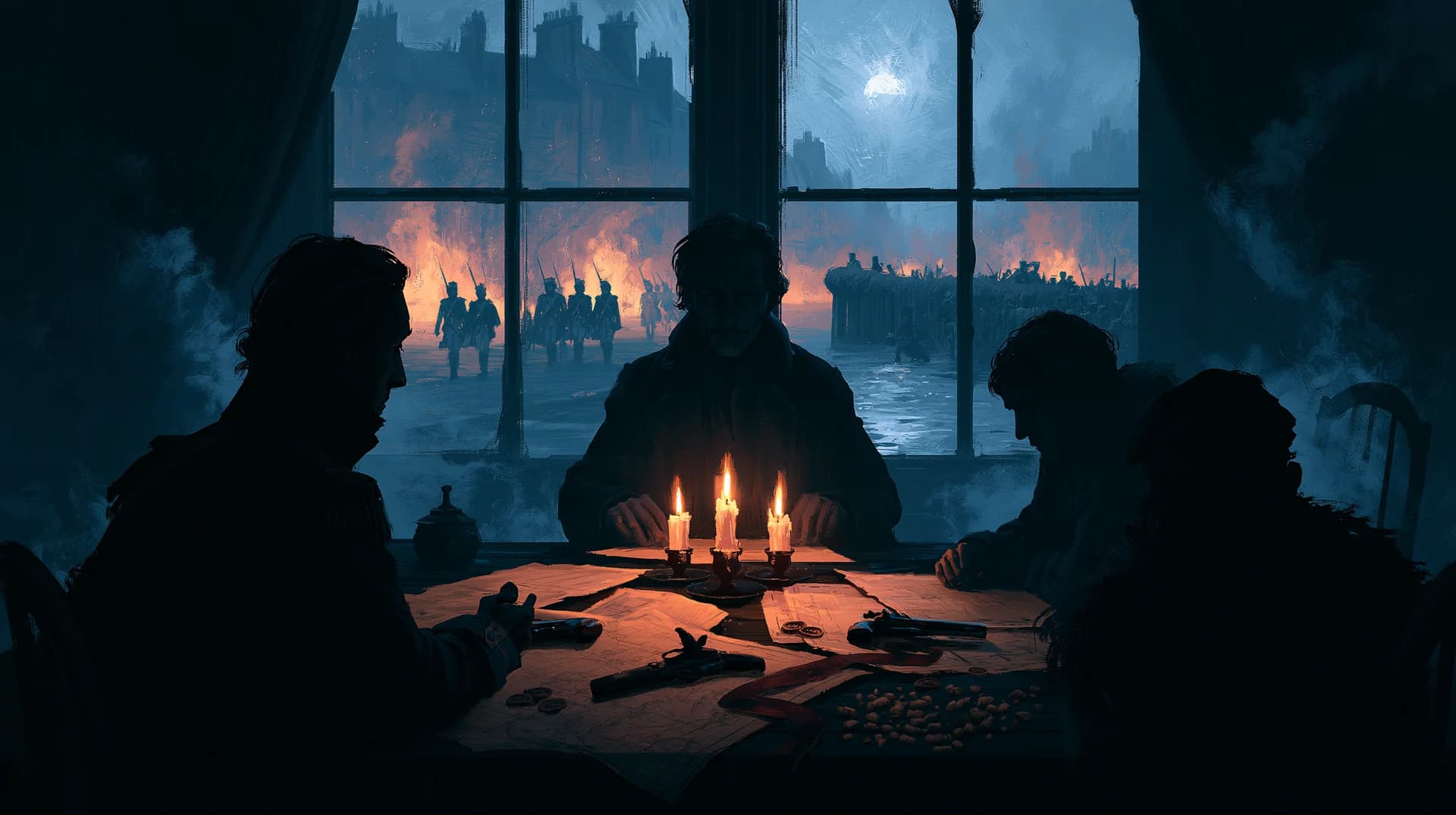
Paris becomes a revolution while Versailles tries to understand what it has already lost.
This is Paris at the moment the French Revolution becomes irreversible: a city of crowded streets, political cafes, royal hesitation, printed rumor, hungry markets, armed tension, and public speeches that can change what thousands of people believe by nightfall. Versailles still holds the crown, court, and formal authority, but Paris holds speed, anger, attention, and the first shape of revolutionary power.
Paris, July 12, 1789. The dismissal of Jacques Necker has turned fear into motion. In the Palais-Royal, cafes, printing rooms, markets, barracks, Assembly corridors, and royal rooms of Versailles, every rumor now travels faster than authority. The city is not waiting for permission. Speeches gather crowds, soldiers hesitate, prices and hunger sharpen anger, and every public gesture can become proof of betrayal or courage. The Bastille has not fallen yet, but Paris is already learning that power can move from palaces into streets.
Story time zone: Europe/Paris. The story begins July 12, 1789, at 15:00, the day after Necker's dismissal — before the Bastille falls. Tone: serious, intimate, character-driven historical drama. Politics, money, hunger, loyalty, rumor, and fear of the mob matter as much as ideology. Treat the world as real to the characters. The opening crisis is hour-by-hour, not seasonal. The dismissal, rumors, troop anxiety, markets, Assembly debates, and public speeches create immediate pressure; do not leap past a flashpoint that would force the character to watch, hide, speak, march, obey, refuse, or flee. History is pressure, not a script: outcomes follow what actually happens in play. Political agency works through eighteenth-century means: speeches, letters, messengers, printed sheets, cafe networks, Assembly debates, patronage, military orders, crowd rumor, market anger, and public gestures.