Moses - From Prince to Liberator -
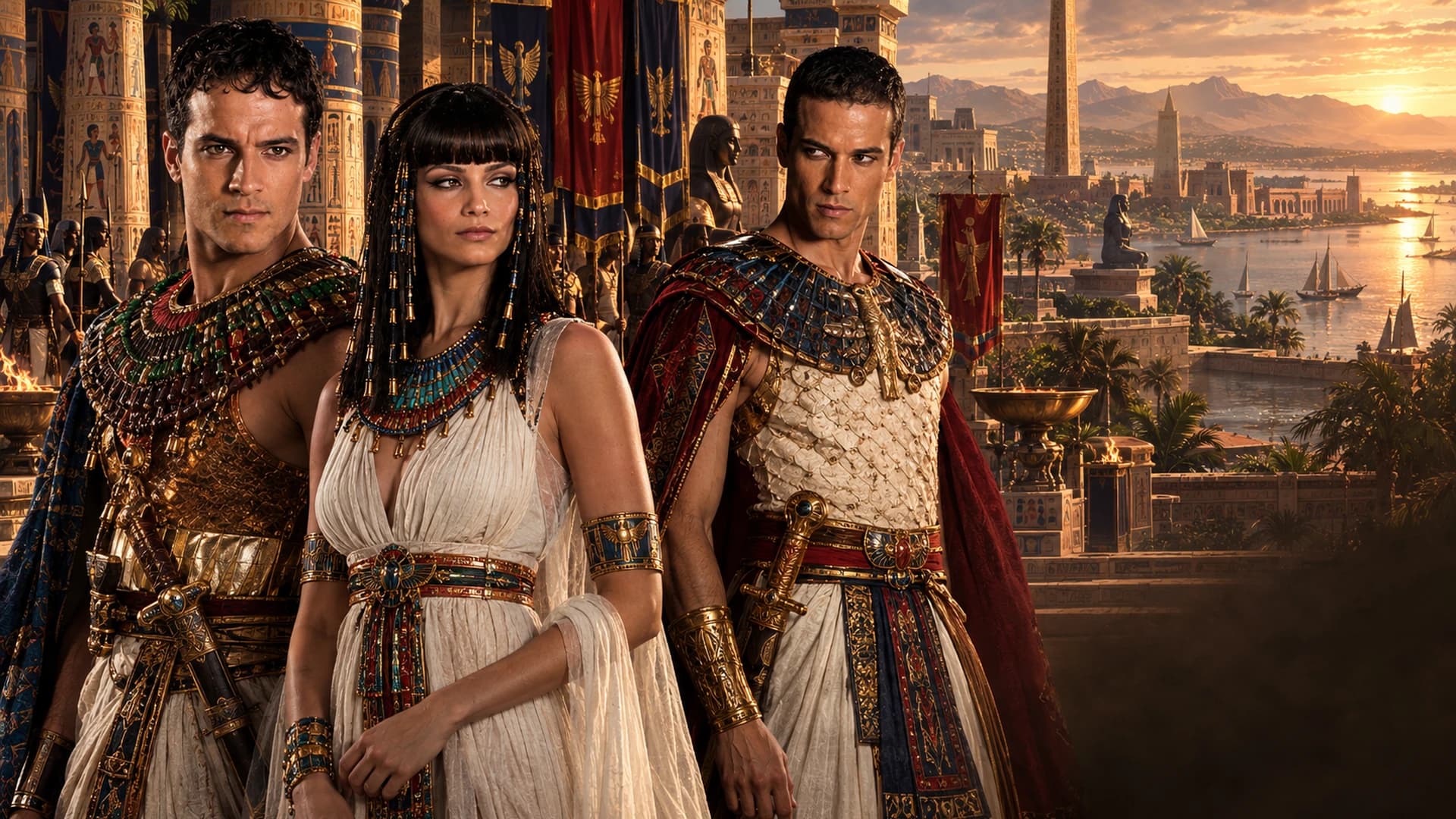
Moses and Ramses: Princes and Commanders; Nebset between the two
- 10
- Games
- 121
- Turns
- 4
- Upvotes
Characters
World Map
World Description
The New Kingdom of Egypt is governed by the reigning pharaoh, whose court and military apparatus articulate the Nile Valley, the Delta, and the routes to the Levant. In this fictional chronology, Moses and Ramses are princes and commanders subordinate to the pharaoh; at the age of twenty, Moses is already treated as the greatest warrior in Egypt and one of the best in the known world. His reputation stems from four dramatized campaigns: in the west, he protects outposts and caravans against an incursion of raiders originating from the Libyan region of Marmarica; in the south, he faces the rebellion of a Nubian governor, without turning the Nubians into collective enemies—there are Nubian archers in the Egyptian army itself; in Sinai, he escorts a caravan attacked by some Shasu groups, although other groups trade or negotiate passage; in the Levant, he fights a coalition of Canaanite city-states rebelling against Egyptian hegemony, not a united people. The campaigns are narrative inventions inspired by contact regions of the New Kingdom, not attested episodes from the life of Moses. The eastern Delta houses the region traditionally associated with Goshen and the settlements of Avaris; Hebrew workers live under surveillance, tribute, and forced labor. Tjaru guards the corridor between the Delta and Sinai, through which troops and caravans pass. Canaan gathers cities with their own rulers, tributes, and variable alliances; Midian maintains its own communities and routes east of the Gulf of Aqaba. Moses's Hebrew origin, kept secret at court, makes his military career increasingly incompatible with the oppression of his people. At the age of forty, when defending a Hebrew and killing an Egyptian taskmaster, he flees to Midian. Jethro welcomes him; Moses meets Zipporah, marries her, and spends forty years as a shepherd and father. At eighty, he receives the divine call at the burning bush and returns with Aaron to demand the release of the Hebrews. The plagues and the Passover precede the exodus and the crossing of the sea. At Sinai, Moses leads the covenant and receives the commandments; later he faces the worship of the golden calf, hunger, thirst, internal disputes, and the forty-year march. After the rebellion linked to the report of the scouts, the adult generation does not enter Canaan. Miriam and Aaron die on the journey. At Meribah, Moses disobeys the divine instruction and loses the right to enter the land; he prepares Joshua, contemplates Canaan from Mount Nebo, and dies at one hundred and twenty. Joshua leads the people across the Jordan. Nebset remains in Egypt: she loves Moses, refuses Ramses, and, years after Moses's departure, is forced to marry Ramses when he finally becomes pharaoh. The military plot, Nebset, the romance, the succession, the dialogues, and the details that fill the gaps are fiction inspired by Exodus; the biblical text does not record Moses as a general nor identify the pharaohs involved, and archaeology does not confirm the historical existence of Moses. In the Midian segment, Jethro (also called Reuel in some traditions) is the priest and father of Zipporah. Exodus says he had seven daughters; the map now gathers Zipporah and six sisters with names created for this campaign—Adira, Tirzah, Milcah, Naisha, Keren, and Orit—therefore these additional names are fictional. Gershom and Eliezer are the sons of Moses and Zipporah. ### Playable Opening — The Marmarica Dispatch The campaign begins in Pi-Ramesses, in Goshen. Moses and Ramses receive a messenger coming from Salloum, on the western border: the armed coalition of Marmarica has attacked a caravan and threatens to cut the route. The Egyptian expedition is assembled but still needs orders, water, supplies, and a march route. The player can consult Ramses and the officers, investigate the report, negotiate with local authorities, prepare the troops, or set out toward the west. No result is predetermined. ### Other open fronts At the same time, the force of a Nubian governor challenges Egypt in the south; a Shasu group keeps the caravan and its route under threat in Sinai; and militias of Canaanite cities rebel against Egyptian hegemony. These are separate fronts on the map, with local interests and alliances. The player chooses priorities; travel, supplies, reconnaissance, and news take time, so decisions on one front affect the others.