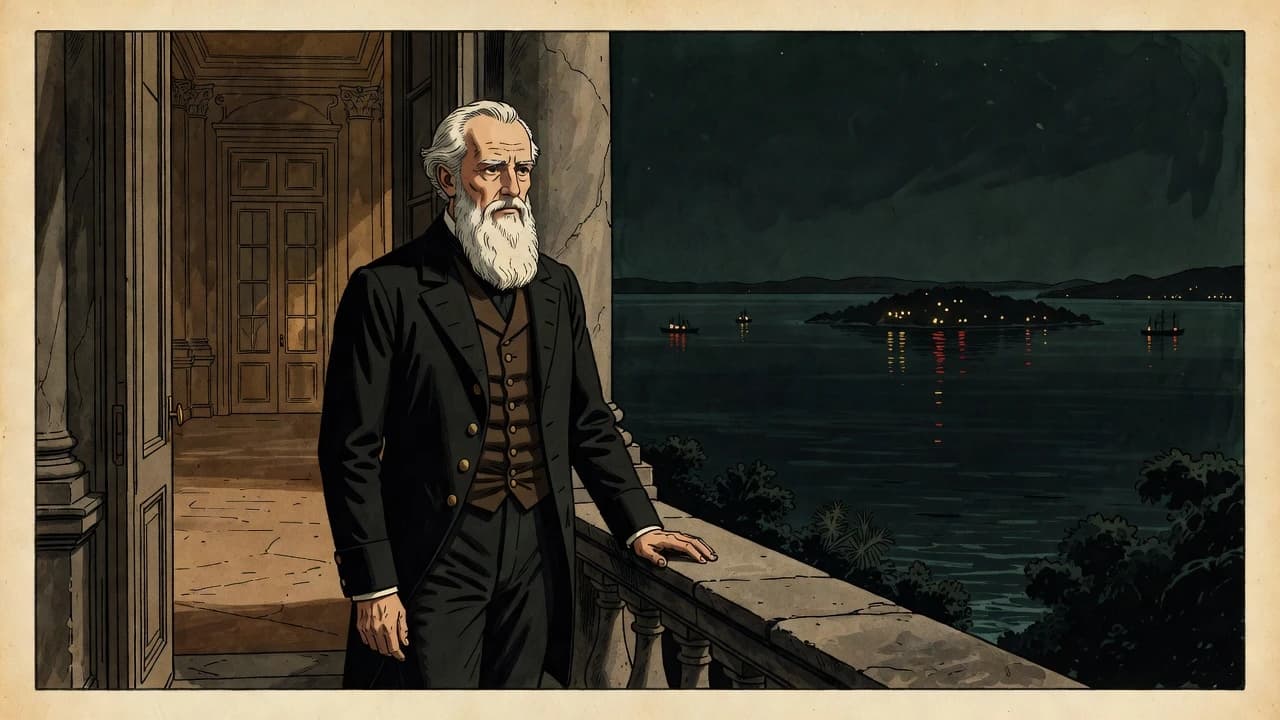
The Law of Free Birth and the Seeds of the Republic
Brazil, September 28, 1871 — slavery, imperial reform, and the slow rise of republicanism.
Characters
World Map
World Description
The map depicts South America on a continental scale, showing the Empire of Brazil and its neighbors. In Brazil, the 1871 law shifts economic and political expectations without ending slavery. The Court, the Council of Ministers, the Senate, the agrarian elites, republican circles, the Army, merchants, and journalists all vie for influence. The provinces hold distinct interests, and the distances between ports, agricultural hubs, borders, and capitals dictate the movement of people, resources, and news.
Premise
On the afternoon of September 28, 1871, at the Imperial Palace, Princess Isabel—Regent of the Empire during the absence of Dom Pedro II—sanctions the Law of Free Birth. Farmers fear the gradual erosion of their enslaved workforce, abolitionists consider the measure insufficient, the post-Paraguayan War Army demands greater recognition, and the republican movement begins to organize. The Empire may yet last for decades, or it may enter a crisis long before 1889.
Simulation Rules
Ordens militares no Rio de Janeiro exigem uma cadeia de comando crível a partir de um oficial superior reconhecido. Um movimento separatista regional só se torna crível com apoio simultâneo de figuras políticas e militares locais. A adesão pública ao Partido Republicano produz custo político perante a Corte, enquanto apoios discretos podem crescer em círculos militares e provinciais. Decisões sobre a futura abolição alteram a confiança de fazendeiros, trabalhadores livres, pessoas escravizadas, comerciantes, parlamentares e autoridades.