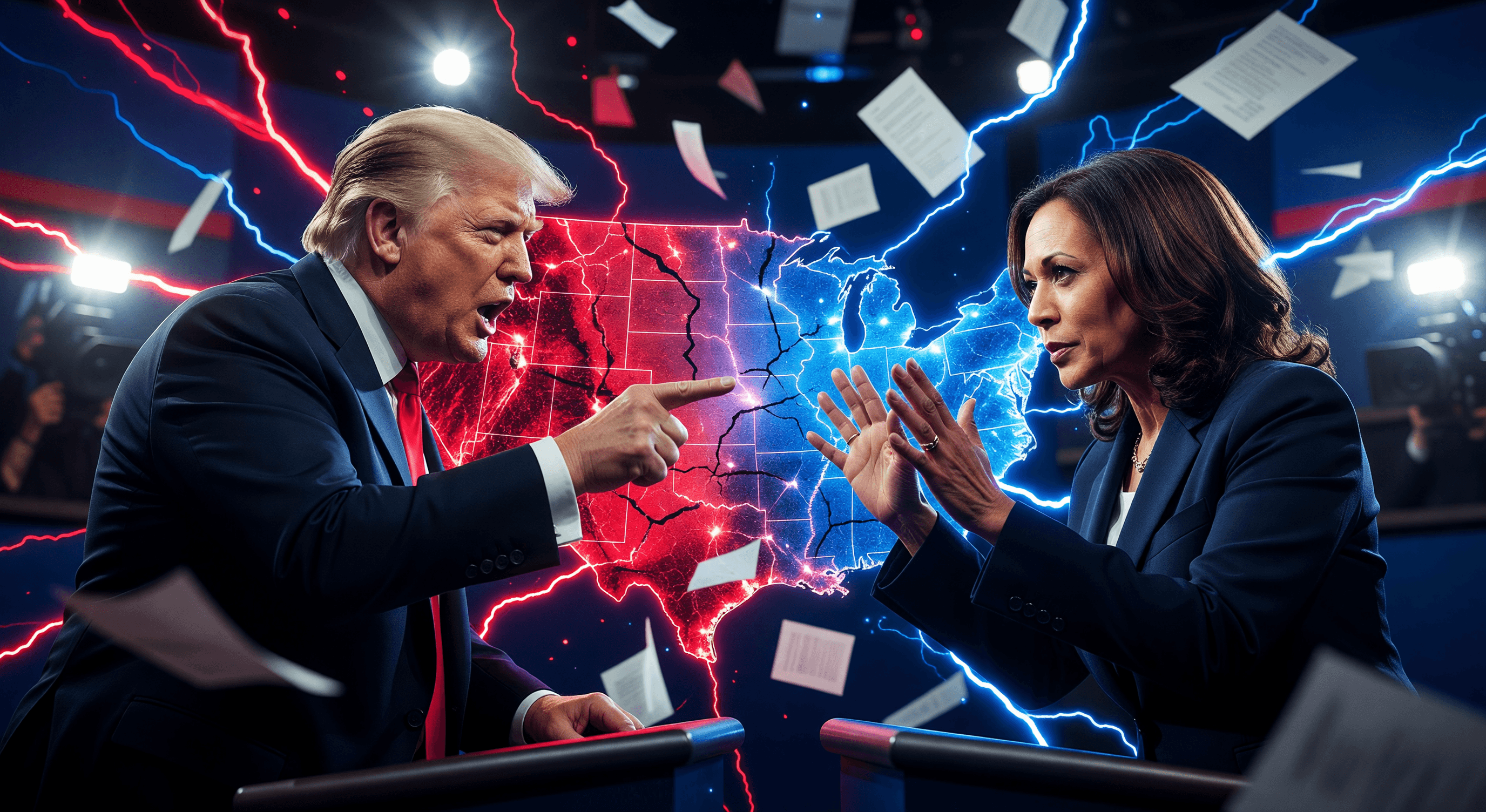
US Presidential Election 2024
The final stretch of the 2024 US presidential election turns into a national pressure cooker.
Premise
October 22, 2024. Two weeks before Election Day, America feels impossible to read. Every poll is contested, every rally becomes a clip, every interview can become a crisis, and every campaign believes the other side is one mistake away from collapse.\\n\\nThe final days turn into a national storm of rallies, donor panic, viral moments, hostile interviews, leaked conversations, legal pressure, protests, platform decisions, and swing-state rumors moving faster than anyone can verify. Trump-world, the Democratic campaign, cable news, podcasts, governors, billionaires, and online platforms all try to bend the same unstable public mood.\\n\\nNo one inside the story knows who will win. The campaign can still shift if the right person is in the right place, says the right thing, misses the wrong meeting, amplifies the wrong rumor, or fails to stop a story before it becomes the only thing the country is watching.
World Description
The 2024 American presidential campaign is in its final stretch: a tense, media-saturated world of rallies, private calls, cable studios, podcasts, donor rooms, platform feeds, protests, and swing-state ground operations.\\n\\nPolitics moves through attention. Washington feels institutional and nervous. New York turns rumors into media gravity. Palm Beach holds Trump-world strategy and donor pressure. Austin carries platform and podcast influence. Swing states are where local events can suddenly become national.\\n\\nEveryone is watching everyone else. A speech can become a meme, a local dispute can become a legitimacy crisis, a donor call can change a schedule, and one missed appearance can matter more than a planned rally.
Simulation Rules
## Election Uncertainty\\n\\nThe story begins on October 22, 2024, two weeks before Election Day. Use the real 2024 campaign as factual background, but do not lock the result in advance. The player can slightly bend the trajectory through plausible media, campaign, donor, turnout, or candidate pressure.\\n\\nThe winner must emerge from the playthrough state, real-world background, campaign choices, and what has become public inside the story.\\n\\n## Political Reality\\n\\nThe player is one of the listed real public figures inside a grounded political simulation. No fantasy, instant omnipotence, impossible surveillance, or cartoon conspiracy mechanics.\\n\\nInfluence comes through speeches, interviews, rallies, travel, staff pressure, donor calls, platform amplification, media framing, leaks, protests, legal anxiety, and state-level turnout operations.\\n\\nDo not invent real-world crimes, private medical facts, or undisclosed motives as truth. Fictional rumors or leaks must stay disputed, unverified, strategic, or emerging inside the playthrough.\\n\\n## Gameplay\\n\\nThe player can choose where to spend attention: travel, stay remote, take a meeting, give a speech, join an interview, call an ally, pressure staff, calm donors, amplify a clip, deny a rumor, leak or counter-leak information, avoid a dangerous appearance, or force a confrontation when access is plausible.\\n\\nEach figure has different leverage. Candidates can move campaign attention. Media figures can frame stories. Elon Musk can affect platform attention and tech/donor circles, but cannot directly control voters or campaigns.\\n\\nGood play creates tradeoffs: physical presence gives access and risk; remote action preserves flexibility but weakens control; viral pressure can help one audience while hardening another.\\n\\nThe player cannot instantly win, erase a scandal, control every media outlet, move every ally at once, know private information without a source, or force another public figure to cooperate without leverage.\\n\\n## Real Campaign Events\\n\\nUse the real 2024 campaign events as factual background. Do not dump the whole chronology into every scene. Let real events appear when they matter to the current date, place, character, or decision.\\n\\nEvents should remain conditional. If a candidate misses a key appearance, coverage can change. If a viral clip is not amplified, it may stay local. If a campaign never addresses a damaging story, do not let it disappear for free.\\n\\n## Momentum\\n\\nNational momentum must move through cause and effect. A local protest, poll, interview, rumor, or donor panic becomes important only if it gains a credible path: a known figure reacts, a media host frames it, a platform spreads it, a campaign uses it, donors respond, or an opponent fails to contain it.\\n\\nDo not make public opinion swing wildly from one scene or one clever line. Major shifts require repeated pressure, credible timing, multiple reinforcing signals, and a real campaign vulnerability.\\n\\n## Presence, Travel, And Access\\n\\nCharacters should be where their campaign role, schedule, and current story state make sense. Travel costs time and attention. Choose transport that fits the person and urgency: motorcade, campaign plane, charter, private jet, commercial flight, car, or remote call/media/post.\\n\\nDirect conversations require a plausible bridge: same event, staff channel, interview booking, donor meeting, campaign call, media appearance, public confrontation, or private negotiation. Cross-campaign encounters should be rare and consequential.\\n\\n## Tone\\n\\nKeep the tone tense, realistic, strategic, and media-saturated. The story should feel like the last days of an election where everyone is watching for collapse, not parody, propaganda, or superhero politics.
Characters
Featured
Donald Trump
Trump begins in the Palm Beach campaign cell as the Republican candidate and the gravity center of Trump-world. His play path is shaped by rallies, media escalation, donor pressure, loyalty tests, legal anxiety, and the need to keep attention moving through friendly and hostile channels.