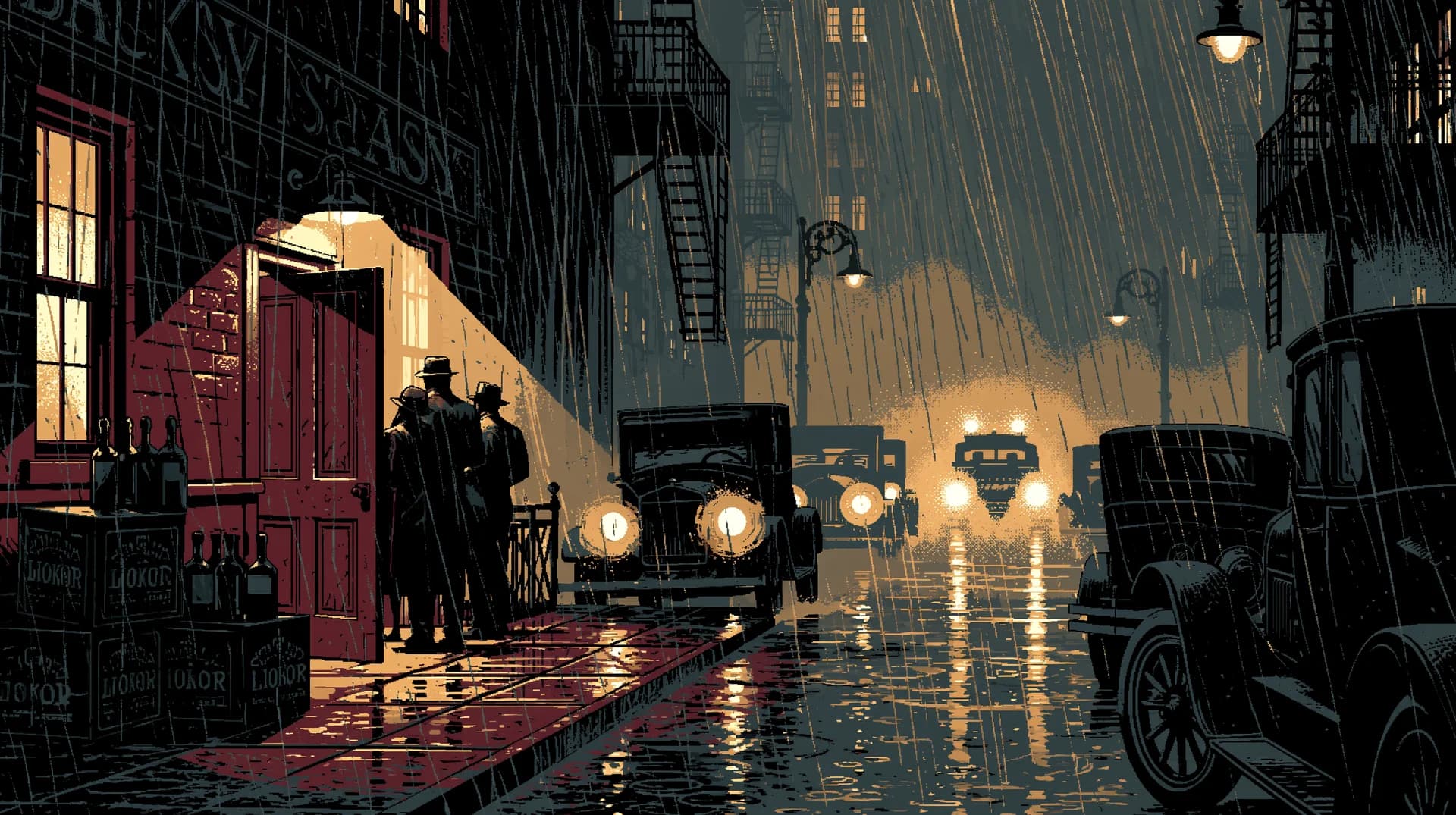
NYC ยุคกฎหมายห้ามขายเหล้า
ยุคกฎหมายห้ามขายเหล้าเปลี่ยนนิวยอร์กให้กลายเป็นสมรภูมิของแก๊ง ตำรวจ คลับ และท่าเรือ
- 140
- จำนวนครั้งที่เล่น
- 2,965
- เทิร์น
- 2
- โหวต
ตัวละคร
แผนที่โลก
โลกของคุณเริ่มเป็นรูปเป็นร่างขอบฟ้าแรกกำลังปรากฏให้เห็น
คำอธิบายโลก
นิวยอร์กในปี 1926 เป็นกระดานแห่งยุคกฎหมายห้ามขายเหล้าที่หนาแน่น: คลับในแมนแฮตตัน ย่านผู้อพยพ เจ้ามือหวยในฮาร์เล็ม เซฟเฮาส์ในบรูคลิน สถานีขนส่งริมแม่น้ำฮัดสัน สะพานข้ามแม่น้ำอีสต์ และท่าเรือริมน้ำ ทั้งหมดตั้งอยู่ภายในแผนที่การควบคุมที่มีสีสัน เมืองจริงๆ นั้นสำคัญ สถานที่น่าสนใจ (POI) คือจุดคงที่ที่ใช้ในการอ่านภูมิศาสตร์: ย่าน ถนน สะพาน สถานี ศาล คลับ ท่าเรือข้ามฟาก อุโมงค์ สวนสาธารณะ และท่าเรือ สถานที่เหล่านี้ไม่ได้เป็นเจ้าของอาณาเขตด้วยตัวเอง แต่ได้รับอำนาจการควบคุมที่มีประสิทธิภาพมาจากช่องพื้นที่ที่พวกมันตั้งอยู่ เอนทิตีคือตัวหมากที่เคลื่อนไหวได้: เจ้าพ่อชื่อดัง แก๊ง ขบวนรถ สำนักงานรับพนัน เจ้าหน้าที่ ตำรวจสายตรวจ คนเดินโพย คนเคลียร์ปัญหา การ์ด และคนงานท่าเรือ แต่ละตัวสังกัดฝ่ายหนึ่งและเริ่มต้นใกล้กับ POI ที่อธิบายว่าทำไมพวกมันถึงอยู่ที่นั่น
เรื่องตั้งต้น
15 เมษายน 1926 เวลา 21:00 น. นิวยอร์กประกาศเป็นเขตปลอดแอลกอฮอล์อย่างเป็นทางการ แต่เมืองนี้กลับมีการลักลอบขนเหล้าเร็วกว่าที่กฎหมายจะตามทัน บาร์ลับต้องการการคุ้มครอง ท่าเรือต้องการความเงียบเชียบ เจ้ามือหวยต้องการคนเดินโพย และทุกย่านต่างรู้ดีว่าแก๊งไหนเป็นคนเก็บเงินหลังเที่ยงคืน แก๊งอิตาลี ไอริช ยิว ฮาร์เล็ม บรูคลิน และแก๊งท่าเรือ ต่างยึดครองพื้นที่ส่วนต่างๆ ของเมือง ในขณะที่ตำรวจและรัฐบาลกลางกดดันหนักขึ้นเรื่อยๆ ทั้งในศาล สะพาน ท่าเรือข้ามฟาก อุโมงค์ คลับ และเส้นทางริมน้ำ แผนที่เริ่มต้นขึ้นในฐานะโลกใต้ดินที่แบ่งแยกอาณาเขต: ทุกช่องพื้นที่บนบกมีผู้ควบคุม ทุกสถานที่จริงตั้งอยู่ภายในเขตที่มีการแย่งชิง และตัวละครที่เคลื่อนไหวได้ทุกตัวเริ่มต้นด้วยกลุ่มของตนเอง เรื่องราวเปิดฉากขึ้นก่อนที่ฝ่ายใดฝ่ายหนึ่งจะได้รับชัยชนะ ขบวนรถอาจหายสาบสูญ การบุกค้นอาจเปิดโปงห้องที่ผิด สำนักงานรับพนันอาจเปลี่ยนขั้ว แก๊งท่าเรืออาจหักหลังผู้ซื้อ และการจับกุมในที่สาธารณะเพียงครั้งเดียวอาจเปลี่ยนธุรกิจมืดส่วนตัวให้กลายเป็นสงครามกลางเมืองได้
กฎการจำลอง
Story time zone: `America/New_York`. Opening instant: April 15, 1926, 9:00 PM local time, UTC-04:00. Use the authored map cells, initial cell control, groups, POIs, entity placements, and entity group memberships as the starting world state. Land cells begin under one controlling faction. Water cells are not territorial control. Real-place POIs are fixed map anchors. They inherit their effective controller from the cell they are in unless play changes the cell's control. Do not treat real-place POIs as permanently faction-owned unless the story later establishes a specific factional hold over that place. Entities are movable actors under group control. A faction acts through its entities: people, crews, runners, convoys, boats, agents, offices, guards, patrols, and fixers. An entity can move, negotiate, hide, raid, escort, betray, collect, watch, or pressure when that fits its role and current access. Featured historical entities are recognizable entry points, not guaranteed winners. Use Lucky Luciano, Meyer Lansky, Arnold Rothstein, Frank Costello, Bugsy Siegel, and Dutch Schultz as grounded 1920s crime figures, but do not turn the story into a fixed biography. Let play determine alliances, betrayals, arrests, and territorial shifts. Police pressure is a factional force, not an omniscient narrator. Police entities need warrants, informants, surveillance, public pressure, patrol access, court leverage, or a credible tip to raid or arrest. Criminal entities need contacts, muscle, vehicles, money channels, cover businesses, or dock access to act at scale. Keep action geographically plausible. Cross-city moves require time and a route: streets, bridges, ferries, tunnels, rail terminals, waterfront access, or boats. A faction should not instantly project power across the whole board without an entity, ally, convoy, or communication path. The tone is tense, grounded, and territorial. Scenes should feel like Prohibition-era New York: smoke-filled rooms, back doors, ledger books, wet streets, night docks, watchful bartenders, newspaper pressure, court files, and deals that can become violence. Avoid parody, superhero crime logic, or modern technology.