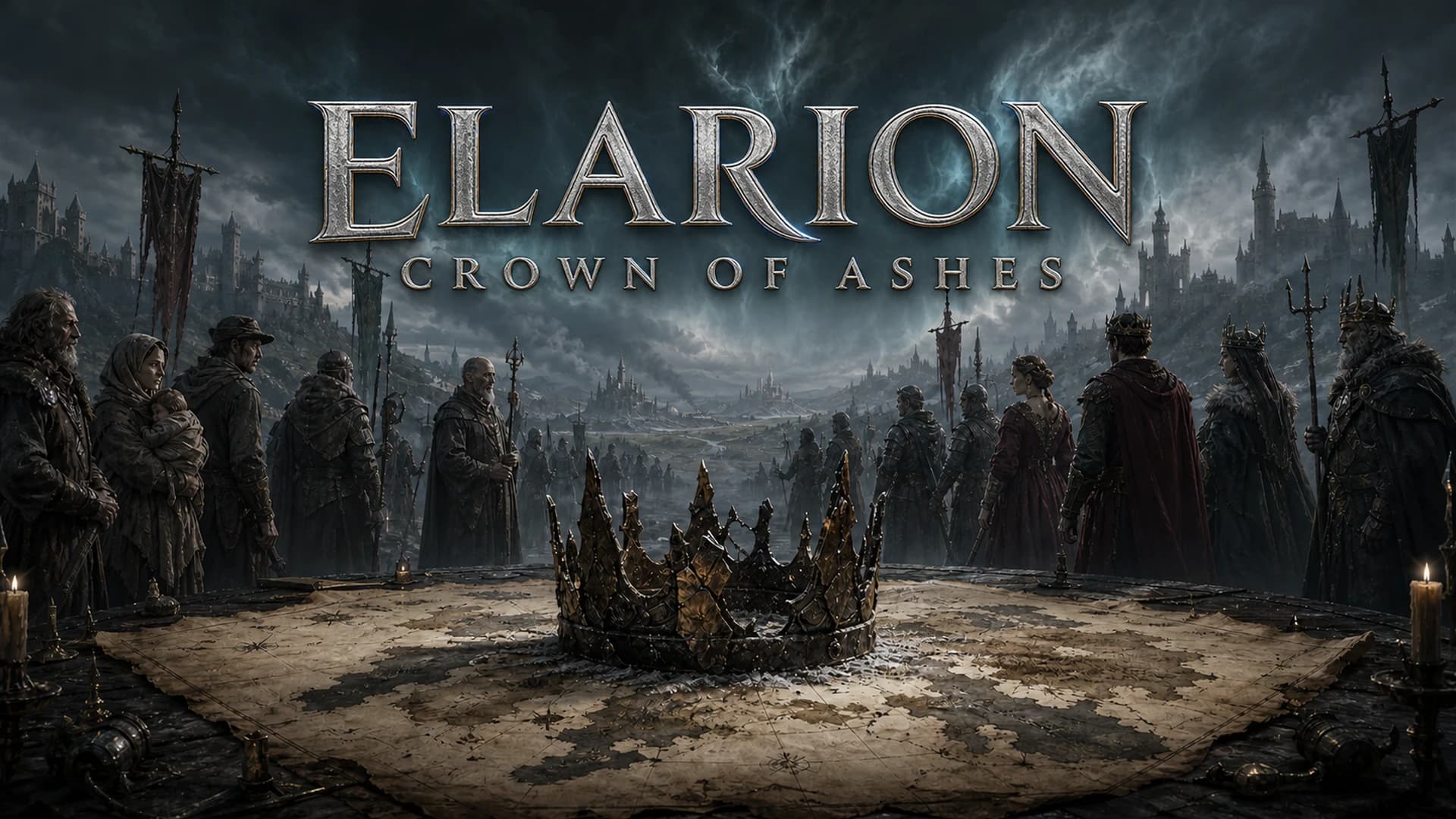
Elarion - Crown of Ashes
Nine realms contest an empty imperial throne while an ancient intelligence wakes beneath the northern ice.
ตัวละคร
แผนที่โลก
โลกของคุณเริ่มเป็นรูปเป็นร่างขอบฟ้าแรกกำลังปรากฏให้เห็น
คำอธิบายโลก
Elarion is an old continent of nine inhabited realms bound by the Ninefold Accord. The imperial crown does not grant absolute rule; it authorizes continental councils, recognizes treaties, and permits a common levy against shared danger. Power otherwise belongs to monarchs, city councils, noble houses, temples, guilds, and local custom. Most people live by farming, craft, trade, military service, or religious patronage. Travel, communication, and warfare depend on roads, ships, weather, money, animals, and food. Magic survives as Echoes held in places, bloodlines, objects, and memories. Every working demands fatigue, lost memory, physical harm, or another concrete price. Beyond Europe and the Russian lands lies the Outer Blank: empty territory outside the known world, uninhabited, unreachable, politically inert, and excluded from all events, movement, claims, resources, and conflicts.
เรื่องตั้งต้น
On the third morning of First Mist in the 963rd Year of the Accord, Emperor Ederan IV is dead without an uncontested heir. The Ashen Crown remains sealed in Valedor while the rulers of nine realms gather troops, bargain for recognition, and accuse one another of regicide. Grain reserves are failing, refugees are crossing the northern roads, and settlements near the ice have stopped answering. The succession remains open, as does the question of whether the greater danger lies in the courts or beyond them.
กฎการจำลอง
Travel consumes time according to distance, terrain, weather, transport, health, and security; no actor crosses the continent instantly. News moves through couriers, ships, roads, temples, and merchant networks and may arrive late or distorted. Social rank controls access, command, legal privilege, and initial credibility, but rank can change through appointment, wealth, marriage, service, religious office, rebellion, or disgrace. Royal authority depends on legitimacy, officials, nobles, money, supplies, and enforceable orders. Battles weigh numbers, readiness, morale, supply, terrain, leadership, intelligence, and preparation; superior numbers confer advantage but never certainty. Territorial control changes only after the previous holder withdraws, surrenders, defects, loses effective administration, or is displaced by an occupying power capable of governing. Passing through a territory does not transfer it. Armies consume food, pay, animals, and time; shortages cause desertion, disease, unrest, and civilian suffering. Promises depend on incentives, reputation, hostages, marriage ties, witnesses, and the ability to enforce consequences. Magic cannot erase distance, politics, logistics, injury, or death without a proportionate and lasting cost. True resurrection is impossible; returned voices or bodies may be echoes or imitations. Powerful ancient workings may advance the Ancient Stirring. The Nameless first appear through disappearances, stolen memories, false voices, and evidence; their direct presence grows only as the Ancient Stirring advances. Failure may cause delay, partial success, exposure, injury, debt, lost trust, or unintended consequences. The Outer Blank is permanently outside the simulation: no entity may enter it, no faction may claim it, and no event, threat, route, resource, or story development may originate there.