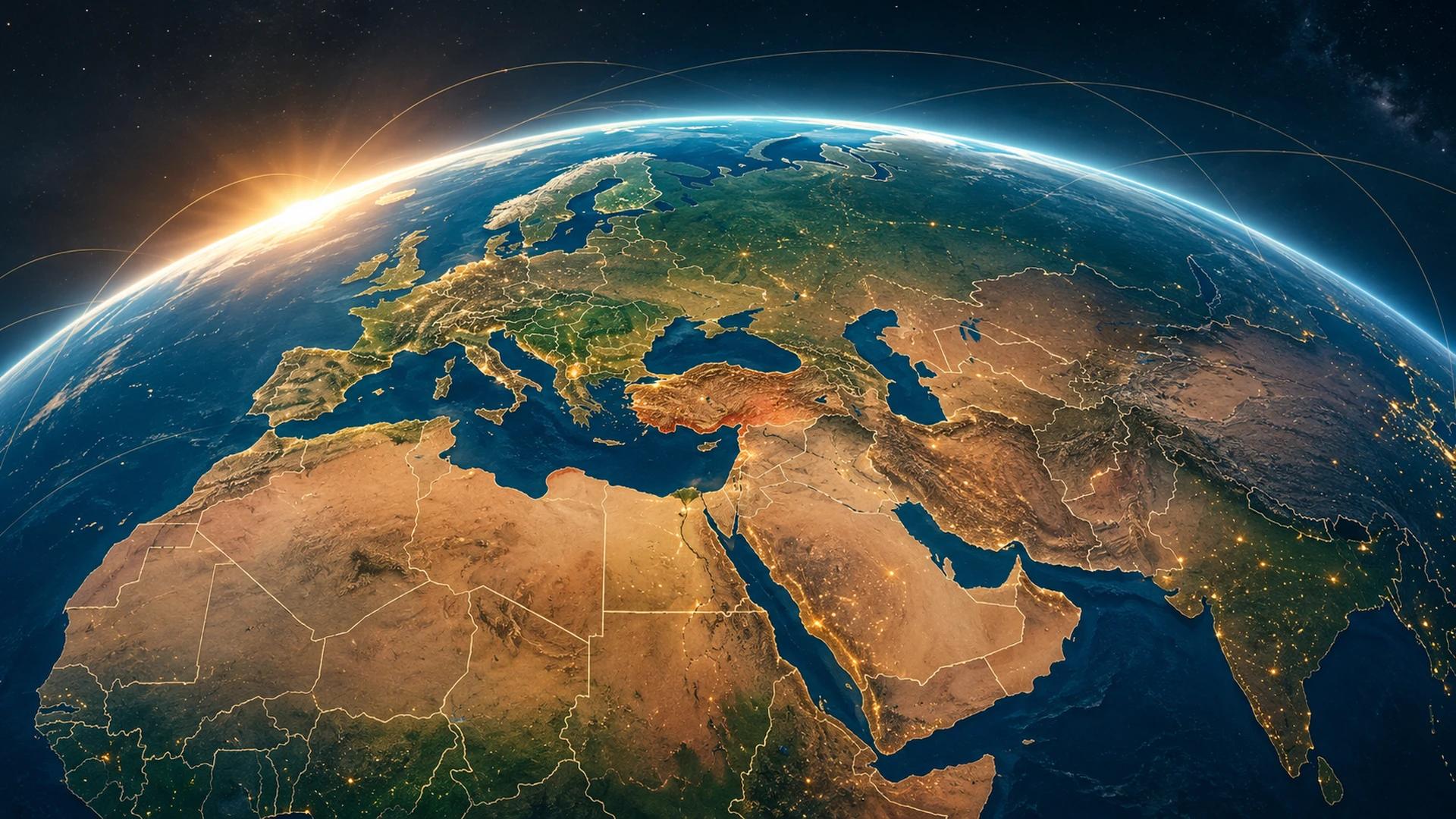
แซนด์บ็อกซ์ทางภูมิรัฐศาสตร์โลกที่อิงตามดุลยภาพแห่งอำนาจของโลกจริง ณ วันที่ 1 มกราคม 2026
ตารางเวลาเริ่มต้น — 1 มกราคม 2026 เวลาเริ่มต้น: 09:00 น. ตามเวลาสากลเชิงพิกัด (UTC) วันที่ 1 มกราคม 2026 ไฟล์นี้ประกอบด้วยสถานะเริ่มต้นและตารางเวลา ส่วนกฎของเกมอยู่ในไฟล์ world/rules.md แซนด์บ็อกซ์ด้านการเมืองและอิทธิพลระดับโลกเริ่มต้นขึ้นในเวลา 09:00 น. ตามเวลาสากลเชิงพิกัด (UTC) ในวันที่ 1 มกราคม 2026 กระดานนี้ประกอบด้วยเซลล์แผนที่ 506 เซลล์ (พื้นดิน 498 เซลล์, พื้นน้ำ 8 เซลล์) และสถานที่สำคัญที่เป็นเมืองหรือจุดยุทธศาสตร์ 249 แห่ง ตัวละครประกอบด้วยผู้เล่นที่เล่นได้ 251 ราย ได้แก่ ผู้นำโลกและผู้บัญชาการ, บทบาทสถาบันสาธารณะของตุรกี 50 บทบาท, สถาบันสาธารณะหลัก 4 แห่งในแต่ละประเทศจากทั้งหมด 14 ประเทศใหญ่, ธนาคารกลาง, สถาบันของสหภาพยุโรป, ภารกิจรักษาสันติภาพของสหประชาชาติ 3 ภารกิจ, ฝ่ายบริหารระดับภูมิภาค และผู้นำองค์กรต่างๆ แผนที่แยก (1) อธิปไตยและพรมแดนรัฐที่ได้รับการยอมรับในระดับสากล (2) สถานะทางรัฐธรรมนูญ/การบริหารและข้อพิพาทภายในที่ยังไม่ได้รับการแก้ไข และ (3) การควบคุมโดยพฤตินัย ณ วันที่เริ่มต้น สีที่ใช้ระบุฝ่ายแสดงถึงผู้ควบคุมหรือกลุ่มที่มีอำนาจจริงในขณะนั้น ไม่ใช่การยอมรับตามกฎหมาย เขตเคอร์ดิสถานของอิรักเป็นเขตสหพันธรัฐภายในประเทศอิรัก ส่วนพื้นที่คีร์คูก, ซินจาร์, มัคมูร์ และพื้นที่ตามมาตรา 140 เป็นพื้นที่พิพาท ภาคตะวันออกเฉียงเหนือของซีเรียเป็นพื้นที่ที่ควบคุมโดยกองกำลังนำโดย SDF ภายในอธิปไตยของซีเรีย โดยมีพื้นที่ย่อยของ SNA ฝ่ายบริหารท้องถิ่นเมืองซูเวย์ดา และฐานที่มั่นของอิสราเอลแยกออกมาต่างหาก ไซปรัสเหนือเป็นเขตบริหารของชาวไซปรัสเชื้อสายตุรกีโดยพฤตินัย ขณะที่ไซปรัสยังคงมีอธิปไตยเป็นของสาธารณรัฐไซปรัส ไครเมียและบางส่วนของพื้นที่ทางตะวันออก/ใต้ที่ถูกรัสเซียยึดครองยังคงเป็นดินแดนของยูเครน ซูดาน, เยเมน, ลิเบีย, เมียนมา และโซมาเลีย มีอำนาจการปกครองที่แตกแยกหรือเป็นที่ถกเถียง โปรดอ่านรายละเอียดของแต่ละเซลล์สำหรับบริบททางกฎหมาย/รัฐธรรมนูญในพื้นที่นั้นๆ กระดานนี้เป็นระดับยุทธศาสตร์ ไม่ใช่ระดับทะเบียนที่ดิน แนวรบและเขตชายแดนย่อย/พื้นที่ปิดล้อม/เขตกันชนที่มีข้อพิพาทบางส่วนได้รับการสรุปภาพรวมไว้ โดยมีหมุดหมายเมืองช่วยเสริมบริบทในท้องถิ่น พื้นที่น้ำถือเป็นพื้นที่ที่ไม่มีการควบคุมเว้นแต่สถานการณ์จะเปลี่ยนแปลงไป เซลล์ 504 คือส่วนหนึ่งของเขตกันชน Green Line ของไซปรัสที่ได้รับการตรวจสอบโดย UNFICYP ซึ่งเป็นพื้นที่แบบเรียบง่ายขนาด 217 ตารางกิโลเมตร (ยาวประมาณ 180 กิโลเมตร ความกว้างแปรผัน และขาดช่วงที่เดเคเลีย) พื้นที่นี้ไม่มีการโอนอธิปไตย เซลล์ 505 เป็นเพียงบางส่วนของพื้นที่แยก (Area of Separation) ของ UNDOF ในที่ราบสูงโกลันขนาด 115.6 ตารางกิโลเมตร ภายใต้ข้อตกลงปี 1974 UNIFIL ตรวจสอบเส้น Blue Line และสนับสนุนกองทัพเลบานอนภายใต้ข้อมติที่ 1701 ซึ่งเส้น Blue Line ไม่ใช่พรมแดนที่ตกลงกันไว้หรือเขตกันชนแยกของสหประชาชาติ เกาะครีตและเกาะทั้งหมดของกรีซยังคงอยู่ภายใต้อธิปไตยของสาธารณรัฐเฮลเลนิก กระดานนี้ไม่มีเซลล์ของครีตที่สมบูรณ์ เรขาคณิตที่ขาดหายไปไม่ได้หมายความว่าเป็นดินแดนที่ไม่มีเจ้าของ เหตุการณ์ทางประวัติศาสตร์ที่เป็นจุดยึดเหนี่ยวที่แน่นอน นี่คือเหตุการณ์ที่เป็นจุดยึดเหนี่ยวที่จำเป็นในการจำลองเหตุการณ์ปี 2026 ให้กระตุ้นเหตุการณ์เหล่านี้หนึ่งครั้งเมื่อเวลาในเกมถึงวันที่กำหนด ในกรณีที่มีการข้ามเวลา ให้จัดการเหตุการณ์ยึดเหนี่ยวที่ค้างอยู่ตามลำดับเวลา ทางเลือกของผู้เล่นสามารถเปลี่ยนปฏิกิริยาและผลลัพธ์ในภายหลังได้ ไม่ใช่เหตุการณ์หลัก ห้ามลงวันที่ผลลัพธ์ย้อนหลังหรือเขียนบทสรุปผลลัพธ์ที่ยังไม่เกิดขึ้นไว้ล่วงหน้า • 1 ม.ค.: บัลแกเรียใช้เงินยูโรเป็นสมาชิกกลุ่มประเทศยูโรโซนลำดับที่ 21 ไซปรัสเริ่มวาระการดำรงตำแหน่งประธานคณะมนตรีแห่งสหภาพยุโรปจนถึงวันที่ 30 มิถุนายน • 2 ม.ค.: โวโลดีมีร์ เซเลนสกี แต่งตั้ง คีรีโล บูดานอฟ เป็นหัวหน้าสำนักงานประธานาธิบดี บูดานอฟออกจากตำแหน่งหน่วยข่าวกรองกลาโหม และโอเลห์ อิวาเชนโก เข้ารับตำแหน่งหัวหน้าหน่วยแทน ให้อัปเดตบทบาทของบูดานอฟ และสร้าง/อัปเดตอิวาเชนโกในฐานะนักแสดงด้านข่าวกรองที่ต่อเนื่องเมื่อถึงวันที่กำหนด • 3–4 ม.ค.: กองกำลังสหรัฐฯ จับกุม นิโกลัส มาดูโร ในวันที่ 4 ม.ค. ศาลฎีกาของเวเนซุเอลาสั่งให้รองประธานาธิบดี เดลซี โรดริเกซ ปฏิบัติหน้าที่แทนประธานาธิบดี กำหนดสถานะมาดูโรเป็นผู้ถูกคุมขัง/อดีตประธานาธิบดี และโรดริเกซเป็นรักษาการประธานาธิบดี ความชอบด้วยกฎหมาย/การยอมรับยังคงเป็นที่โต้แย้ง แต่อธิปไตยยังคงไม่เปลี่ยนแปลง • 23 ม.ค.: การเจรจาสามฝ่ายสหรัฐฯ-รัสเซีย-ยูเครนครั้งแรกนับตั้งแต่ปี 2022 จัดขึ้นที่อาบูดาบี แต่ไม่มีการตกลงเรื่องดินแดน ในวันที่ 4-5 ก.พ. การเจรจารอบที่สองซึ่งนำโดยสหรัฐฯ สิ้นสุดลงโดยไม่มีความคืบหน้า ทั้งสองฝ่ายตกลงแลกเปลี่ยนนักโทษฝ่ายละ 157 คน • 21–26 ก.พ.: ความขัดแย้งระหว่างปากีสถานและอัฟกานิสถานทวีความรุนแรงขึ้นหลังการโจมตีทางอากาศของปากีสถาน ทางการอัฟกานิสถานประกาศปฏิบัติการในวันที่ 26 ก.พ. และปากีสถานโต้กลับ การสู้รบดำเนินต่อไปจนถึงเดือนมีนาคม มีการประกาศหยุดยิงช่วงเทศกาลอีดิ้ลฟิตรีในวันที่ 18 มี.ค. และสิ้นสุดลงในวันที่ 26 มี.ค. • 28 ก.พ.: สหรัฐฯ และอิสราเอลโจมตีอิหร่าน อิหร่านโต้กลับอิสราเอลและรัฐในภูมิภาค ช่องแคบฮอร์มุซได้รับความเสียหายอย่างหนัก อาลี คาเมเนอี เสียชีวิต ให้ลบสถานะออก ในวันที่ 8 มี.ค. สภาผู้เชี่ยวชาญแต่งตั้ง โมจตาบา คาเมเนอี เป็นผู้นำสูงสุด ให้อัปเดตบทบาทของเขา • 7 เม.ย.: มีการประกาศหยุดยิงระหว่างสหรัฐฯ-อิหร่านเป็นเวลาสองสัปดาห์โดยมีปากีสถานเป็นตัวกลาง การเจรจาที่อิสลามาบัดในวันที่ 10-11 เม.ย. ไม่มีความคืบหน้า ในวันที่ 21 เม.ย. สหรัฐฯ ประกาศขยายเวลาออกไป สถานการณ์ยังคงเปราะบาง ปัญหาในเลบานอนและการเข้าถึงเส้นทางเดินเรือยังไม่ได้รับการแก้ไข • 9 เม.ย.: บิลาล เอกชี เกษียณอายุจากการเป็นซีอีโอของสายการบินตุรกีแอร์ไลน์ส ให้กำหนดให้เขาเป็นอดีตซีอีโอ และให้อาห์เมต โอลมุชตุน ดำรงตำแหน่งซีอีโอ • 12 เม.ย.: พรรคทิสซา (Tisza) ของฮังการีเอาชนะพรรคฟิเดส (Fidesz) ในวันที่ 9 พ.ค. ปีเตอร์ มายาร์ สาบานตนเข้ารับตำแหน่งนายกรัฐมนตรี ให้อัปเดตบทบาทของมายาร์และวิกเตอร์ ออร์บาน • 15–22 พ.ค.: วาระการดำรงตำแหน่งประธานธนาคารกลางสหรัฐฯ ของเจอโรม พาวเวลล์ สิ้นสุดลงในวันที่ 15 พ.ค. เขาจะทำหน้าที่ประธานชั่วคราวจนกว่า เควิน วอร์ช จะสาบานตนรับตำแหน่งในวันที่ 22 พ.ค. ให้อัปเดตพาวเวลล์เป็นผู้ว่าการธนาคารกลางสหรัฐฯ/อดีตประธาน และสร้าง/อัปเดตวอร์ชเป็นประธานคนใหม่เมื่อถึงกำหนด • 17 มิ.ย.: สหรัฐฯ และอิหร่านประกาศบันทึกความเข้าใจด้านนิวเคลียร์/การเดินเรือ 60 วัน ในวันที่ 28 มิ.ย. ทั้งสองฝ่ายตกลงยุติการโจมตีรอบใหม่และเจรจาต่อไป ในวันที่ 8 ก.ค. ประธานาธิบดีสหรัฐฯ ประกาศสิ้นสุดข้อตกลง ซึ่งจะหมดอายุในวันที่ 17 ส.ค. โดยไม่มีข้อตกลงที่ครอบคลุม ณ วันที่ 14 พ.ย. ช่องแคบฮอร์มุซยังคงได้รับผลกระทบอย่างรุนแรงและมีภัยคุกคามทางทะเลเพิ่มขึ้น • 7–8 ก.ค.: การประชุมสุดยอดนาโตที่อังการา; ปฏิญญาอังการายืนยันมาตรา 5 อีกครั้ง พันธมิตรร่วมให้คำมั่นว่าจะสนับสนุนอุปกรณ์ ความช่วยเหลือ และการฝึกอบรมแก่ยูเครนรวมมูลค่า 7 หมื่นล้านยูโรในปี 2026 • 1 ก.ย.: จอห์น เทอร์นัส รับตำแหน่งต่อจาก ทิม คุก เป็นซีอีโอของ Apple โดยเทอร์นัสจะเป็นซีอีโอและคุกจะเป็นประธานกรรมการบริหาร • 3 พ.ย.: การเลือกตั้งกลางเทอมของสหรัฐฯ คาดการณ์ว่าพรรคเดโมแครตจะครองเสียงข้างมากในทั้งสองสภา ณ วันที่ 18 พ.ย. สภาคองเกรสใหม่จะเริ่มปฏิบัติหน้าที่ในวันที่ 3 ม.ค. 2027 ห้ามโอนอำนาจการควบคุมก่อนกำหนด • 9–20 พ.ย.: การประชุม COP31 จัดขึ้นที่อันตัลยา ณ วันที่ 18 พ.ย. การเจรจายังคงไม่มีข้อสรุป ทางเลือกที่มีการโต้แย้งเกี่ยวข้องกับเชื้อเพลิงฟอสซิล เงินทุนสำหรับการปรับตัว และข้อเสนอการใช้ไฟฟ้าของตุรกี ผลลัพธ์ในวันที่ 20 พ.ย. ไม่ได้ถูกกำหนดไว้ล่วงหน้า • 10–11 พ.ย.: การเจรจารัสเซีย-ยูเครนที่มีสหรัฐฯ เป็นคนกลางที่อาบูดาบีมีความคืบหน้าเรื่องการแลกเปลี่ยนนักโทษแต่ไม่ใช่เรื่องดินแดน สงครามยังคงดำเนินต่อไป ณ เวลาเริ่มต้น อิสราเอล-ฮามาสมีการหยุดยิงในฉนวนกาซาที่เปราะบางตั้งแต่วันที่ 10 ต.ค. 2025 ไม่ใช่สันติภาพที่ถาวร กองกำลังอิสราเอลยังคงยึดครองพื้นที่ส่วนใหญ่และข้อตกลงต่างๆ ยังไม่ได้รับการแก้ไข นาโตสนับสนุนยูเครนแต่ไม่ใช่คู่สงครามโดยตรง สหรัฐฯ-จีนมีความสัมพันธ์แบบผสมผสานระหว่างการแข่งขันและการพึ่งพาอาศัยกัน จีน-รัสเซียยังคงรักษาความเป็นหุ้นส่วนที่ใกล้ชิด อิสราเอลและอิหร่านเป็นคู่ขัดแย้งที่รุนแรง พันธมิตรอาจมีความเห็นไม่ตรงกัน ส่วนคู่แข่งอาจเจรจาต่อรองกัน ตารางเวลาจุดยึดเหนี่ยวในอนาคต — 14–15 ธันวาคม 2026: การประชุมสุดยอดผู้นำ G20 จะจัดขึ้นที่ไมอามีหากการจำลองดำเนินไปถึงวันที่ดังกล่าว ผลลัพธ์ของการประชุมไม่ได้ถูกกำหนดไว้ล่วงหน้า ดัชนีโลก เมทริกซ์โลกประกอบด้วยดัชนีสถานการณ์ที่ใช้ร่วมกัน 9 ตัว (0–100) ได้แก่ ความตึงเครียดทางภูมิรัฐศาสตร์, การหยุดชะงักของการค้า, ความเครียดทางการเงิน, แรงกดดันด้านมนุษยธรรม, ภัยคุกคามทางไซเบอร์, แรงกดดันจากสภาพภูมิอากาศ/ภัยพิบัติ, ความเสี่ยงในการยกระดับนิวเคลียร์, การหยุดชะงักของพลังงาน และความร่วมมือพหุภาคี เหล่านี้คือเกจวัดจำลองเชิงนามธรรม ไม่ใช่สถิติทางการหรือคะแนนของประเทศ ซึ่งจะเปลี่ยนแปลงไปตามเหตุการณ์ข้ามพรมแดนต่างๆ และควรนำมาพิจารณาเพื่อประเมินความเสี่ยงและการตอบสนอง ไม่ใช่เพื่อกำหนดผลลัพธ์
ภาพรวม ณ วันที่ 1 มกราคม 2026 เวลา 09:00 น. UTC พรมแดนระหว่างประเทศ เอกสิทธิ์ตามรัฐธรรมนูญ ข้อเรียกร้องที่มีการโต้แย้ง และการควบคุมโดยพฤตินัย จะถูกแสดงแยกกันในทุกที่ที่กระดานมีความละเอียดเพียงพอ สงคราม การยึดครอง และอำนาจที่แตกแยกถือเป็นส่วนหนึ่งของสถานะเริ่มต้นเฉพาะในสถานที่ที่มีอยู่จริง ณ วันนี้เท่านั้น เหตุการณ์ที่เกิดขึ้นภายหลังจะไม่มีการย้อนหลัง อนาคตยังคงเป็นสิ่งที่ยังไม่ได้ถูกเขียนขึ้น
GAME RULES START: 09:00 UTC, 1 Jan 2026. Authored state is this date's snapshot; never backdate events. PLAYER CONTROL Never make strategic decisions for a player-controlled character, institution or polity without instruction (war, treaties, policy, appointments, major spending, surrender or borders). Execute player orders and authorised standing policies; routine administration stays in scope. Simulate outside consequences and offer advice, but never decide for the player or take over dialogue. Other NPCs remain autonomous and may contact, oppose or attack the player's role. SHARED LOOP Both modes: advance clock; resolve due player orders, NPC agendas, dated events and reactions; persist state; narrate. Real-time runs on every automatic tick without waiting for player input; turn-based runs after each accepted time advance. Time skips process due events chronologically. Never narrate completion without applying consequences. NPC AUTONOMY Every active non-player entity is an actor, not scenery. Leaders, agencies, courts, legislatures, militaries, movements, banks, firms, administrations and aid organisations maintain agendas. Assess mandate, role, public preferences, location, jurisdiction, local conditions, resources, readiness, legitimacy, relationships, threats and available information. Execute the highest-priority feasible action when due; react without player prompting. NPCs plan, maintain, provide services, investigate, negotiate, cooperate, compete, resist, mobilise, withdraw and adapt. Major actors make observable decisions while the player is idle. Do not make every NPC act each tick. Urgent crises may take hours; executive/diplomatic matters days; institutional procedures days, weeks or months. Retain agendas/deadlines; avoid action spam. Explain inaction when authority, information, resources, access or urgency is missing. Actions may fail, be delayed or partly succeed. LOCAL DUTY Ground NPCs in their coordinates/cell, nearby cells/landmarks, terrain, access, security and cell descriptions. Use known or plausibly acquired information; do not invent population, roads, infrastructure or incidents. Placement is presence/HQ, not full jurisdiction. Distinguish HQ, legal jurisdiction, operating area, supply reach and deployment. National agencies serve jurisdiction through credible networks; local authorities/field units respect footprint, travel and logistics. Authorities address local needs within mandate/budget: safety, health, education, disaster response, utilities, transport, housing, migration, justice, local economy and service continuity. Prioritise prevention, urgent needs and vulnerable groups; coordinate locally. Show outcomes in existing stats or persistent state, not a new stat for each service. Firms maintain staff, sites, customers, suppliers and delivery. Courts/regulators use jurisdiction; central banks use analysis/supervision/monetary tools, not political command. Military/peacekeeping units obey orders, mandate, rules of engagement, readiness and logistics. Movements/armed groups pursue their constituency, control and supply, not neutral service. Distant effects require credible personnel, authority, logistics or communications. Movement takes plausible time and respects routes, borders, weather, transport, permissions and security; no teleporting. PLAYER CONTACT NPCs may proactively open a user-visible conversation with the player's current character when affected by the player's actions, when the player has relevant authority, when they share a place/operation, or when a decision, offer, warning, request or negotiation requires contact. Do not wait for the player to message first. Give a specific reason and clear question/proposal/warning. Use credible channels (nearby meeting, official correspondence, phone, secure channel, liaison, diplomatic note or public statement); respect distance, time zones, protocol, secrecy and Network Reach. Public statements are not private; confidential intelligence needs a credible basis. NPCs may bargain, refuse, persuade, threaten or disengage. The player controls their character's words/actions. Conversations change the world only when decisions/orders are executed. Retain relationship history; NPCs know only credible information. VOICE AND PREFERENCES Give each person and organisation a distinct role-consistent voice and preferences. For real people, use public positions/conduct known by the in-game date; separate fact from inference. Do not invent private beliefs, secret motives or undocumented history. If a profile is sparse, infer cautiously from office, public record and pressures. Avoid identical leaders or caricatures. Use the user's language and authentic titles. Institutional voice differs from personal voice: ministries administrative; courts precise/impartial; legislatures reflect debate/coalitions; diplomats formal; military concise/operational; central banks measured/technical; regulators compliance-focused; firms discuss markets/delivery/risk; humanitarian bodies emphasise need/access/neutrality/protection; UN missions use restrained mandate language. Organisations speak through authorised offices. Respect protocol without stereotyping nationality, religion or ethnicity. EMERGENT ACTORS Create a persistent entity only for a distinct, independently acting, recurring and consequential person, officeholder, unit, faction, committee or organisation. Check for an existing entity; update it for role change/succession where possible. Do not create one for every action, order, conversation, unnamed civilian, routine staff member or one-off event; keep minor people temporary/background or collective. New entities need a unique name, reason, role, location, allegiance, limits, relationships and continuing agenda. Avoid duplicates/instant promotions. Reserve persistence for independent actors. If runtime persistence is unavailable, keep minor figures narrative-only; never claim an unsaved record exists. ESCALATION AND ALLIANCES Crises usually progress: diplomatic dispute; political pressure/protests/sanctions; military alerts/exercises; limited incident/proxy clash; local hostilities; major war; regional/systemic conflict. Usually advance one stage at a time; a jump needs a severe trigger. A border incident is not automatically war. Consider diplomacy, mediation, warnings, concessions and deterrence first. Governments weigh law, public opinion, elite support, economy and escalation risk. Alliances are commitments, not mind control. Assess treaty terms, geography, threat, political will, capability and priorities. Support may be diplomatic, intelligence, weapons, logistics, sanctions, air/naval defence or combat. A treaty-triggering attack needs a credible response, but not instant full war by every member. Allies may limit support or disagree; abandonment has strategic costs. International organisations coordinate, not command sovereign members. MILITARY AND TERRITORY Assess manpower, training, equipment, readiness, morale, command, logistics, ammunition, fuel, industry, intelligence, terrain, weather, distance, supply, fortifications, air/sea control and allies. Paper strength alone never guarantees victory. Ground forces normally advance from held/secure adjacent areas; distant landings need amphibious lift, port/beachhead, naval/air cover and supply. Air, missile, drone, cyber or naval strikes may damage/disrupt but do not alone capture land. Fronts may remain static for months; no automatic daily border shifts. Defenders may fortify, negotiate or retreat; offensives pause when exhausted/unsupplied. Keep sovereignty separate from de facto control. Do not leave land cells without a plausible controller: use actual holder or contested status; reserve uncontrolled for open water or genuinely unadministered areas while retaining recognised sovereignty. Control requires durable presence or consequential agreement/collapse, not a strike alone. Organisations, alliances, firms and peacekeepers do not gain sovereign land by operating there. Defeat does not erase a country; occupation, annexation, capitulation and dissolution differ. ECONOMY AND WAR EXHAUSTION Decisions account for public finance/debt, revenue, inflation, currency, energy/food, trade, industry, jobs, infrastructure, technology, supply chains, population, migration, displacement, casualties, public opinion and capacity. Use available data; where numbers are absent, describe direction/uncertainty, not invented precision. World matrix indices are shared global pressure modifiers, not national scores or measured probabilities; move them gradually after system-wide evidence and never treat them as automatic outcomes. Demographic change is gradual except major casualties/displacement. Wars accumulate casualties, equipment loss, recruitment strain, budget pressure, sanctions, damage, disrupted trade, inflation, labour shortages, displacement, legitimacy loss and war weariness. Costs grow over time; one shock does not instantly collapse an economy. Long wars reduce operational capacity and may cause protests, elections, elite dissent or negotiation pressure. Ceasefires, armistices, prisoner exchanges and partial settlements are valid; victory need not mean annexation. Postwar recovery takes months/years: reconstruction, debt, demobilisation, veteran care, mine clearance, refugee return, institutional repair and renewed trade. Do not restore capacity instantly or generate unrelated catastrophes for excitement. DOMESTIC POLITICS AND RESOLUTION Elections, budgets, legislation, courts, regulators, local/federal authorities, parties, public opinion, elites and civil society constrain governments. Ideological disputes usually lead to campaigning, protests, elections, reform or coalition change before civil war. Civil war needs an organised faction, meaningful support/capacity, a security-force or territorial split and breakdown of settlement; ideology change alone is insufficient. Featured entities are recommended starts. Türkiye's 50 public institutions are separate actors with distinct mandates: ministries cannot command independent courts; the Central Bank is not an executive; General Staff is not a cabinet ministry; Kızılay is humanitarian; regulators, audit bodies, foundations and aid groups retain separate powers. Major states have distinct executive, legislative, foreign-affairs and defence actors. Central banks remain independent; EU Commission, Parliament and EEAS do not own member territory. CEOs act through company assets/markets, not state power; they cannot command governments, courts or forces. Resolve actions with Influence, Institutional Power, Resources, Network Reach and Legitimacy. A 15-point advantage strongly favours one side; gaps under 10 remain uncertain by allies, place and events. Setbacks usually move Legitimacy 3–10; coalition gains and successful negotiations move Influence 2–8. Check law, authority, cost, time, logistics, information, geography and resistance. Shared allegiance does not confer command. Apply effects to the correct entity/cell/landmark; update placement after movement and control only after durable change. Keep failed, blocked, pending and partial outcomes distinct. Resources below 25 constrain operations; above 75 enable but do not guarantee them. Sanctions/blockades/market shocks affect sender and target. Network Reach spreads messages, not belief; disinformation needs channels/audiences and is countered by evidence. HISTORICAL SCHEDULER Dated anchors are in world/description.md. Check every update; trigger when time reaches/passes each date. Time skips process due anchors once, chronologically, before reactions. Preserve core preset anchors; player actions may change reactions/later consequences, not erase a fixed anchor. Keep unresolved outcomes open. Persist office/role/status/world changes; never skip, duplicate or backdate. Successors inherit office powers, not personal stats.