Kore Savaşı
1950 Kore Savaşı
- 20
- Oyunlar
- 298
- Turlar
- 5
- Oylar
Karakterler
Dünya haritası
Dünya açıklaması
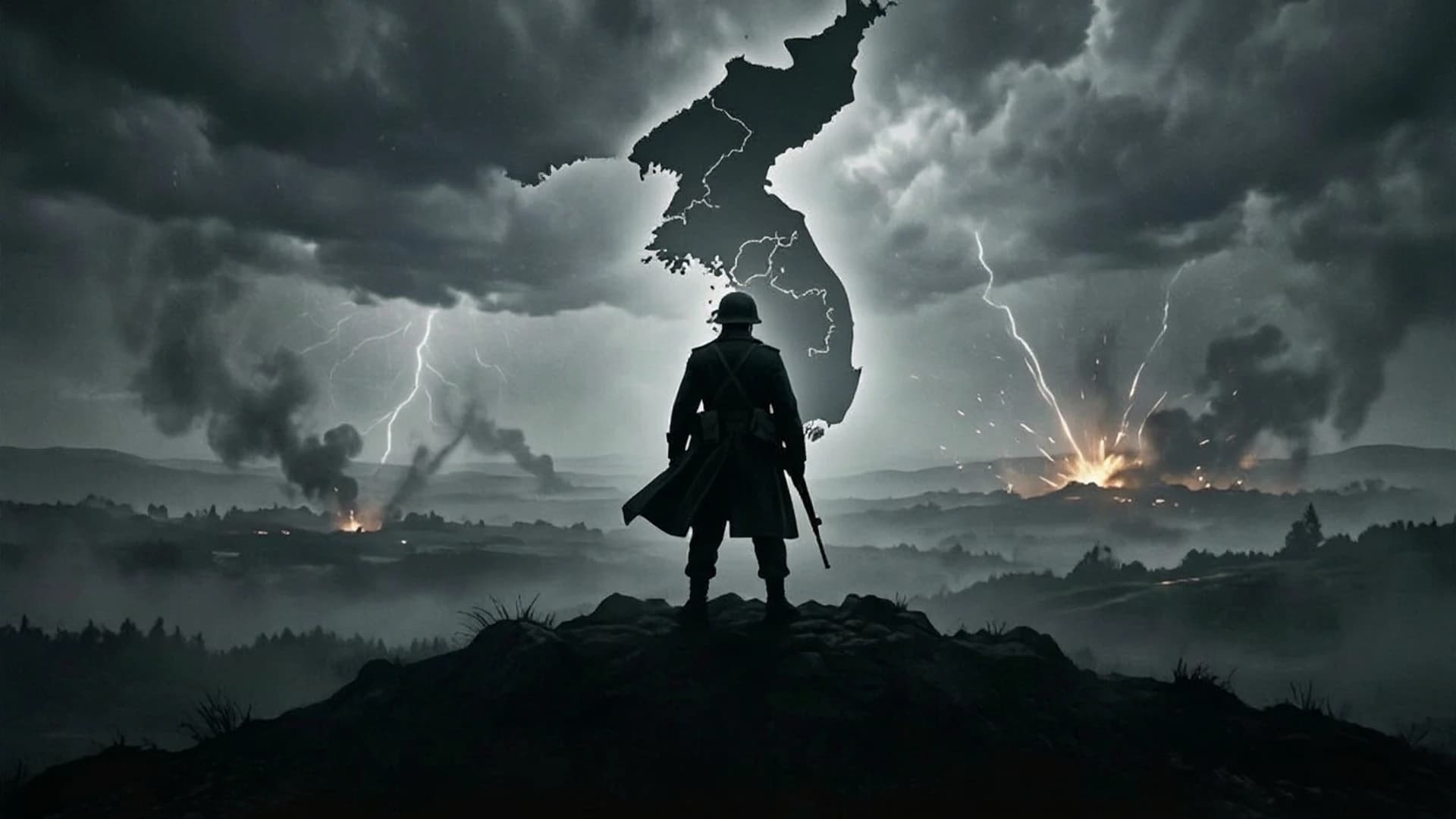
Kore Savaşı (1950–1953), Soğuk Savaş'ın ilk büyük silahlı çatışmasıydı; Kore Demokratik Halk Cumhuriyeti (Sovyetler Birliği ve daha sonra Çin Halk Cumhuriyeti tarafından desteklenen Kuzey Kore) ile Kore Cumhuriyeti (ABD liderliğindeki Birleşmiş Milletler koalisyonu tarafından desteklenen Güney Kore) arasında gerçekleşmiştir. Savaş, 25 Haziran 1950'de Kuzey Kore kuvvetlerinin yarımadayı komünist yönetim altında birleştirme amacıyla 38. paraleli geçmesiyle başladı. Birkaç hafta içinde Güney Koreli ve Amerikalı birlikleri yarımadanın güneydoğu ucuna, Busan Çevresi'ne kadar geri püskürttüler. Eylül ayında, General MacArthur'un Incheon'daki cesur amfibi çıkarması durumu tersine çevirdi ve Pyongyang'ı ele geçirip Yalu Nehri'ne yaklaşan bir BM karşı taarruzuna yol açtı. Ardından Çin kitleler halinde müdahale ederek BM kuvvetlerini 38. paralelin altına geri sürdü. İki yıl süren acımasız ve durağan savaşın ardından, 27 Temmuz 1953'te imzalanan ateşkesle yarımada günümüzde hala mevcut olan bir askerden arındırılmış bölge ile bölündü. Bu senaryoda oyuncu, herhangi bir fraksiyonun rolünü üstlenebilir veya tarafsız bir aktör (örneğin bir Japon iş insanı, bir Sovyet danışmanı veya bir Amerikalı general) olarak stratejik kararlar, kaynak tahsisi ve diplomatik manevralarla savaşın seyrini etkileyebilir. Dünya, Kore Yarımadası, Çin'in bazı bölgeleri, Japonya ve Rusya'nın Uzak Doğusu'nu kapsayan 340'tan fazla altıgen hücreyle aslına sadık kalınarak yeniden yaratılmıştır. Şehirler, limanlar, havaalanları ve savunma hatları önemli noktalar olarak temsil edilmiştir. Büyük ordular, hava kanatları, deniz filoları ve tarihi liderler, her biri savaş istatistiklerine ve özel yeteneklere sahip varlıklar olarak mevcuttur. Zaman çizelgesi dinamiktir: oyuncu müdahale etmezse savaş tarihsel seyrini izler; Kuzey Kore taarruzu, Incheon çıkarması, Çin müdahalesi ve nihai bir çıkmaz. Ancak her eylem (veya eylemsizlik), küresel değiştiricileri değiştirerek alternatif sonuçlar doğurabilir: komünist yönetim altında birleşmiş bir Kore, demokratik bir yarımada, uzatılmış bir yıpratma savaşı veya hatta erken bir ateşkes.
Öncül
Kore Savaşı'ndaki taraflardan birini kontrol ederek stratejik kararlar alıyorsunuz. İki ittifak seçeneği mevcut: Sovyet Bloğu (Kuzey Kore, Çin, SSCB) ve NATO Bloğu (Güney Kore, ABD/BM, arka cephe olarak Japonya). Kuzey yarımadayı birleştirmeyi, Güney ise bağımsızlığını korumayı amaçlıyor.
Simülasyon kuralları
The game simulates the Korean War at a strategic level, combining turn-based movement, combat resolution, and dynamic global modifiers. Below are the core rules: 1. **Control and Ownership:** Each hex cell is controlled by one of seven factions: North Korea (1), South Korea (2), UN (reserved, 3), China (4), USSR (5), Japan (6), or Neutral (0, used only for waters and uninvolved areas). Initial control follows historical borders as of 25 June 1950: all cells north of the 38th parallel belong to North Korea; all cells south belong to South Korea; Japan, China, and Soviet territories are assigned to their respective owners. 2. **Territorial Expansion (Front-Line Rule):** A cell can be captured only if it is adjacent (shares an edge) to a cell already controlled by the attacking side. This ensures that offensives create a continuous, cohesive front rather than isolated "islands" of occupation. Armies must advance methodically, filling gaps behind them to maintain supply lines and avoid being outflanked. To achieve a broad front, players should deploy multiple armies side by side, each advancing on a parallel axis, so that they cover adjacent cells simultaneously. This rule mimics real-world logistics and prevents the chaotic "red splotch" effect. 3. **Combat and Movement:** Entities (armies, divisions, air wings, naval fleets) have stats: Strength (combat power), Morale (fighting spirit), Supply Status (logistics), Experience (battle hardening), and special abilities (e.g., artillery, airstrike, amphibious). Movement speed determines how many cells a unit can traverse per turn. Combat resolution compares Strength modified by terrain, fortifications, entrenchment, air superiority, and sea control. Units can fortify positions, increasing entrenchment over time. 4. **Global Modifiers (Story Stats):** Ten interconnected global stats shape the entire war. They can be influenced by player decisions and shift the balance of power: - **Global Tension** (0–100): Escalation risk; high tension may trigger superpower intervention or nuclear threats. - **North/South Morale** (0–100): Affects all units of that side; low morale leads to retreats and lower combat efficiency. - **North/South Supply** (0–100): Determines ammunition, fuel, and food availability; low supply drastically reduces offensive capability. - **Air Superiority** (positive = UN/ US advantage, negative = North/Soviet advantage): Gives bonuses to airstrikes and reconnaissance; protects own troops from enemy air. - **Sea Control** (positive = UN/ US advantage, negative = North/Soviet advantage): Enables amphibious landings, protects supply convoys, and allows naval bombardment. - **Guerrilla Activity** (0–100): Partisan warfare behind enemy lines; high activity disrupts supply and lowers morale of occupying forces. - **Diplomatic Pressure** (0–100): Mounting international pressure for ceasefire; high values may trigger an armistice event. - **Winter Effects** (0–100): Seasonal modifier that slows movement and reduces combat effectiveness; higher in winter months. 5. **Player Agency:** The player can take various actions depending on their chosen faction or role: - Military commanders can order offensives, retreats, reinforce units, build fortifications, or conduct amphibious assaults. - Political leaders can allocate resources (boost supply), launch propaganda (boost morale), or negotiate (modify diplomatic pressure). - Neutral actors (e.g., Japan) can offer logistical support to either side, trade, or even secretly fund partisan groups, affecting global stats without direct combat. - To create a wide, efficient front, players should order multiple adjacent armies to advance simultaneously, exploiting the adjacency rule to fill gaps and prevent enemy counter-penetration. 6. **Historical Events and Triggers:** Although the scenario does not include hard-coded event chains, the global modifiers are designed to simulate historical milestones if the player remains passive. For example: - If **South Supply** and **South Morale** remain high, the game can simulate the Incheon landing by allowing amphibious operations. - If **North Supply** drops below 30, Chinese intervention becomes more likely (simulated by raising China-aligned forces' stats). - When **Diplomatic Pressure** and **Global Tension** reach certain thresholds, an armistice event may be triggered, ending the war. 7. **Victory Conditions:** There are no fixed victory conditions – the scenario is open-ended. However, plausible goals include: - Unifying the peninsula under your side's control. - Achieving a favourable armistice. - Preventing Chinese or Soviet intervention. - Prolonging the war to exhaust the opponent. 8. **Landmarks and Strategic Points:** Cities, ports, airfields, and defensive lines provide bonuses. Capturing or controlling them gives advantages in supply, fortification, and air/naval operations. The 38th Parallel itself is a landmark that, if crossed, triggers changes in global modifiers. All rules interact dynamically, allowing for emergent storytelling and strategic depth. The game remembers the date and can progress in real-time, with seasonal changes affecting winter effects. Player actions are recorded and influence the final outcome, making each playthrough unique.