
The living world
Understand the map, its inhabitants, and the values that keep every consequence consistent.
The map is a view of state
The Davia map is not just a backdrop. It turns the world's current values into something you can inspect spatially: who is where, which territories share an allegiance, where a landmark stands, and which regions are changing.
The same four building blocks appear in every game:
Read layers
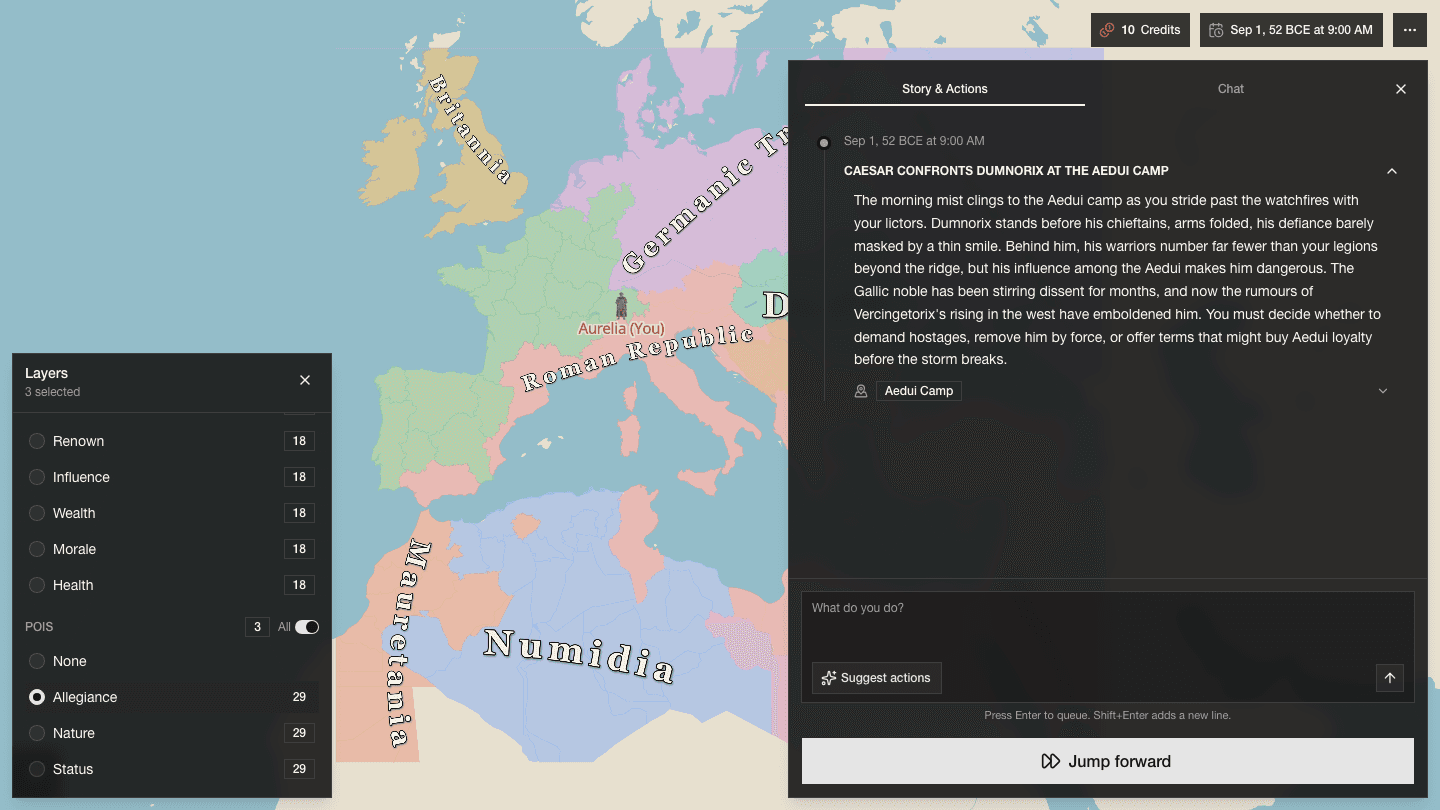
Select Layers in the lower-left corner of the map. Each layer reveals one stat across all subjects that own it.
In the example below:
- Allegiance is selected for cells.
- The map turns the table of cell values into a territorial view.
Entity and landmark layers can be shown at the same time, so you can compare a character's condition with the territory beneath them.
Stats are persistent truths
A stat answers one question the game must keep current. Allegiance tells you which political side a subject supports. Morale records a force's willingness to continue. Health limits what a wounded character can plausibly do.
A stat can apply to one or several kinds of subject. Two entities can both have Morale while holding different values; cells, entities, and landmarks can share Allegiance while each keeps its own current side. A creator may set an optional default for the common case or leave the stat empty until a specific value is assigned.
If Caesar loses a battle in Gaul, one event can lower his army's Morale, reduce Men Under Command, and change the disputed cell's Status. The journal explains the defeat; the stats make its consequences last.
The world does not orbit you
Characters act from their own locations, relationships, and resources. Events elsewhere may reach you as news, a messenger, a changed border, or a later confrontation. You can influence the world, but you are one actor inside it.
That is why distance and time matter. An entity cannot simply appear across the map, and a long journey consumes story time during which other actors can pursue their goals.